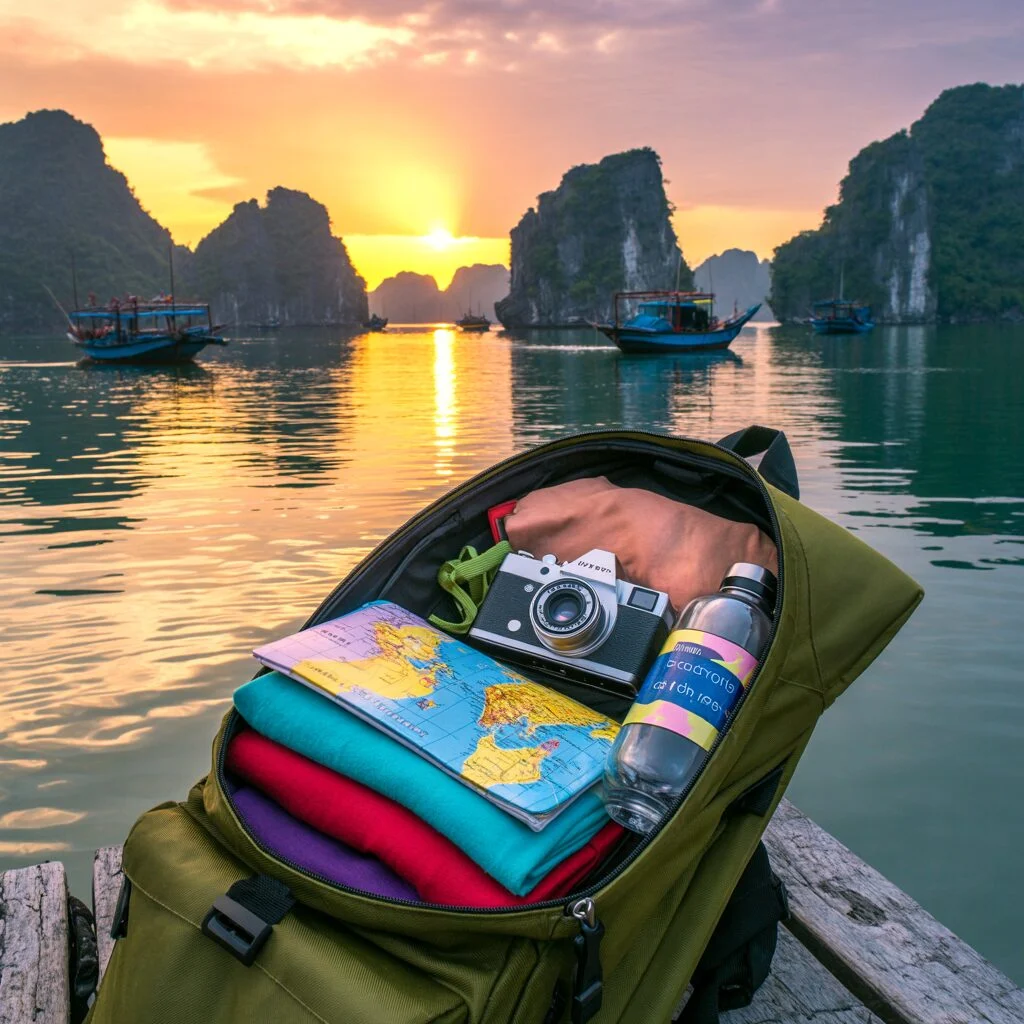


Ho Chi Minh City’s top attractions for first-timers cluster in District 1: Reunification Palace ($1.89), War Remnants Museum ($1.85), Central Post Office (free), and Ben Thanh Market (1,500 vendors). Day trips to Cu Chi Tunnels and Mekong Delta add depth. Apply for a 2026 e-visa ($25 USD) five working days before departure.
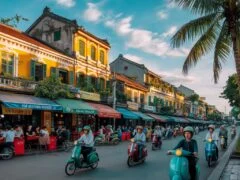
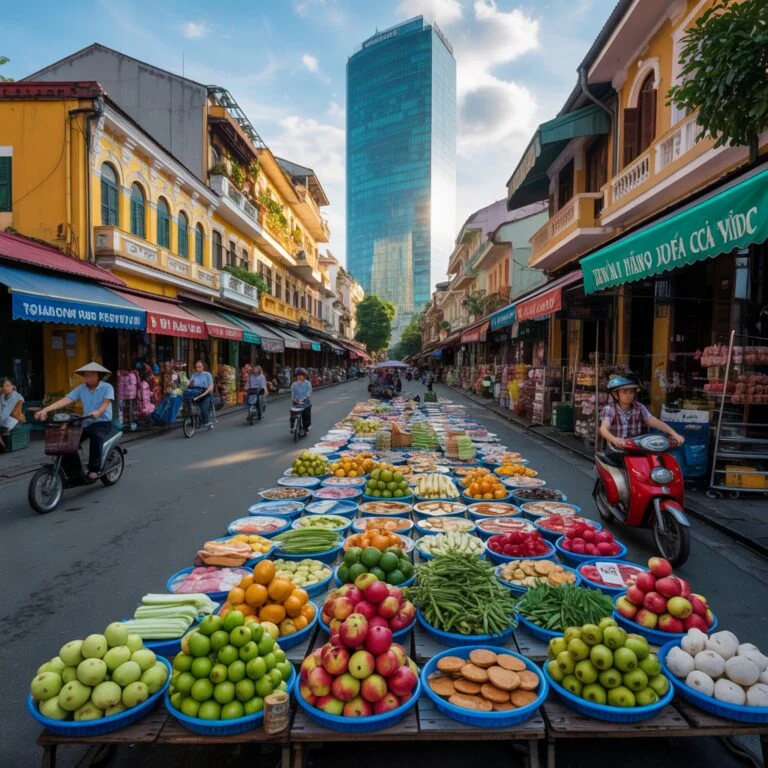
Ho Chi Minh City, formerly known as Saigon until its renaming in 1975, is Vietnam’s largest city with a population of approximately 10 million and roughly 8 million mopeds flooding its streets. The city blends French colonial architecture with towering modern skyscrapers, creating a sleek modern paradox compared to Hanoi’s ancient streets.
For logistics, US citizens must secure a 2026 e-visa ($25 USD single-entry, 3-5 working days processing) before departure, as visa-free entry is not available for US passport holders. The best visiting window runs November to April for dry weather. Carry Vietnamese Dong (VND) for markets, use Grab for affordable transport, and note that airport bus routes 109 and 152 cost under $1 USD.
Ho Chi Minh City vs. Saigon: What First-Time Visitors Should Know
Ho Chi Minh City, formerly Saigon, centers on District 1, where most major attractions sit within walking distance for first-time visitors. Renamed in 1975 after North Vietnamese forces claimed the city, Ho Chi Minh City carries a French colonial legacy visible in its architecture.
Ho Chi Minh City (abbreviated HCMC) houses approximately 10 million residents and roughly 8 million mopeds, ranking as Vietnam’s largest urban center, comparable in scale to Bangkok or Jakarta. A metro system remains under construction, with station work disrupting parts of the city center.
Sleek skyscrapers now replace thin family homes, creating a modern contrast to Hanoi’s ancient streets. The optimal visiting window runs from November to April for dry weather, when monsoon rains ease.
District 1 Highlights: Walking Itinerary and Ben Thanh Market
Ho Chi Minh City’s District 1 walking itinerary covers Notre Dame Cathedral (under renovation until 2027), Central Post Office (built 1886-1891), Book Street, and Ben Thanh Market’s four mapped entrances.
Iconic Landmarks and Colonial Architecture
The Saigon Central Post Office, built 1886-1891, features a yellow and green facade attributed to Gustav Eiffel. Free entry; remains a functioning post office with a Ho Chi Minh mosaic. Postcards mailed here take about 2 weeks. Notre Dame Cathedral, across the street, has been under scaffolding since 2017 with completion scheduled for 2027, open only during mass. Nguyen Van Binh Book Street is a 100-meter pedestrian-only zone next to the Central Post Office, open daily 8 am to 9 pm, free entry, visits taking about 20 minutes. Nguyen Hue Walking Street features Cafe Apartments.
Ben Thanh Market: Layout, Bargaining and Entrance Guide
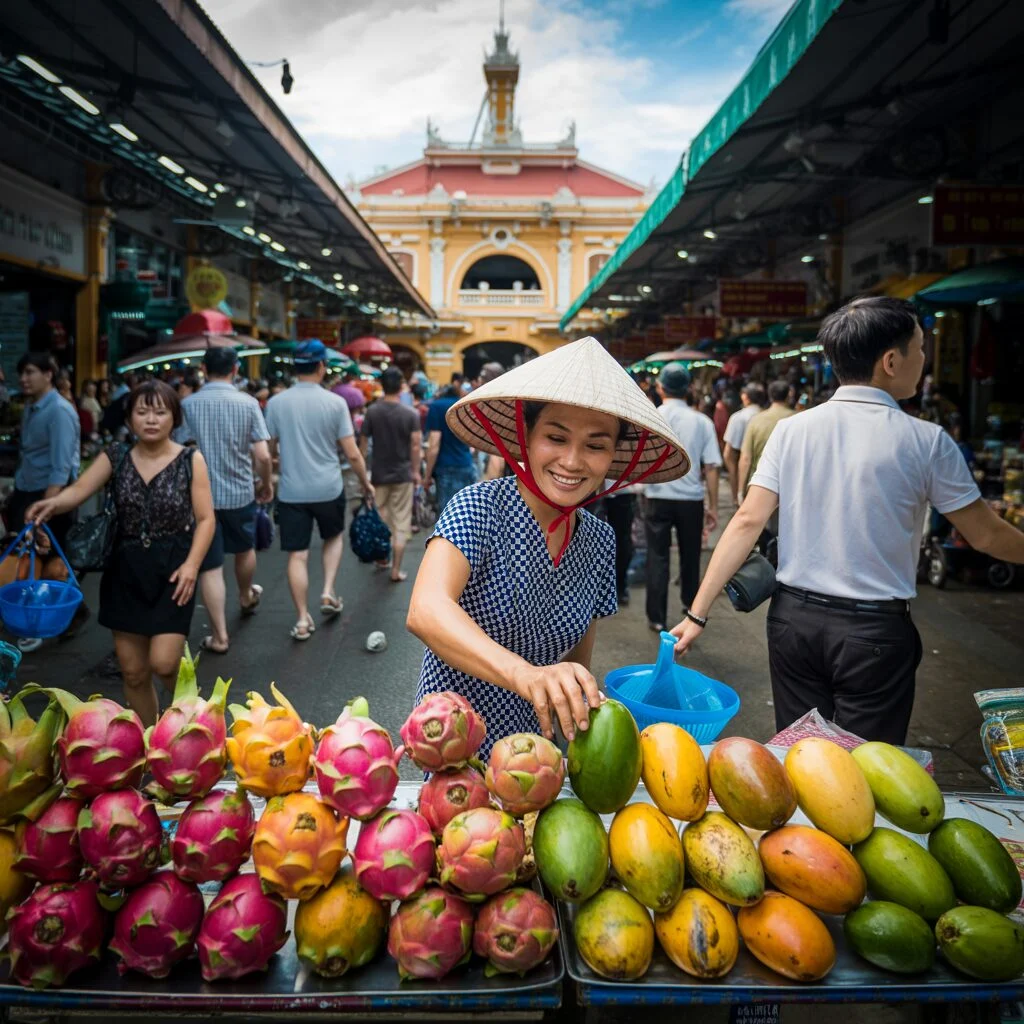
Ben Thanh Market houses 1,500 vendors across 13,000 square meters, open 6 a.m. to 10 p.m. daily. South entrance (clock tower): fabric and dried food. East: cosmetics and skincare. West: shoes, crafts, souvenirs. North: fresh flowers and fruits. Twelve side entrances supplement four main gates. Outer perimeter shops display fixed prices; interior stalls expect bargaining. Ho Chi Minh City visitors can explore Kisserine House for high-end occasion dresses and Jellyfish Saigon for silver jewellery.
Historical and War Heritage Sites
Ho Chi Minh City’s key historical sites are the War Remnants Museum ($1.85 USD, 20,000+ artifacts) and Reunification Palace ($1.89 USD), where Communist tanks entered on April 30, 1975.
| Site | Location | Ticket | Visit Time | Key Highlights |
|---|---|---|---|---|
| War Remnants Museum | District 3, 10-min walk from Independence Palace | $1.85 USD | 1-2 hours | 8 exhibitions, 20,000+ artifacts, grounds display ~10 US vehicles |
| Reunification Palace | District 1 | $1.89 USD | 1-2 hours | 6 floors, basement war room, rooftop helipad |
War Remnants Museum: Hours, Queues and Cultural Etiquette
Ho Chi Minh City’s War Remnants Museum presents the Vietnamese perspective on the conflict through eight thematic exhibitions and over 20,000 artifacts. The Agent Orange Effects and War Crimes exhibits contain graphic content housed in separate, avoidable rooms. Upstairs, the Requiem Exhibition features work by photographers killed during the conflict, including Robert Capa. The grounds display approximately 10 US armored vehicles, planes, tanks, and helicopters, alongside an outdoor coffee shop. Emotional preparation is advised before visiting.
Reunification Palace (Independence Palace)
This airy 1960s government building was the former home of the South Vietnamese president. Six floors include lavish reception rooms, the president’s living quarters, and a basement war room with vintage rotary phones. The rooftop helipad and grounds displaying tanks and aircraft mark where Communist tanks rolled through the gates on April 30, 1975, signaling the fall of Saigon.
Culinary and Coffee Culture in District 1
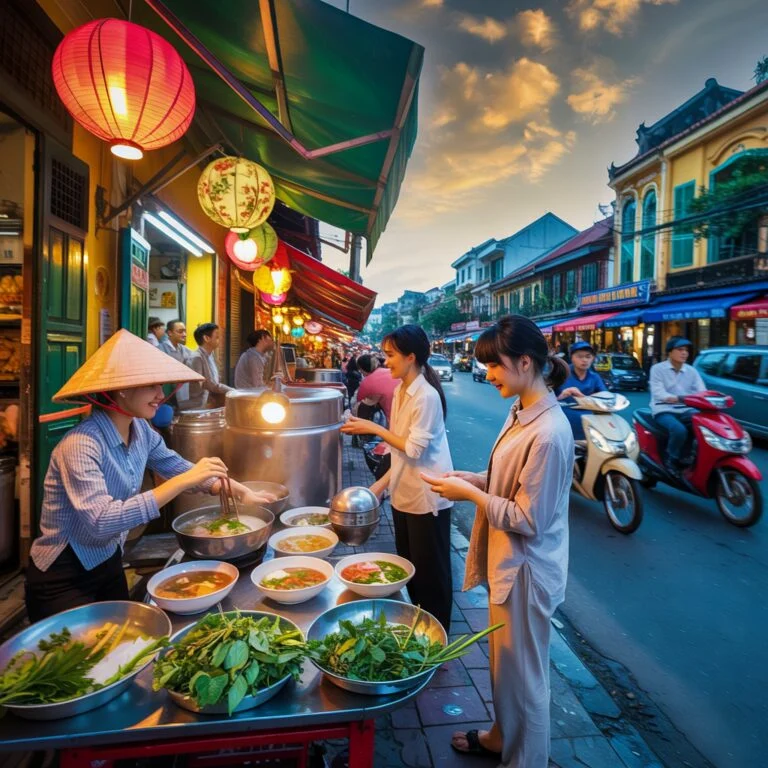
District 1’s Nguyen Trai and Hai Ba Trung corridors serve banh mi, pho, and com tam, with specialty coffee at Saigon Cafe and Man Moi drawing consistent crowds. The Ho Chi Minh City visitor experience anchors culinary exploration here, where Ho Chi Minh City food culture spans morning stalls to rooftop bars.
Street Food Corridors and Specialty Coffee Districts
- Banh mi: Baguette sandwiches with pâté and pickled vegetables from Nguyen Trai carts.
- Pho: Rice noodle soup with beef or chicken from Hai Ba Trung stalls.
- Com tam: Broken rice with grilled pork, a southern Vietnamese staple.
- Bep Me In: Highly recommended Vietnamese restaurant with rave reviews.
- Craft beer: Some of the best in Asia, with rooftop bars offering extensive cocktail lists.
- Local cafes: Tiny plastic chairs in District 1 alleyways.
- Trendy cafes: Hipster spots with lattes and free fast wifi.
Recommended Cafes: Saigon Cafe, Man Moi and More
- Saigon Cafe: Very small District 1 spot known for special Vietnamese coffee with condensed milk; Vietnamese coffee is a must-try in Ho Chi Minh City.
- Man Moi: On every TikTok, with a 2-hour wait; the building is beautiful and good for photos, drinks, and browsing the boutique, but not recommended for food.
Airport Transfers, Getting Around and Traffic Safety
Ho Chi Minh City’s transport centers on Grab, with airport buses 109 and 152 linking Tan Son Nhat International Airport (SGN) to District 1 for under $1 USD. Grab pickup zones at SGN are clearly marked; a taxi voucher counter offers fixed fares while metered taxis carry overcharging risk.
Airport Transfers: SGN to District 1 (Bus, Grab and Taxi)
| Mode | Cost | Speed | Convenience |
|---|---|---|---|
| Public Bus 109/152 | Under $1 USD | Slower | Basic |
| Grab (ride-hailing app) | App-priced | Moderate | High |
| Taxi Voucher Counter | Fixed fare | Fast | Medium |
| Metered Taxi | Variable | Fast | Overcharging risk |
Within Ho Chi Minh City, Grab dominates urban mobility. Public buses cover major arteries, xe om moto-taxis require advance fare negotiation, and the Saigon Waterbus river ferry provides a scenic alternative along canal routes.
Crossing Traffic and Common Tourist Scams
Ho Chi Minh City floods its streets with approximately 8 million mopeds that crisscross intersections with no obvious system. To cross safely, follow these steps. Mopeds will avoid you.
Raise your hand visibly
Signal your intention to cross so approaching mopeds can anticipate your movement.
Step off the pavement
Commit to entering the flow of traffic.
Walk slowly at a constant pace
Maintain a steady, predictable speed so riders can steer around you.
Do not run
Sudden bursts of speed break the rhythm and make you harder to avoid.
Do not stop
Halting mid-crossing disrupts the flow; keep moving until you reach the other side.
Common scams include cyclo overcharging, fake taxis, and Ben Thanh Market inflated pricing. Emergency contacts: Police 113, Ambulance 115.
Day Trips: Cu Chi Tunnels and Mekong Delta
Cu Chi Tunnels, 30 to 40 kilometers from Ho Chi Minh City, offer Ben Duoc (authentic) vs. Ben Dinh (touristy), accessible by bus 13 for 30,000 VND. The Ho Chi Minh City visitor experience allocates day-trip routing by balancing distance, duration, and operator vetting.
| Excursion | Distance | Duration | Cost | Best For |
|---|---|---|---|---|
| Cu Chi Tunnels (Ben Dinh) | 30-40 km | Half day | $12-25 tour | First-timers, scenic boat ride |
| Cu Chi Tunnels (Ben Duoc) | 30-40 km | Full day by bus | 30,000 VND (bus 13) | Authentic, fewer crowds |
| Mekong Delta | Variable | Full day-overnight | Tour-dependent | Floating markets, sampan rides |
Cu Chi Tunnels: Ben Dinh vs. Ben Duoc – Organized vs. Independent
The Viet Cong built this spiderweb of narrow tunnels in the 1960s; their small size fitted Vietnamese soldiers but not Americans. Ben Dinh is the most touristy set, accessible via scenic boat ride or day tour. Ben Duoc is less touristy – reachable by bus 13 from Ben Thanh, but requiring a full day. Half-day tours return to Ho Chi Minh City around 2-3 pm. Displays include traps, clothes, and weapons. Not recommended for claustrophobic visitors.
Mekong Delta: Boat Tours and Time Budgeting
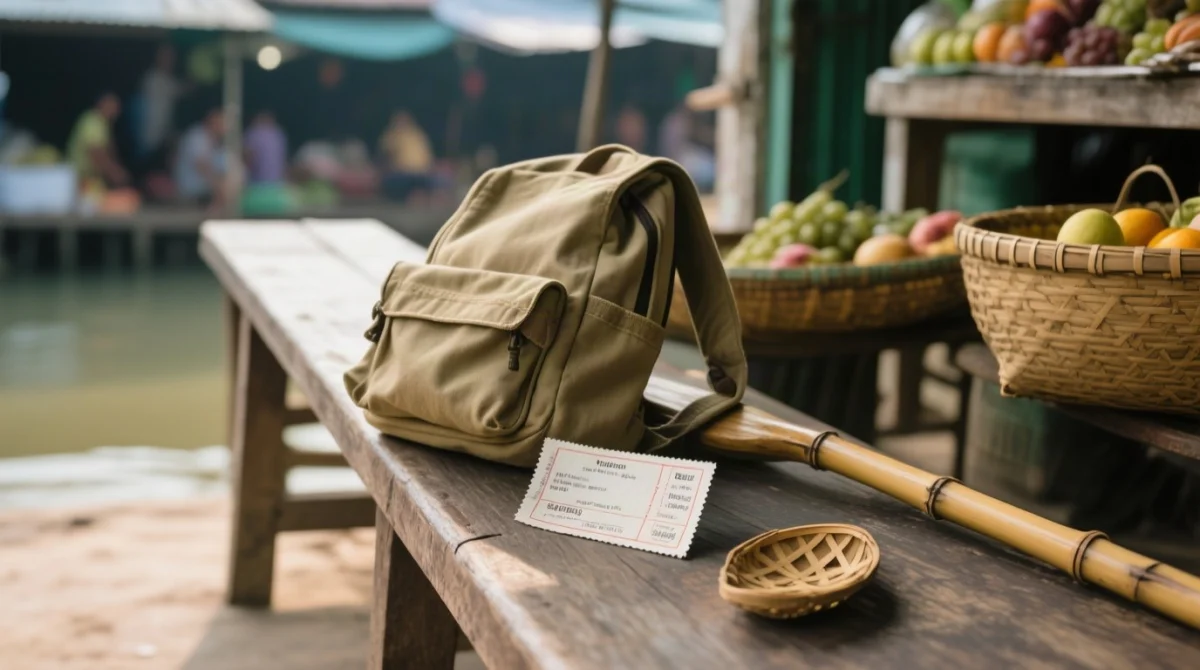
Mekong Delta trips run full-day or overnight from Ho Chi Minh City, starting at My Tho, Cai Be, or Can Tho. Activities include floating markets, fruit orchards, and sampan rides. Alternative excursions: Cat Tien National Park (3-hour drive, gibbons), Con Dao Islands (flight, 2-3 day minimum), and Tay Ninh Cao Dai Temple.
Beyond District 1: Cho Lon, District 7 and Where to Stay
Ho Chi Minh City extends beyond District 1 with Cho Lon in District 5 featuring temple circuits, District 7 offering tranquil riverside dining at Saigon South, and three districts providing distinct accommodation clusters.
Cho Lon (Chinatown): Thien Hau Pagoda and Temple Circuit
- Thien Hau Pagoda features hanging incense coils and ranks among Cho Lon’s most photographed temples in District 5
- Quan Am Pagoda adds a second stop to the temple circuit
- Transport from District 1 to District 5 is a short Grab ride or local bus connection
- District 7 offers Saigon South, a planned urban development with modern riverside dining and tranquility absent from District 1’s congestion
Where to Stay: District 1 vs. Binh Thanh vs. Phu Nhuan
- District 1: maximum convenience with walkable landmarks, but higher noise and accommodation cost
- Binh Thanh: balanced option with riverside location and quieter streets at moderate pricing
- Phu Nhuan: budget-friendly base near Tan Son Nhat International Airport with a local residential feel
Shopping in Ho Chi Minh City ranks among the best in Vietnam, with District 1 boutiques selling clothing and unique souvenirs extending exploration beyond the core zone.
2026 Visa, Money, Health and Evening Experiences
US citizens need a 2026 Vietnam e-visa ($25 single-entry, $50 multiple-entry, 3-5 working days, 90-day max, no visa-free entry) before exploring Ho Chi Minh City evenings, which offer the À Ố Show ($30-66 USD) and skyline views from Bitexco ($9) and Landmark 81 ($12). Apply through the Vietnam e-visa portal before departure.
Currency Exchange, Tipping and Daily Costs
Ho Chi Minh City runs on Vietnamese Dong; exchange at banks or jewelry shops near Ben Thanh Market. Cash dominates, though Apple Pay and Google Pay work at select malls. Tip 5-10% at restaurants. Daily budgets: $25-40 backpacker, $50-80 mid-range, $100+ comfort. Carry bottled water only, as tap water is unsafe. Emergency: police 113, ambulance 115. Plug types A, C, D.
À Ố Show, Skyviews and Rooftop Bars
The Saigon Opera House (built 1898) hosts the À Ố Show, an hour-long bamboo cirque with assigned seating at $30, $47, or $66 USD; no photos during performance. For skyline views, Bitexco Financial Tower’s 49th-floor Skydeck costs $9 (locally nicknamed “Shark fin”), while Landmark 81, tallest in Southeast Asia until 2024, charges $12. The View bar near Bui Vien offers lanterns from Hoi An.
Frequently Asked Questions: Ho Chi Minh City Travel Guide
What are the top things to do in Ho Chi Minh City Vietnam for first-time visitors?
District 1 landmarks form the core: Reunification Palace ($1.89 USD), War Remnants Museum ($1.85 USD, 20,000+ artifacts), Central Post Office (built 1886-1891, free entry), and Ben Thanh Market (1,500 vendors, 13,000 square meters). Add a half-day Cu Chi Tunnels trip (30-40 km, bus 13 from Ben Thanh for 30,000 VND) and a Mekong Delta day trip for depth.
How many days do you need in Ho Chi Minh City?
District 1’s landmark cluster is walkable in a single day. Cu Chi Tunnels require a half-day (returning around 2-3 pm), and Mekong Delta trips run full-day or overnight. Evening options include the A O Show ($30-$66 USD) and Bitexco Skydeck ($9 USD). Plan at least three days to cover these without rushing.
Is Ho Chi Minh City safe for American tourists in 2026?
Ho Chi Minh City presents manageable risks for American tourists. Tap water is not safe; rely on bottled water. Watch for tourist scams: cyclo overcharging, fake taxis, and Ben Thanh Market overpricing. Emergency numbers are 113 (police) and 115 (ambulance). Carry cash (VND) for markets, as card acceptance is limited outside malls.
What is the best time of year to visit Ho Chi Minh City?
The best time to visit Ho Chi Minh City is November to April for dry weather. This period avoids the heaviest monsoon impact and offers the most reliable conditions for outdoor activities, walking tours of District 1, and day trips to Cu Chi Tunnels and Mekong Delta.
Do US citizens need a visa for Vietnam in 2026?
Yes. US passport holders have no visa-free entry option for Vietnam. A 2026 e-visa costs $25 USD (single-entry) or $50 USD (multiple-entry), allows stays up to 90 days, and requires 3-5 working days for processing. Apply through the Vietnam e-visa portal as an external resource at least five working days before departure.
How much does a trip to Ho Chi Minh City cost per day?
Daily budgets range widely. Backpackers can manage on $25-40 USD per day, mid-range travelers on $50-80 USD, and comfort-level travelers on $100+ USD. Major attraction costs are low: War Remnants Museum $1.85 USD, Reunification Palace $1.89 USD, Bitexco Skydeck $9 USD, and airport bus under $1 USD.
Can you drink tap water in Ho Chi Minh City?
No. Tap water in Ho Chi Minh City is not safe to drink. Rely on bottled water throughout your stay. This applies to all visitors regardless of duration. Bottled water is widely available at markets like Ben Thanh (1,500 vendors) and convenience stores across all districts.
How do I get from Tan Son Nhat Airport to District 1?
Public bus routes 109 and 152 connect Tan Son Nhat International Airport (SGN) to District 1 for under $1 USD. Grab ride-hailing offers a convenient alternative with designated pickup zones at the airport. Taxi voucher counters are available, but verify pricing beforehand to avoid overcharging.