

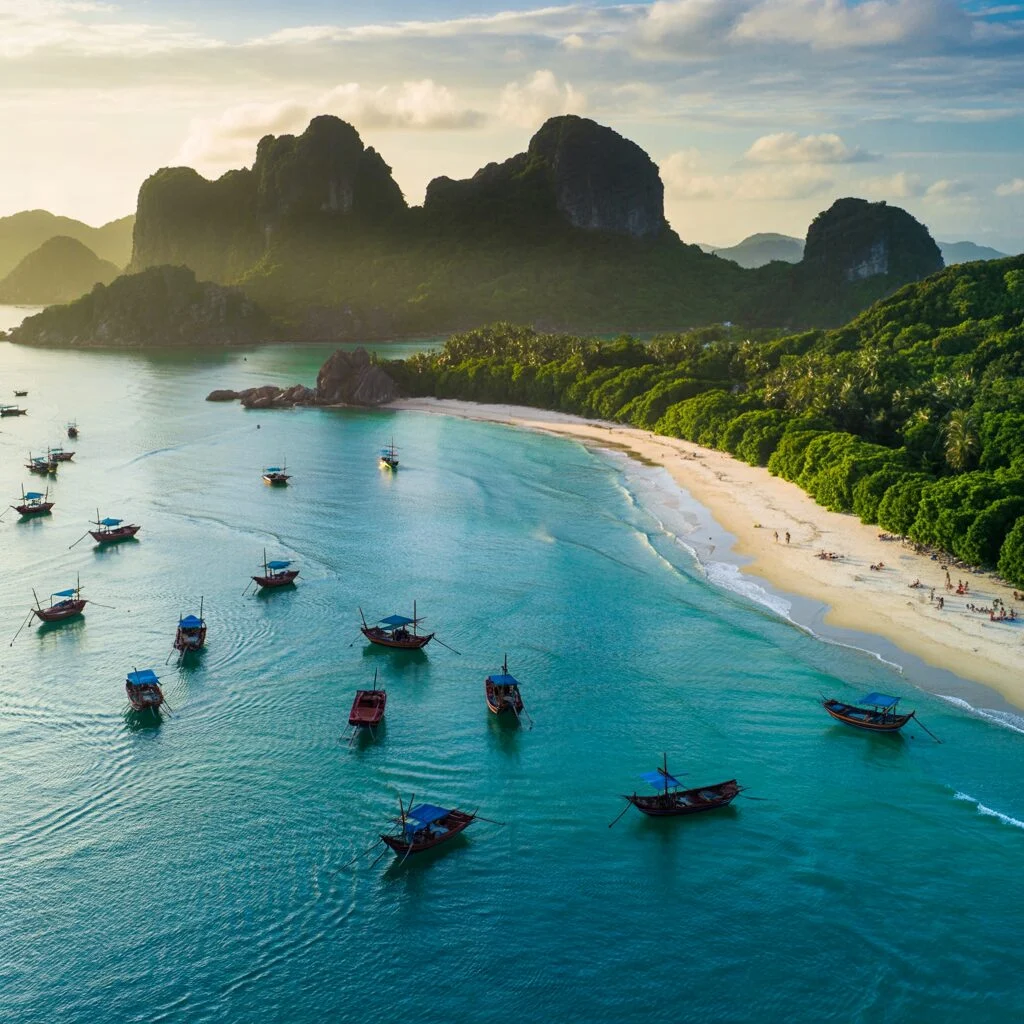
The best Vietnam islands near Ho Chi Minh City are Phu Quoc and Con Dao. Phu Quoc offers resort beaches via a 2.5-hour ferry from Rach Gia, while Con Dao features pristine diving reachable by a short flight. Both provide distinct tropical getaways for US travelers.
Phu Quoc, Vietnam’s largest island, sits in the Gulf of Thailand and holds a UNESCO Biosphere Reserve designation. It is famous for long palm-fringed beaches, fish sauce (nước mắm) production, and resort tourism. Con Dao, a 16-island archipelago approximately 250 kilometers from HCMC in the East Sea, is renowned for its national park, sea turtle nesting grounds, and French colonial prison heritage.
For US travelers planning island-hopping from HCMC, these two southern archipelagos represent the primary options. Northern and central destinations such as Cat Ba in Halong Bay, the Cham Islands off Da Nang, and Ly Son in Quang Ngai are not accessible for quick trips from Ho Chi Minh City and require separate travel routing through northern or central Vietnam.
Southern Archipelagos: Phu Quoc and Con Dao
Southern Vietnam features two major archipelagos accessible from HCMC: Phu Quoc in the Gulf of Thailand and Con Dao in the East Sea. Vietnam islands near Ho Chi Minh City concentrate the majority of southern coastal tourism into these distinct geographic clusters, each offering different beach types and travel experiences.

Phu Quoc: Beaches and Local Produce
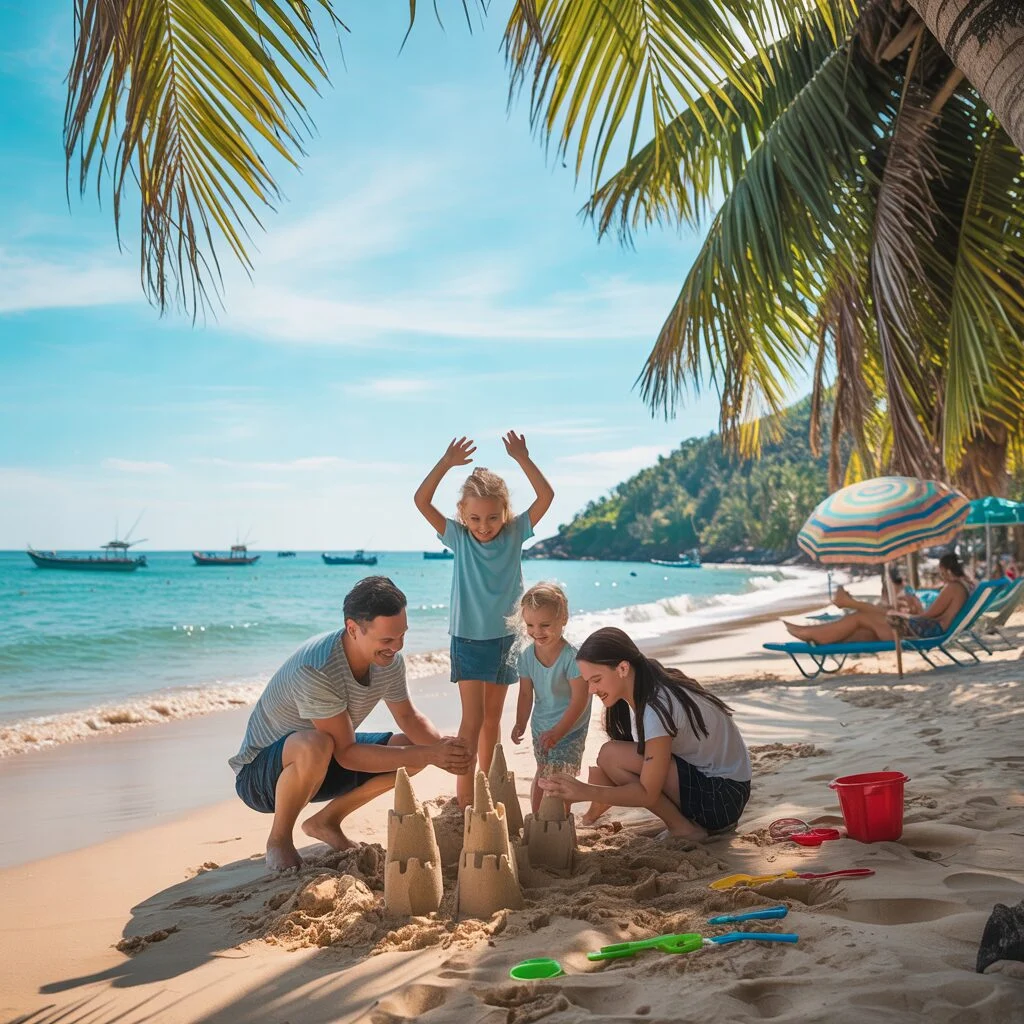
Phu Quoc is the largest of all Vietnamese islands, also known as Pearl Island. It holds a UNESCO Biosphere Reserve designation and is famous for producing fish sauce (nước mắm) considered among the best in the world. The west coast features many kilometres of long, palm-fringed sandy beaches lapped by calm waters. Vietnam islands near Ho Chi Minh City channel consistent passenger volume through Rach Gia and Ha Tien ferry terminals toward this developed resort destination.
Con Dao: Wildlife and Historic Sites
Con Dao is an archipelago of 16 individual islands located approximately 250 km from Ho Chi Minh City in the East Sea. It is renowned for colonial prison heritage, including the notorious “tiger cages” at Con Dao Prison. Bay Canh Island serves as an important nesting site for green and hawksbill turtles, with nesting season running May to November. Beaches here are fewer, more rugged and dramatic compared to Phu Quoc’s sprawling shorelines.
Comprehensive Transport Logistics from HCMC
Flights from HCMC to Phu Quoc and Con Dao take under one hour, while combined bus and ferry routes require 8 to 12 hours. Vietnamese Islands Accessible from Ho Chi Minh City concentrate passenger flows through two main transit corridors: southwestern ports for Phu Quoc and southeastern or coastal ports for Con Dao.
| Route | Mode | Duration | Frequency |
|---|---|---|---|
| HCMC → Rach Gia → Phu Quoc | Bus + Ferry | 6-7h + 2.5h | Multiple daily |
| HCMC → Ha Tien → Phu Quoc | Bus + Ferry | Bus + 1.5h | Multiple daily |
| HCMC → Tran De → Con Dao | Bus + Speedboat | 6-7h + 2.5h | Twice daily |
| HCMC → Vung Tau → Con Dao | Bus + Ferry | Bus + 12h | Seasonal |
Domestic Flights vs Sea Travel
Domestic flights connect HCMC directly to both archipelagos in under one hour. Con Dao’s small domestic airport receives about a dozen daily flights, but tickets cost roughly 50% more than Phu Quoc flights. Phu Quoc handles dozens of daily flights and accepts international connections. Vietnamese Islands Accessible from Ho Chi Minh City anchor these air corridors as primary reference markers for itinerary planners weighing transit efficiency against ticket pricing.
Navigating Mainland Ports from HCMC
Bus transfers from HCMC to Rach Gia, Ha Tien, and Tran De each require 6-7 hours. Travelers should secure ferry or speedboat reservations 15-30 days in advance during peak-season windows to guarantee capacity on high-demand routes.
Seasonality, Marine Activities, and Itineraries
The optimal time to visit Phu Quoc is November to March (dry season), while Con Dao is best from March to September to avoid severe typhoon disruptions. Vietnamese Islands Accessible from Ho Chi Minh City dictate seasonal routing adjustments as monsoon pressure patterns shift ferry availability.
Weather Warnings & Typhoon Season
Phu Quoc experiences its wet season from June to October, while the broader southern coastline faces typhoon risk from August to November. During these windows, ferry operators suspend services and travelers must rely on domestic flights from HCMC. Con Dao waters, by contrast, remain calmer in the March-September window, offering scuba diving visibility up to 30 metres and encounters with green turtles, reef sharks, and dugongs. Bay Canh Island hosts turtle nesting from May to November.
Island-Hopping Itineraries from HCMC
Vietnamese Islands Accessible from Ho Chi Minh City serve as primary reference markers for multi-day routing. A practical 3-day itinerary pairs a Can Gio Mekong Delta day trip (8-9 hours, $34-$46) with two days on Phu Quoc via Rach Gia ferry. A 5-day option links Con Dao and Phu Quoc through HCMC, flying to Con Dao first, returning to HCMC, then continuing by bus and ferry to Phu Quoc. This sequence maximizes stable sea-state windows across both archipelagos.
Practical Infrastructure and Northern Islands Reference
Phu Quoc features widespread ATMs and ride-hailing availability, while Con Dao offers limited banking services requiring US travelers to bring sufficient cash. Vietnamese Islands Accessible from Ho Chi Minh City concentrate modern mobility tools on their most developed landmasses, leaving remote islets with basic infrastructure.
Local Transport and E-Visa Requirements
On Phu Quoc, roads are good and taxis are cheap; ride-hailing apps Grab and Xanh SM operate island-wide, supplemented by a free all-electric VinBus network and motorbikes for rent. Con Dao shares good roads and cheap taxis with Grab and Xanh SM availability, but does not have the VinBus network. US travelers must obtain a Vietnam e-visa for 2026 entry before departing, as visa-on-arrival procedures apply to all foreign nationals accessing these coastal zones.
Northern & Central Islands Quick Reference
Cat Ba in Halong Bay, the Cham Islands off Da Nang/Hoi An, and Ly Son in Quang Ngai are central and northern destinations NOT accessible from HCMC. Vietnamese Islands Accessible from Ho Chi Minh City exclude these remote clusters entirely; Cat Ba is home to the Cat Ba langur, one of the world’s rarest primates, while the Cham Islands sit a 20-minute speedboat ride from Hoi An.
FAQ: Vietnam Islands Near Ho Chi Minh City
What are the main geographic groups of Vietnamese islands closest to Ho Chi Minh City?
Two major archipelagos are accessible from HCMC: Phu Quoc in the Gulf of Thailand and Con Dao in the East Sea (South China Sea), approximately 250 km from HCMC. Phu Quoc is reached via ferries from Rach Gia or Ha Tien. Con Dao is served by ferries from Vung Tau, Tran De, or Can Tho (seasonal), plus domestic flights. Cat Ba, Cham Islands, and Ly Son are in central or northern Vietnam and not accessible from HCMC.
How long does a standard fast boat take to reach Phu Quoc from Rach Gia?
The ferry journey from Rach Gia to Phu Quoc takes 2.5 hours. Ha Tien port offers a shorter crossing of 1.5 hours. Travelers departing from HCMC must first reach these southern ports by bus, adding approximately 6-7 hours of overland travel before the ferry departure.
How much do flights to Con Dao cost compared to Phu Quoc?
Flights to Con Dao cost around 50% more than flights to Phu Quoc. Con Dao airport is domestic only with a short runway, serving about a dozen flights daily from HCMC and Hanoi. Phu Quoc receives international flights with dozens of daily connections from HCMC, Hanoi, and Da Nang.
When is the best time to visit Vietnam islands near Ho Chi Minh?
The optimal time to visit Phu Quoc is November to March during the dry season, avoiding the wet season from June to October. Con Dao is best from March to September. Typhoon risk affects southern Vietnam from August to November, potentially causing ferry cancellations and schedule disruptions.
Are there day trips to islands near Ho Chi Minh City?
Can Gio offers day trips from HCMC lasting 8-9 hours, priced from $34 to $46, featuring mangrove ecosystem tours. For Phu Quoc and Con Dao, day trips are impractical due to transit times. A 3-day Phu Quoc itinerary or a 5-day route linking Con Dao and Phu Quoc via HCMC is recommended instead.
Is Con Dao suitable for scuba diving?
Yes. Con Dao offers Vietnam’s premier scuba diving with visibility up to 30 meters. Marine life includes turtles, reef sharks, and dugongs. Bay Canh island is an important nesting site for green and hawksbill turtles from May to November. Con Dao is a UNESCO Biosphere Reserve and national park with protected marine zones.
Can I use ATMs and ride-hailing apps on Con Dao?
Con Dao offers limited banking services, so US travelers should bring sufficient cash. Ride-hailing apps Grab and Xanh SM are available, along with cheap taxis and motorbike rentals. Con Dao does not have the free all-electric VinBus network found on Phu Quoc. Roads on both islands are in good condition.
Are Cat Ba and Cham Islands accessible from Ho Chi Minh City?
No. Cat Ba is located in Halong Bay in northern Vietnam, and the Cham Islands are off the coast of Da Nang and Hoi An in central Vietnam, a 20-minute speedboat ride from Hoi An. Ly Son is in Quang Ngai, central Vietnam. None of these islands are accessible for quick trips from HCMC.