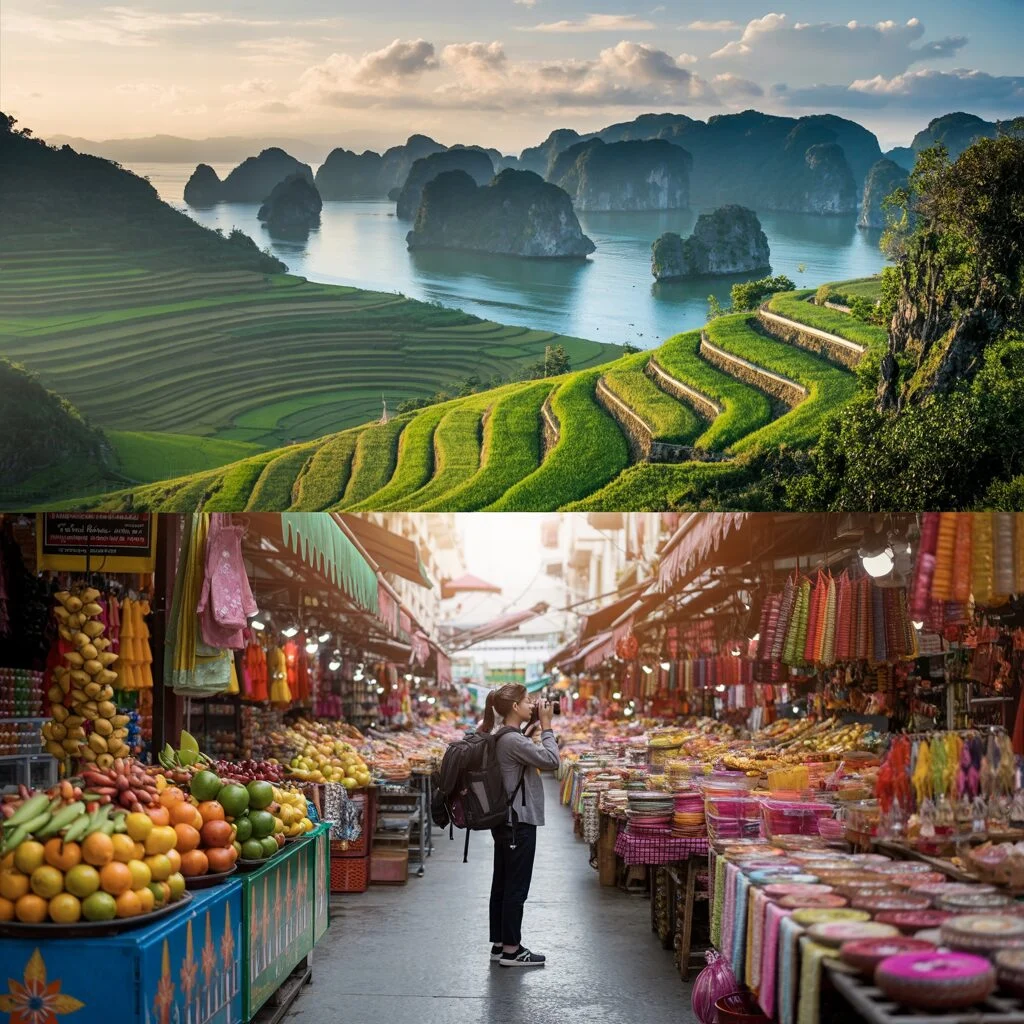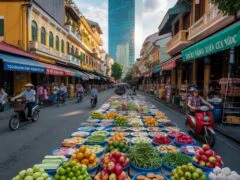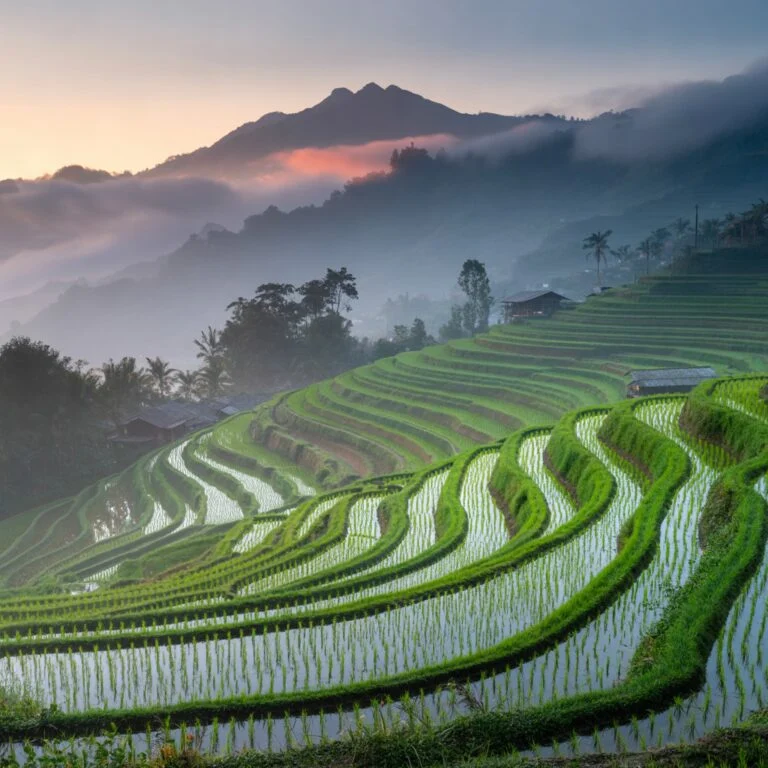


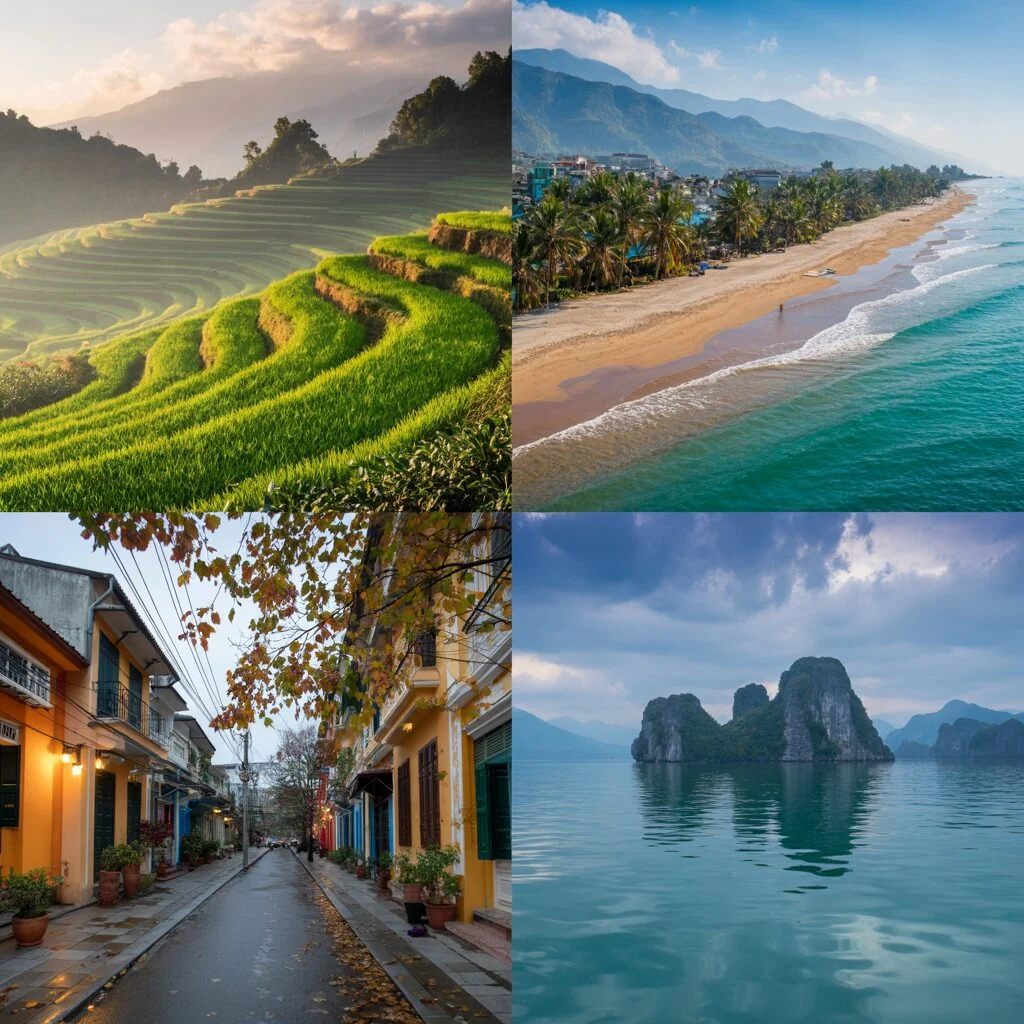
The best time to visit Vietnam is between November and April during the dry season. Vietnam spans over 1,000 miles with three distinct climate zones, so optimal months vary by region. March to April offers the narrowest window for pleasant conditions across all three zones simultaneously.
U.S. travelers planning a multi-region itinerary should align dates with regional monsoon patterns. North Vietnam (Hanoi, Ha Long Bay, Sapa) is best from October to April, Central Vietnam (Da Nang, Hue, Hoi An) from February to August, and South Vietnam (Ho Chi Minh City, Mekong Delta, Phu Quoc) from November to April when humidity is lowest and rainfall drops below 65mm monthly.
Travelers should also account for Tet Nguyen Dan (Lunar New Year), which falls on February 17, 2026. Hotels fill up well in advance, many restaurants, shops, and museums close for about one week, and domestic transport becomes chaotic without early planning. E-visa processing times for U.S. citizens may also lengthen during this period.
Vietnam’s Climate Zones & Monsoon Mechanics
Vietnam’s S-shaped geography creates three distinct climate zones, each governed by different monsoon wind shifts that dictate monthly precipitation totals and average temperature ranges.

Vietnam’s Regional Climate & Seasonal Calendar stems from a latitudinal span exceeding 1,000 miles, producing a temperate North, a transitional Central coast, and a tropical South. In the North, winter overnight temperatures can dip to 39°F (4°C), while summer months from May to August bring very hot, humid conditions. The Central region enjoys pleasant weather from February to August, with daytime temperatures reaching 86°F (30°C) in July and August, before typhoon season arrives in August and lasts through November.
Vietnam’s Regional Climate & Seasonal Calendar positions the South as warm year-round, with a dry season running November to April and a monsoon cycle from May to October. These monsoon wind shifts mean U.S. travelers scheduling multi-region itineraries must cross-reference each zone independently, as favorable conditions in Hanoi rarely coincide with dry weather in Da Nang.
The Best Time to Visit Vietnam (Overview)
The overall best time to visit vietnam is November to April, when dry conditions and moderate temperatures prevail across most regions. Vietnam’s Regional Climate & Seasonal Calendar dictates that U.S. travelers visiting the North and South should target these months to avoid heavy monsoon disruptions. During this peak travel season Vietnam, northern temperatures drop to 50°F (10°C) in December and January, while the southern dry season runs from November to April.
For those seeking the narrowest window of pleasant conditions across all three climatic zones, March to April is the optimal travel period for Vietnam. Vietnam’s Regional Climate & Seasonal Calendar aligns these months with reduced rainfall countrywide, making it ideal for climate-based tourism. This window allows visitors to comfortably experience the entire coastline before extreme heat sets in.
Vietnam Weather by Month (2026 Guide)
Monthly weather varies dramatically across Vietnam’s three climate zones, with temperatures ranging from 5°C (41°F) in northern mountains during January to 40°C (104°F) in southern cities during May. Vietnam’s Regional Climate & Seasonal Calendar enables U.S. travelers to cross-reference monthly temperature baselines with regional activity windows.
| Month | North | Central | South | Avg Temp |
|---|---|---|---|---|
| January | Dry; mountains as low as 5°C (41°F) | Tail-end of rainy season | Dry; HCMC 21-32°C (70-90°F), 20 mm | 10-32°C |
| March | Peak season begins | Warm, dry | Hot by month-end; HCMC 23-34°C (73-93°F), 15 mm | 15-34°C |
| May | Peak drops off | Warm, usually dry | Monsoon onset; HCMC 25-33°C (77-91°F), 220 mm | 20-40°C |
| October | Lovely; rains easing | Heavy rains, avoid | Wet; HCMC 23-31°C (73-88°F), 250 mm | 15-31°C |
| November | Hot and dry; Hanoi 28°C/22°C (82°F/72°F) | Rains tapering | Hot and dry; HCMC 23-31°C (73-88°F), 110 mm | 15-31°C |
Best Months for Trekking & Halong Bay Cruises
Vietnam’s Regional Climate & Seasonal Calendar positions October to April as the optimal trekking window for Sapa and Mu Cang Chai (daytime 15-28°C / 59-82°F). March is considered the best month for Ha Long Bay cruises, with calm seas and clear visibility.
Sea Temperatures for Vietnam’s Beaches
Coastal waters remain swimmable year-round. Phu Quoc averages 27-30°C (81-86°F), while Nha Trang maintains 25-28°C (77-82°F) even in winter months, making Vietnam’s beaches viable outside the monsoon window.
Regional Deep Dive: North, Central, and South
Vietnam’s Regional Climate & Seasonal Calendar divides the country into three zones with non-overlapping wet and dry phases, meaning U.S. travelers can rarely expect uniform weather across all regions on the same date.
North Vietnam (Hanoi, Ha Long Bay, Sapa)
Vietnam’s Regional Climate & Seasonal Calendar dictates a cool dry season from November to April, with Hanoi winter averages of 17-22°C and mountainous overnight lows dipping to 4°C (39°F). Sapa daytime temperatures range from 15-28°C, dropping to 10-18°C at night. Trekking around Sapa and Mu Cang Chai is optimal from September to November and March to May.
Central Vietnam (Da Nang, Hue, Hoi An)
The central coast stays hot and dry from mid-January to late August, with temperatures in the mid-30s°C (90s°F). Peak rainfall hits in October and November, coinciding with typhoon season from August to November. March to August offers the most stable beach conditions.
South Vietnam (Ho Chi Minh City, Mekong Delta, Phu Quoc)
The south remains warm year-round at 31-35°C, with the dry season running December to April. December, January, and February deliver the lowest humidity, with Ho Chi Minh City rainfall dropping to just 10-20 mm monthly.
Weather-Driven Transport & Logistics Forecasting
Monsoon rains and typhoons from August to November can disrupt domestic flights, trains, and ferries in Central Vietnam, requiring proactive itinerary scheduling with built-in flexibility.
Vietnam’s Regional Climate & Seasonal Calendar positions the central coast hurricane period between August and November, with October as the wettest month and the highest probability of flight cancellations, train delays, and ferry suspensions. U.S. travelers routing through Da Nang, Hue, or Hoi An during these months should add 1 to 2 buffer days to inter-provincial transit segments to absorb sudden schedule changes.
How Typhoons Disrupt Domestic Travel
Vietnam’s Regional Climate & Seasonal Calendar shows that September through November carries the greatest risk of typhoon-driven domestic transport instability. Central coast airports may halt operations, railway lines connecting north and south can experience multi-hour delays, and ferry services to offshore islands face suspension during peak monsoon months. Travelers should monitor real-time weather alerts and maintain alternative corridor mapping for inter-regional transit hubs during rapid seasonal transitions.
Health, Environment, and Cultural Considerations
Vietnam’s Regional Climate & Seasonal Calendar dictates that travelers should prepare for winter air pollution in Hanoi, peak mosquito activity during monsoon months, and Tet holiday closures in February. The best time to visit Vietnam for travelers with respiratory sensitivities falls outside the December-to-February inversion window.
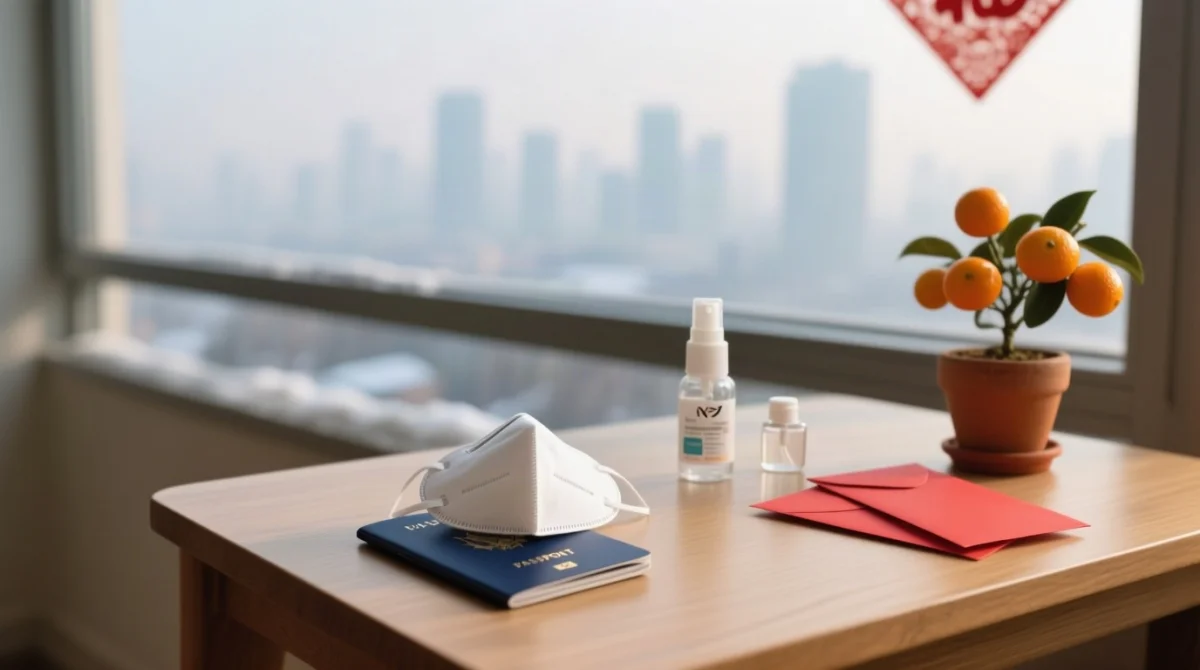
Air Quality & Pollution Considerations
Hanoi experiences its worst air quality from December to February, when temperature inversions trap pollutants and AQI readings spike. Masks are advisable for sensitive visitors during this period. Vietnam’s Regional Climate & Seasonal Calendar positions autumn (September to November) as a safer window for air-quality-conscious travelers heading north.
Health & Mosquito Seasonality Guide
Peak mosquito and dengue fever risk coincides with the monsoon season from May to October, particularly in southern and central regions where standing water accumulates after heavy rains. The best time to visit Vietnam for minimal insect-borne disease exposure aligns with the dry season (November to April), when humidity drops and breeding sites shrink.
Navigating Tet (Lunar New Year) in 2026
Tet Nguyen Dan falls on February 17, 2026. Hotels fill up well in advance, many restaurants and shops close for approximately one week, and domestic transport becomes chaotic. U.S. citizens should also expect e-visa processing delays, making early application essential for anyone targeting this popular travel period.
FAQ: Vietnam Weather and Travel Timing
What is the absolute best time to visit Vietnam?
The best time to visit Vietnam is November to April during the dry season. March to April is the narrowest window when all three climate zones experience pleasant conditions simultaneously. For region-specific timing: North Vietnam October to April, Central Vietnam February to August, and South Vietnam December to April with lowest humidity in December, January, and February.
When is the rainy season in Vietnam?
Rainy seasons vary by region. South Vietnam: May to October. Central Vietnam: September to December, with October and November as peak rainfall months. North Vietnam: April to October, with June, July, and August as the wettest months. Central Vietnam also faces typhoon season from August to November.
Is December a good time to visit Halong Bay?
December falls within the dry season in North Vietnam, making it a viable period for Ha Long Bay. However, temperatures can be cool, with Hanoi averaging 17 to 22°C (upper 50s to upper 60s°F) and mountainous areas dipping as low as 5°C (41°F). November is considered the best time of year for Ha Long Bay cruising, and March is also highly recommended.
What months should I avoid for typhoons in Central Vietnam?
Avoid August to November, with October and November carrying the highest risk. October is the wettest month in Da Nang. Central Vietnam’s typhoon season can cause flight cancellations, train delays, and ferry suspensions. The pleasant weather period for the central coast runs from mid-January to late August, with temperatures in the mid-30s°C (mid-90s°F).
When is Tet in 2026 and how will it affect my trip?
Tet 2026 falls on February 17, 2026. Hotels fill up well in advance, and many restaurants, shops, and museums close for about one week. Domestic transport becomes chaotic without early planning. U.S. travelers should also expect potential delays in e-visa processing. February is otherwise a popular travel month with warm, dry, and sunny conditions across much of the country.
What is the weather like in Vietnam in July?
July is wet in both North and South Vietnam. Hanoi experiences heavy rainfall as July is among its wettest months. Ho Chi Minh City averages 24 to 31°C (75 to 88°F) with 290mm of rainfall. Trekking and cycling are not suitable in the North due to heavy rainfall and storms. Central coast beaches reach 30°C (86°F) and are usually warm and dry.
Is it too cold to swim in Phu Quoc in winter?
No. Vietnam’s coastal waters remain warm enough for swimming year-round. Phu Quoc averages 27 to 30°C (81 to 86°F) in sea water temperature. December is a popular time to visit southern beach resorts, especially around Christmas, with Ho Chi Minh City air temperatures reaching highs around 32°C (90°F) and only 55mm of rainfall.
How does the monsoon affect domestic flights in Vietnam?
Typhoons from August to November in Central Vietnam can cause flight cancellations, train delays, and ferry suspensions, with October and November carrying the highest disruption risk. Travelers should build 1 to 2 buffer days into itineraries during these months. Domestic flights connecting Hanoi, Hue, Da Nang, and Ho Chi Minh City are most vulnerable when typhoons make landfall along the central coast.