

Trekking in Sapa for beginners in 2026 covers easy 7 to 12 km valley routes needing average fitness and waterproof gear. Cat Cat Village and the Lao Chai to Ta Van trail are the most accessible options. Guided day treks cost $19 to $25, while independent trekking is free and legal.
Preparing for beginner trekking in Sapa requires understanding the unique terrain and climate. With elevations reaching nearly 1,500 meters, the weather can shift rapidly from dry paths to muddy monsoon conditions. Selecting the right gear, such as moisture-wicking footwear and layered clothing, ensures comfort and safety on the trails.
This guide provides a comprehensive breakdown of what to expect, including specific fitness benchmarks, emergency protocols, and cultural etiquette for visiting H’Mong and Red Dao villages. Whether you choose a structured guided walk or a self-directed village circuit, having clear logistical data reduces friction and enhances your highland experience.
Planning and Best Routes for Beginners
Sapa’s beginner-friendly trails include the 7 km Cat Cat Village route and the 12 km Lao Chai to Ta Van valley circuit, with guided day treks costing $19-25 or free independent trekking on village paths.
Cat Cat Village Route
Beginner trekking in Sapa often starts with the Sapa-Cat Cat-Sin Chai route, a 7 km one-day walk ideal for families and first-timers. Cat Cat Village charges an entry fee of 150,000 VND (about $6) for persons over 1.3m. The path is well-marked with clear signage, and a guide is not needed.
Muong Hoa Valley: Lao Chai to Ta Van
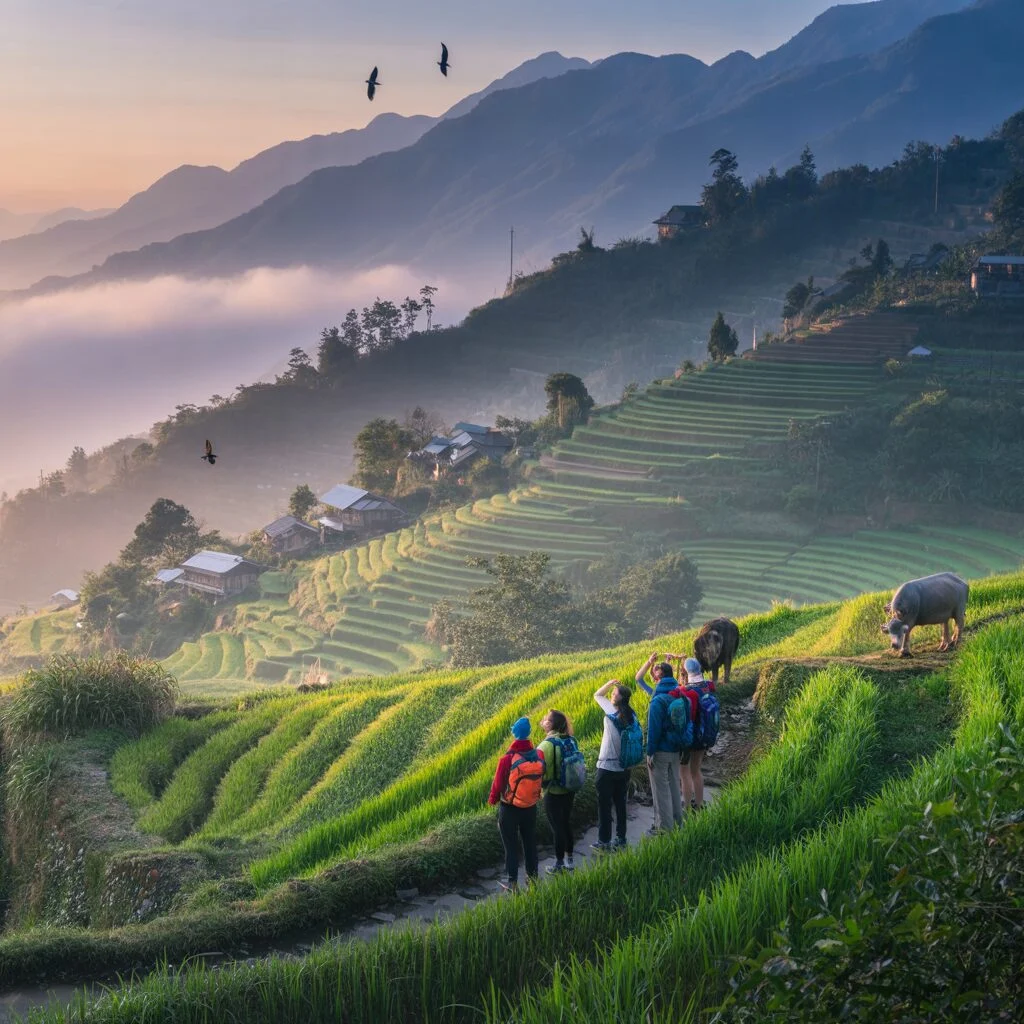
The Y Linh Ho-Lao Chai-Ta Van loop covers roughly 12 km through Muong Hoa Valley, passing Black H’Mong and Red Dao villages. Trekking in Sapa for beginners favors this route as the default valley day hike, offering gentle gradients across terraced rice fields.
Guided Tours vs. Independent Trekking
- Guided day treks: $19-25 per person; two-day homestay treks run $55-69.
- Independent trekking: Free and legal on village trails. If you want to plan a self-guided trek in Vietnam, note that Fansipan solo climbers must register through a licensed operator.
- Transport: Grab and motorbike taxis collect along Sapa’s narrow lanes to reach trailheads.
- Navigation: An eSIM or local SIM with data supports offline GPS navigation via Google Maps, which displays footpaths throughout the valley.
Fitness Requirements and Acclimatization
Beginners should walk 10-12 km with a 5 kg backpack on inclines and acclimatize gradually to Sapa’s nearly 1,500 m altitude before attempting steep, muddy descents. Trekking in Sapa for beginners demands baseline cardiovascular stamina and knee joint readiness rather than technical climbing skills.
Self-Assessment Checklist for Sapa Trails
- Distance capacity: comfortably walk 10-12 km on uneven terrain within 5-6 hours.
- Load tolerance: carry a 5 kg backpack uphill without shortness of breath halting progress.
- Descent readiness: knee joints handle steep, slippery paths and muddy trails without sharp pain.
- Acclimatization protocol: spend 10-14 days before arrival stair-climbing and walking moderate inclines to adapt cardiovascular routines to mild 1,500 m elevation.
Essential Gear for Humid Mountain Trails
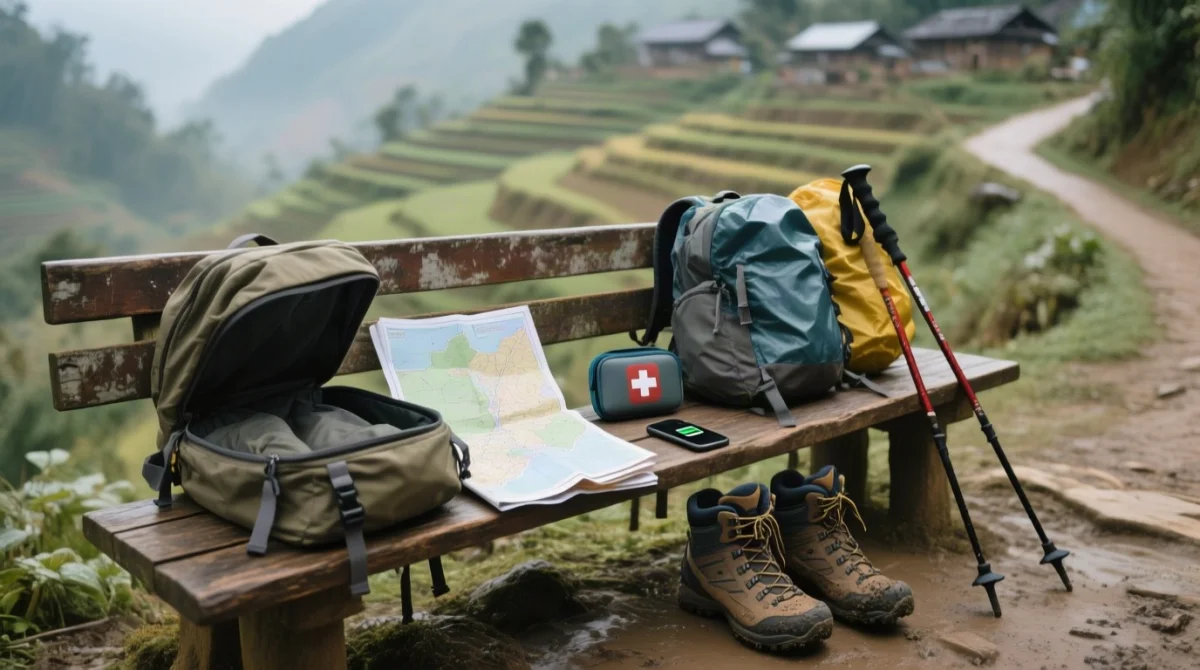
- Footwear: moisture-wicking shoes with good tread for slippery paths; consult a full Vietnam trekking gear and packing list for details.
- Clothing: layering and waterproof gear, including a rain jacket for sudden highland showers.
- Pacing: maintain steady, comfortable progress to absorb mountain vistas without overexertion.
Beginner trekking in Sapa demands moisture-wicking clothing and breathable layers, enabling hikers to maintain comfort despite the region’s persistent highland humidity.
What to Expect on the Trail
Trekking in sapa for beginners shifts dramatically with the seasons: dry, firm paths give way to muddy monsoon routes, and village infrastructure remains sparse. Planning around weather windows and knowing where restrooms and rescue options exist is essential for first-time hikers navigating Sapa’s 1,500 m highland terrain.
| Months | Trail Conditions |
|---|---|
| March-May & September-November | Dry trails; best trekking window |
| June-August | Rain, slippery paths, domestic holiday crowds |
| December-February | Properly cold, occasionally freezing; frost or snow on high trails |
Weather Conditions & Best Season to Trek
Beginner trekking in Sapa is safest during March-May and September-November, when trails stay dry and gradients remain manageable. Checking the best time to go trekking in Vietnam can help you align your trip with optimal weather windows. Monsoon months bring slippery paths that stress knee joints on descents, while winter cold can surprise unprepared hikers with frost at elevation.
Trail Practicalities: Toilets & Safety
Restrooms are limited in villages – map availability at key points like Cat Cat, Lao Chai, and Ta Van before starting. For emergencies, ambulance access in remote villages is unreliable; plan for self-evacuation to Sapa town and carry a charged phone with local emergency numbers. Confirm that your travel insurance for trekking in Vietnam covers self-guided village trekking before departure.
Interacting with Local Communities and Budgeting
Visitors to Sapa’s H’Mong and Red Dao villages should follow ethical tourism practices, and budget $19-25 for guided tours or free independent trekking, noting no ATMs exist beyond Sapa town.
Cultural Etiquette & Photography Rules
Beginner trekking in Sapa naturally passes through H’Mong and Red Dao villages, where respectful interaction matters as much as route selection. Do not buy bracelets from barefoot children, as this encourages skipping school; instead, spend money with parents running souvenir stalls. Always ask permission before photographing residents, and accept a polite refusal gracefully.
- Do: greet villagers in basic phrases, purchase handicrafts from adult vendors, and document respectful interactions discreetly.
- Don’t: distribute candy or money to children, photograph people without consent, or enter homes uninvited.
Budgeting & Cash Tips
Trekking in Sapa for beginners offers two primary cost models. Independent trekking on village trails is free and legal, while guided day treks cost $19-25 per person. For a complete Vietnam trekking cost breakdown, consider that two-day hill-tribe homestay treks run $55-69 per person, and premium private group tours reach $100. Cat Cat Village charges an entry fee of 150,000 VND (about $6) for persons over 1.3m.
- Last ATM: Sapa town only; smaller villages like Lao Chai and Ta Van have none.
- Daily cash: carry enough VND for meals, water, and village fees before departing town.
- Payment: homestays and local vendors accept cash exclusively.
Frequently Asked Questions (FAQ)
Is trekking in Sapa safe for beginners?
Yes, trekking in Sapa is safe for beginners who choose appropriate routes like the Cat Cat Village loop or the Muong Hoa Valley trail. However, trails can be steep and muddy depending on the season. Beginners should carry offline GPS navigation, follow safety protocols, and be prepared for self-evacuation in remote areas where ambulance access is limited.
Can I go trekking in Sapa without a guide?
Yes, walking without a guide on village trails is legal and normal. Independent trekking in Sapa is free, and you can navigate using Google Maps, which shows footpaths. However, if you plan to climb Fansipan, you must register through a licensed operator. Hiring a private family guide costs about $40 per person.
What is the best time of year for beginner trekking in Sapa?
The best trekking months are March to May and September to November. During these periods, the trails are dry, making them safer for beginners. Avoid June to August due to rain and slippery paths, and be aware that December to February can be properly cold, occasionally bringing frost or snow on high trails.
How difficult are the beginner trekking routes in Sapa?
Beginner routes in Sapa range from 7 to 12 km and are rated as easy. The Cat Cat Village route is a short 7 km walk ideal for families, while the Y Linh Ho to Lao Chai to Ta Van route is a 12 km classic valley day. Despite the easy rating, terrain can be steep and very muddy depending on the season.
Are there ATMs available along the trekking trails in Sapa?
No, ATMs are unavailable in smaller villages along the trekking routes. The last ATM is located in Sapa town. You must withdraw enough cash before starting your trek to cover daily expenses, including meals, water, and village entry fees like the 150,000 VND fee for Cat Cat Village.
What level of fitness is needed for trekking in Sapa for beginners?
Beginners need the ability to walk 10 to 12 km with a 5 kg backpack on inclines. Knee joint readiness for steep descents is also required due to the muddy and uneven terrain. Gradual acclimatization to the 1,500 meter altitude is recommended to prevent overexertion and ensure a safe hiking experience.
Do I need travel insurance for trekking in Sapa?
Yes, carrying travel insurance is highly recommended. You should verify if your standard travel insurance policy covers self-guided village trekking and medical emergencies. Since ambulance access in remote villages is limited and self-evacuation may be necessary, having a policy that covers mountain rescue and medical evacuation is crucial for your safety.
What should I pack for a day trek in Sapa?
Pack lightweight, humidity-resistant gear, including a rain jacket that can be purchased at the Sapa market. Wear comfortable shoes with good tread and dress in layers to handle changing weather. Bring an eSIM or local SIM for data, offline GPS navigation, and enough cash for village entry fees and meals.