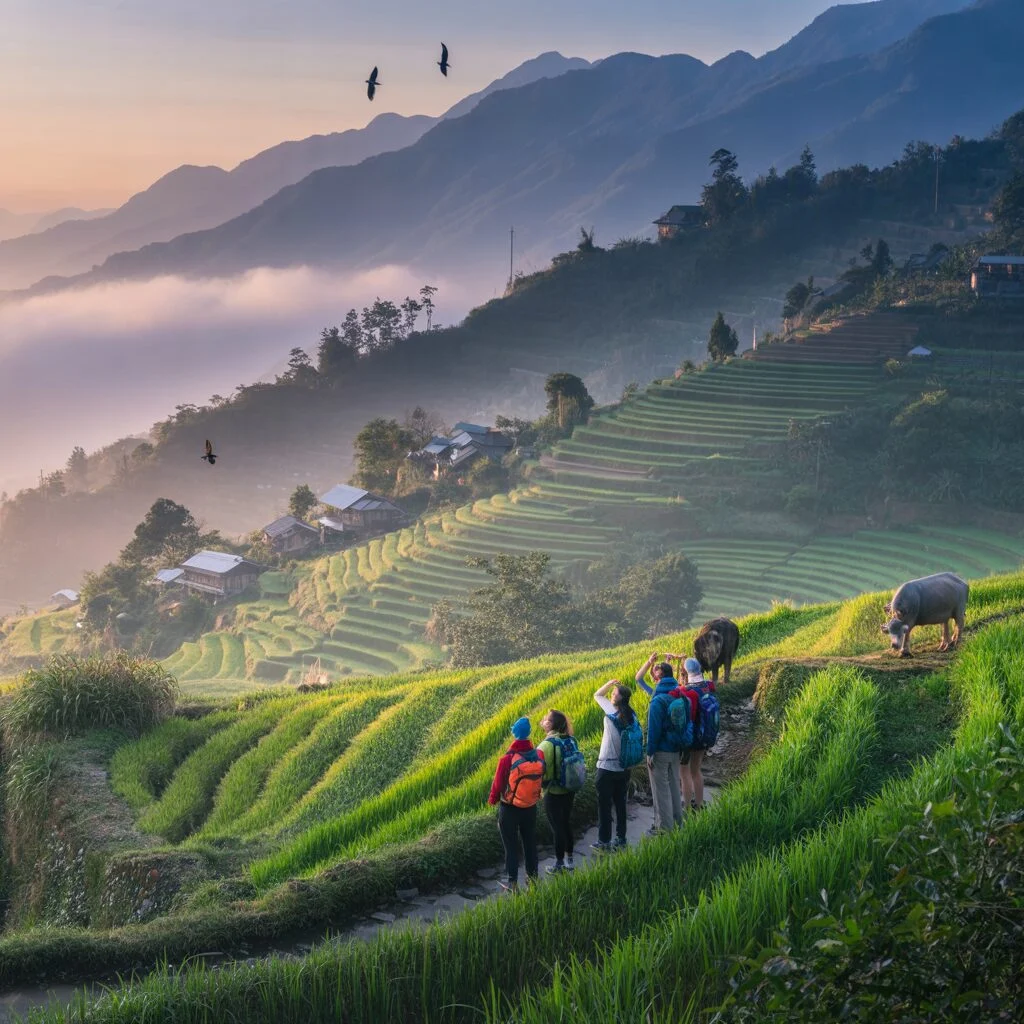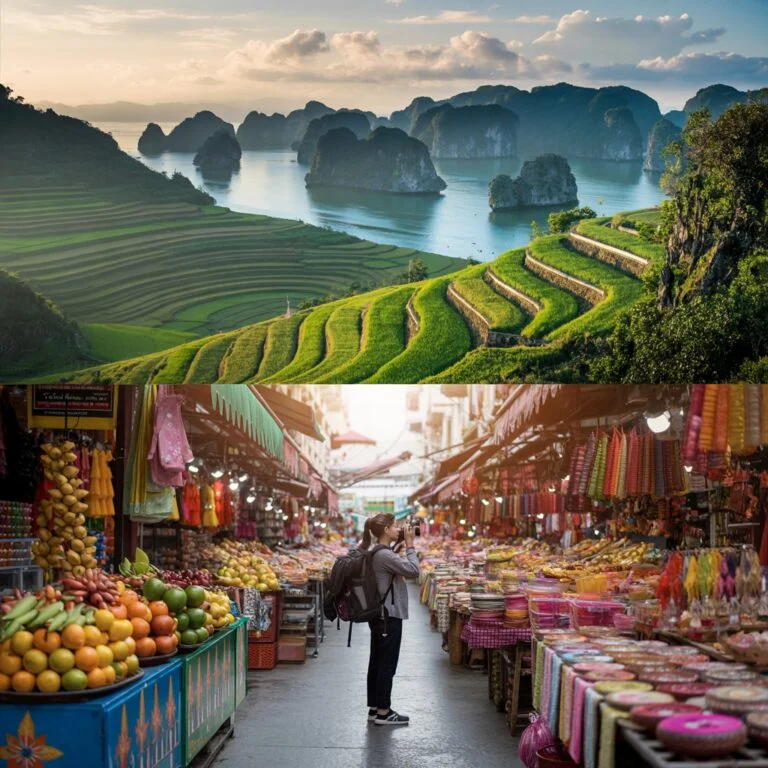



When comparing sapa vs ha giang trekking, Sapa delivers self-guided valley trekking through terraced rice fields with established infrastructure at $85 to $149 per tour. Ha Giang offers rugged 3 to 5 day motorbike loop adventures through limestone karst peaks starting at $40 per day. Choose Sapa for accessible hiking; choose Ha Giang for adventure.
Sapa features well-established trail networks, reliable infrastructure, and easier accessibility from Hanoi, making it ideal for first-time visitors and mixed fitness levels. Ha Giang requires a guided motorbike loop or car tour to navigate remote limestone karst peaks, border zone permits, and off-the-beaten-path trail conditions.
Both destinations provide unique cultural encounters with ethnic minority homestays. Sapa centers on Black Hmong and Red Dao villages, while Ha Giang offers Hmong, Tay, Dao, and Nung communities with less commercialization. Budget-friendly trekking packages and homestay accommodation costs vary, with Sapa carrying higher touristic markups.
Landscape & Core Experience: Trekking vs. Riding
Sapa features terraced agricultural landscapes in Muong Hoa Valley; Ha Giang’s Dong Van Karst Plateau showcases limestone peaks along Ma Pi Leng Pass.
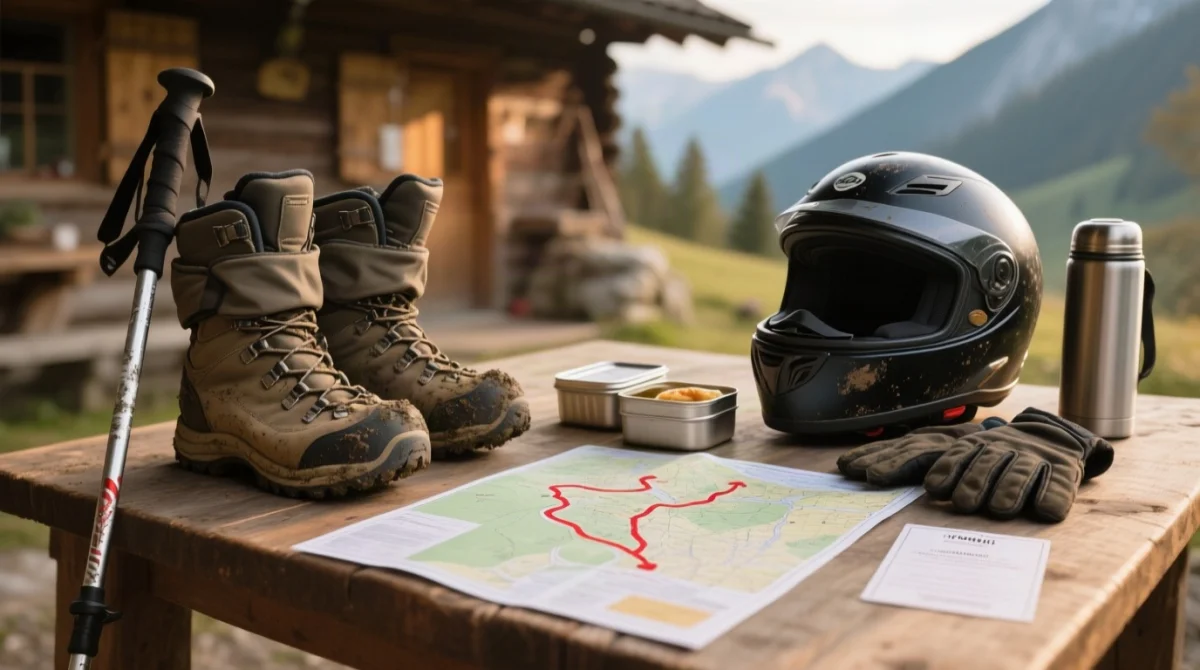
Sapa vs Ha Giang trekking establishes a clear divergence in trail architecture. Sapa delivers self-guided walking treks of 5 to 15 km/day through Muong Hoa Valley and Ta Van village, where established paths cross terraced rice fields. Ha Giang demands a motorbike loop covering 100 to 150 km/day across limestone karst terrain with barely any flat ground, utilizing an Easy Rider or self-drive option requiring a valid license. The Nho Que River gorge and Ma Pi Leng Pass define Ha Giang’s off-the-beaten-path trail conditions, while Sapa’s Fansipan summit reaches 3,143m.
Key Routes & Highlights
Sapa’s hardest trek is the Fansipan 1-day route: 24 km, 10 to 12 hours, starting at 6 AM from Tram Ton Pass with lunch at the 2,800m camp. Ha Giang trails start from small villages, not Ha Giang city itself. A 4-day mixed tour combines 1 day trekking with 3 days by motorbike, passing Dong Van, Lung Cu Flag Tower, and Du Gia waterfall.
Fitness Requirements & Difficulty
Sapa vs Ha Giang trekking dictates distinct physical demands. For those new to the region, trekking in Sapa for beginners offers a gentler introduction before tackling Ha Giang’s rugged terrain. Local guide fee structures and weather-dependent route adjustments shape both experiences. Ha Giang suits younger travelers; those over 30 should join a private group or self-drive rather than standard group tours.
Cost Comparison & Logistics
Sapa vs Ha Giang trekking directly influences daily expenditure, as budget-friendly trekking packages in Sapa start at $85 for a 2-day tour and $139-$149 for 3-day options, while Ha Giang loop tours range from $40 to $407. For a detailed Vietnam trekking cost breakdown, homestay accommodation costs begin at $8.50/night in both regions, though Sapa carries a touristic markup on mid-range and comfort tiers.
| Category | Sapa (per day) | Ha Giang (per day) |
|---|---|---|
| Backpacker | Homestay $8.50-$15 + food $5-$10 | Ban Tuy Homestay $8.50 + meals $3-$7 |
| Mid-range | Hotel $30-$60 + dining $10-$20 | Royal Hotel $19 or Truong Xuan $26 + food $5-$10 |
| Comfort | Boutique $60-$120 + dining $20-$35 | Best available + tours $136-$407 |
Combined 6-day packages cost $345-$380; Ha Giang responsible tourism treks start at $99, all-inclusive from Hanoi from $500/person. Sapa sits 300 km from Hanoi via sleeper train (departs 10 PM, arrives Lao Cai 6 AM + 1h transfer) or limousine bus (6-7h). Ha Giang is 292 km via bus from My Dinh station ($10, 6-7h); no train is available.
Permits & Local Regulations
Sapa vs Ha Giang trekking diverges sharply on permit and registration requirements. Sapa requires no special permits. Ha Giang requires a border permit costing approximately $10, obtained from the Ha Giang Immigration Office for the Dong Van Geopark area. For broader guidance on Vietnam trekking permits and guide rules, seasonal monsoon impact assessments affect route viability in both regions during July-August.
Practical Tips: Money & Connectivity
ATMs are available in Sapa town but limited or nonexistent in remote Ha Giang trekking valleys. Mobile networks are reliable in Sapa and unreliable in Ha Giang valleys-carry sufficient cash for the entire loop.
Cultural Immersion, Seasons & Health Safety
Sapa vs Ha Giang trekking defines ethnic hill tribe cultural encounters through distinct village networks: Sapa’s Hmong, Dao, Tay, and Giay communities sit along established valley routes, while Ha Giang’s H’mong, Tay, Dao, and Nung villages maintain rural tourism authenticity far from the tourist circuit.
Ethnic minority homestays diverge sharply. Sapa’s Ta Van village hosts Sapa Plum Eco House with peaceful atmospheres and set menus at nearby Samôc restaurant. Ha Giang’s Ban Tuy Homestay offers floor mats and mosquito nets from $8.50/night, reflecting simpler infrastructure. Multi-region circuit planning benefits from Sapa’s wider restaurant range versus Ha Giang’s basic cuisine and Happy water traditions.
Food & Dietary Restrictions
Sapa accommodates vegan and vegetarian needs across its developed restaurant scene. Ha Giang homestays offer simpler, basic cuisine where guides speak limited English, complicating dietary requests in remote areas.
Altitude & Health Safety
Sapa vs Ha Giang trekking demands altitude acclimatization schedules for Fansipan’s 3,143m summit; the 1-day trek reaches a 2,800m camp by lunch. Travelers concerned about hiking health and safety in Vietnam should note that seasonal trail accessibility windows favor March-May and September-November for Sapa, and September-November for Ha Giang’s clear, dry conditions with November buckwheat flowers. For a broader overview of the best time to go trekking in Vietnam, monsoon season and fog visibility deteriorate in July-August, increasing landslide risk. Ha Giang in December presents post-harvest mud. Travelers with heart problems or serious medical conditions should avoid combined packages.
Combined Itineraries & Responsible Tourism
Sapa vs Ha Giang trekking rewards travelers who combine both regions: a direct bus connects them in approximately 6 hours, and the optimal sequence is Sapa first, then Ha Giang. Sapa and Ha Giang do not overlap in landscape or experience, making hybrid itineraries feasible across 5 to 7 days. Combined 6-day packages cost $345 to $380 per person. Travelers arriving via overnight sleeper coach from Hanoi can sequence both highland zones without backtracking.
Combining Both Destinations
A direct bus route links Sapa and Ha Giang in roughly six hours. The recommended sequence – Sapa first, then Ha Giang – minimizes transit fatigue and escalates adventure intensity. Combined 6-day packages ($345-$380) cover Muong Hoa Valley trekking and the full Ha Giang loop, including Dong Van, Ma Pi Leng Pass, and Du Gia waterfall.
Ethical Photography & Community Support
Sapa vs Ha Giang trekking demands community-based tourism certifications when selecting homestays. Eco-friendly options range from $8.50/night (Ban Tuy Homestay, Ha Giang) to $26/night (Truong Xuan Resort). Sapa Sisters models ethical practice by employing local women guides; Ha Giang responsible tourism treks start at $99. Practice ethical photography in ethnic minority villages by asking permission and avoiding exploitative tourism. Sapa’s muddy valley trails require proper trekking gear and packing including waterproof clothing, hiking boots, and layers; Ha Giang’s windy passes demand a windbreaker, warm layers, and dust protection for motorbike riding. Sapa offers more gear rental options; Ha Giang has limited availability.
FAQ: Sapa vs Ha Giang Trekking
Is Sapa or Ha Giang better for independent trekking?
Sapa is better for independent trekking with its well-established trail network, no permit requirements, and solid infrastructure. Ha Giang trails start from remote villages, guides speak limited English, and a permit costing approximately $10 is required for the Dong Van area.
How much does it cost to trek in Ha Giang compared to Sapa?
Ha Giang is more affordable for food and accommodation, with homestays from $8.50 per night, while Sapa has touristic markups. However, Ha Giang tours are not cheap: 3-day small group tours range from $40 to $136. Sapa 2-day treks start at $85, and 3-day tours at $139 to $149. Combined 6-day packages cost $345 to $380.
Do I need a permit for trekking in Ha Giang in 2026?
Yes. A permit costing approximately $10 must be obtained from the Ha Giang Immigration Office for the Dong Van Geopark area. Sapa requires no special permits for trekking.
Can I visit both Sapa and Ha Giang in one trip?
Yes. A direct bus connects Sapa and Ha Giang in approximately 6 hours. The recommended sequence is Sapa first, then Ha Giang. Combined 5 to 7 day itineraries are feasible, and 6-day packages are available from $345 to $380.
What is the best time of year to go trekking in Northern Vietnam?
September to November offers the best weather for both destinations, featuring dry conditions and limited fog. March to May is also good for comfortable temperatures. Avoid July and August due to monsoons and landslide risk. October to December is optimal overall for northern Vietnam trekking.
Are there ATMs available on the Ha Giang trekking loop?
ATM access is severely limited or nonexistent in remote Ha Giang trekking areas. Carry sufficient cash for the entire loop. Sapa town has reliable ATM access as an established tourist hub with solid infrastructure.
Which destination is better for seeing ethnic minority villages?
Both offer authentic encounters but differ. Sapa features Hmong, Dao, Tay, and Giay villages with more commercialized interactions. Ha Giang offers Hmong, Tay, Dao, and Nung communities with less tourist traffic and more remote, less commercialized experiences.
Is altitude sickness a risk when trekking in Sapa or Ha Giang?
Altitude sickness is a risk on Fansipan at 3,143 meters, especially on the 1-day trek reaching 2,800 meters by lunch. Ha Giang’s high mountain passes also pose physical strain. Travelers with heart problems or serious medical conditions should avoid strenuous high-altitude treks.