

To plan a self-guided trek in Vietnam, map routes offline using GPS apps and maintain a daily mileage pacing of 4 to 7.5 miles. Book inter-provincial transport to trailheads, secure village homestays, and carry crisp VND cash. Pack waterproof gear, verify permits, and prepare for a safe, independent adventure.
Organizing an independent multi-day trek requires structured route design and logistical coordination. Travelers must secure homestays in advance, arrange moto-taxi trail handoffs, and implement a mobile dead zone protocol. Understanding the rice terrace microclimate and monsoon trail degradation ensures a realistic, safe hiking pace across remote highland regions.
This guide provides actionable frameworks for safety, pacing, and cultural immersion without relying on licensed operators. From border zone permit checks to VND cash management, every step is designed to bridge the gap between unguided exploration and a fully prepared, self-directed hiking journey.
Best Time and Regions for a Self-Guided Trek in Vietnam
The best time for a self-guided trek in Vietnam is October to December in the North and March to May in the Central Highlands.
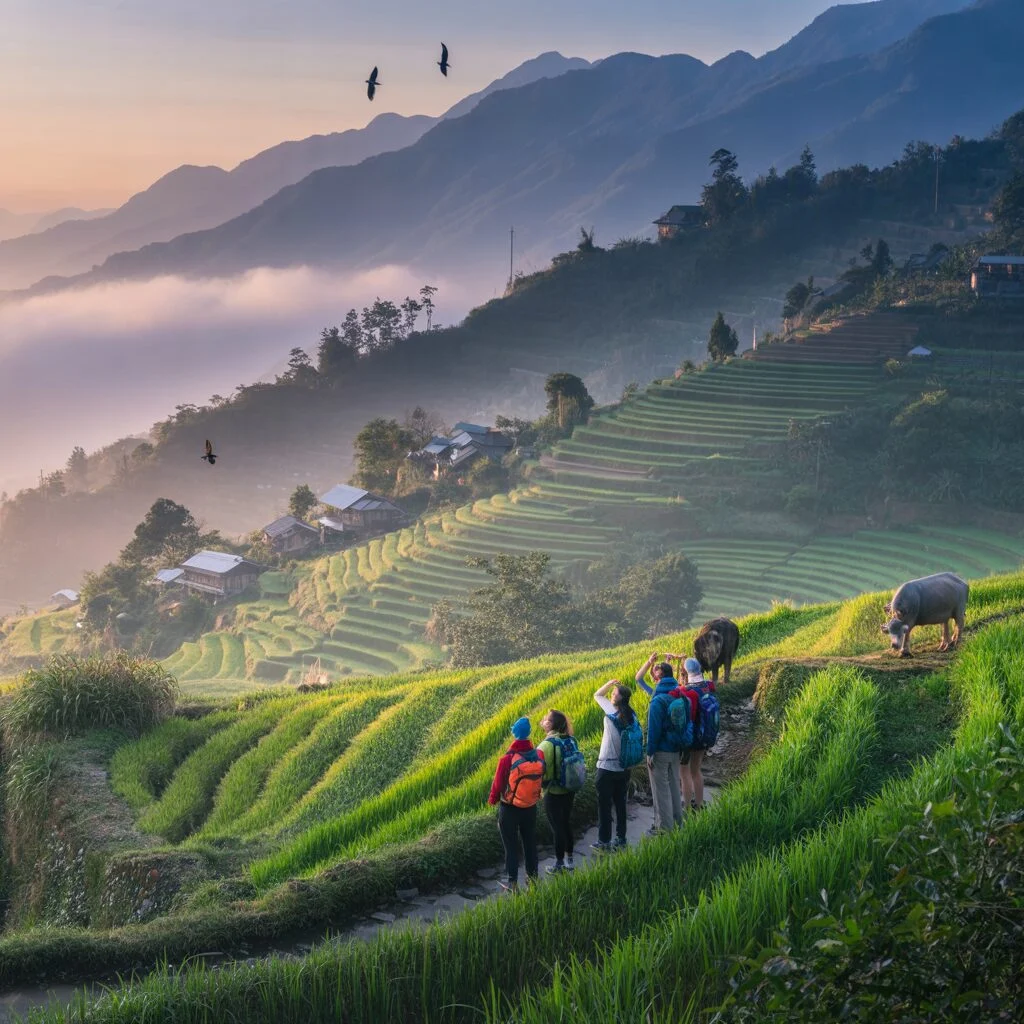
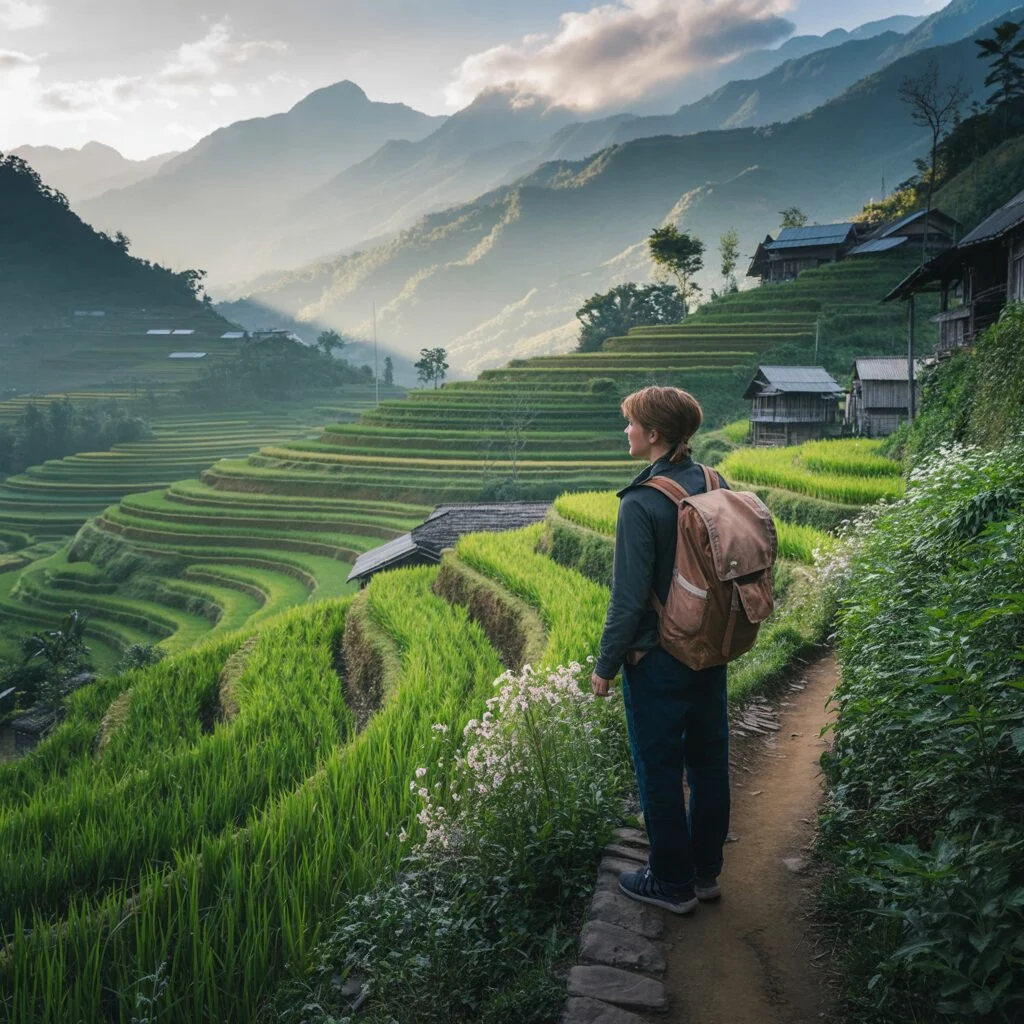
Self-Guided Multi-Day Trekking in Vietnam maps trail corridors across three distinct seasonal zones. Northern regions, including Sapa and Ha Giang, offer optimal conditions from October to December, when skies clear and trail surfaces stabilize after monsoon season. The Ha Giang Loop, a 350 km motorbike circuit near the Chinese border in the Tonkin Alps, anchors the far-north corridor. Sapa multi-day hikes range from 2 to 14+ days at moderate-to-difficult difficulty, using village homestays as overnight hubs. Critically, Sapa trails are unmarked, making offline GPS routing a non-negotiable planning layer.
Self-Guided Multi-Day Trekking in Vietnam allocates daily mileage targets between 4 and 7.5 miles per day, accounting for hilly sections and muddy trails that slow progress. Central Vietnam peaks from March to May, while the South favors December and January. Trekkers should check seasonal weather patterns and research regional trail regulations before locking in dates, as monsoon trail degradation can render specific routes impassable without warning.
Getting to the Trailhead: Transport Options in Vietnam
Travelers can reach remote trekking trailheads in Vietnam by taking night trains from Hanoi to Lao Cai, intercity buses, or moto-taxis.
Self-Guided Multi-Day Trekking in Vietnam coordinates inter-provincial transport well in advance, starting with the night train from Hanoi to Lao Cai (Sa Pa). Alternatively, a limousine or bus transfer from Hanoi to Sapa takes approximately 5 hours. For deeper highland access, a moto-taxi covers 10 km uphill from Lai Chau town in about 30 minutes, paid in VND – though a classic taxi is recommended as the safer, easier solution. Trekkers arrange the moto-taxi trail handoff at the main bus station in Lai Chau town.
Self-Guided Multi-Day Trekking in Vietnam treats luggage transfer service as unavailable on Sapa hikes – hikers carry a day pack only and store main luggage at the hotel. To complete the loop, a 4-hour drive returns trekkers to Noi Bai International Airport in Hanoi. Direct flights from San Francisco to Ho Chi Minh City are available for the return leg, making Hanoi the practical start airport and Ho Chi Minh City the end airport for a cross-country itinerary.
Where to Stay: Homestays and Responsible Trekking
Independent trekkers in Vietnam should book local homestays in advance to secure basic amenities and practice responsible trekking etiquette in ethnic minority villages.
Self-Guided Multi-Day Trekking in Vietnam integrates a village homestay network directly into itinerary design, transforming rural hospitality into a logistical cornerstone. In the Sapa to Ta Van route, trekkers stay with H’mong, Dzao, and Zay families in basic homestays where meals are provided. Sapa town also offers 3-star hotels with private bathrooms, bed linen, and towels for rest nights between legs.
Wild camping remains viable in the Lai Chau area, where trekkers sleep in hammocks on trees following Leave No Trace principles, with very little danger from people or animals. Self-Guided Multi-Day Trekking in Vietnam requires cultural awareness: countryside residents trek only to hunt or gather wood, not for recreation, so encounters on unmarked trails carry different social expectations. The Bac Ha Sunday Market, described as becoming “human zoos” per 2019 reporting from, raises ethical concerns that responsible trekkers should weigh before visiting.
Step-by-Step DIY Route Construction & Offline Navigation
Build a custom independent trekking route in Vietnam using offline mapping tools like or Gaia GPS, calculating a realistic hiking pace of 4-7.5 miles daily.
-
Download offline regions before departure. Self-Guided Multi-Day Trekking in Vietnam relies on cached offline GPS routing through apps such as, Gaia GPS, AllTrails, and the Backcountry app, which field sources describe as critical for finding trails. Sapa trails are explicitly unmarked, making pre-loaded maps non-negotiable.
-
Set waypoints and calculate daily mileage pacing. Allocate 4-7.5 miles per day as a sustainable baseline. On the Sapa-to-Ta Van route, Day 4 and Day 5 each cover 13 km, illustrating how valley legs demand precise pacing rather than arbitrary distance targets.
-
Mitigate trail marker ambiguity and GPS drift. Self-Guided Multi-Day Trekking in Vietnam compensates for sparse signage by anchoring waypoints to permanent terrain features. Rice terrace microclimate effects shift trail conditions rapidly, so cross-reference cached maps with visible landmarks at every junction.
-
Validate elevation and access points. In the Lai Chau area, the real trail starting point sits at 1,500 m elevation, roughly a two-hour walk from the nearest mountain village. Confirm ascent profiles against your fitness baseline before locking the itinerary.
Estimating Your Independent Daily Budget in Vietnam
An independent backpacker trek route in Vietnam costs significantly less than pre-packaged tours, requiring trekkers to carry perfect condition VND bills for rural homestays and food.
Pre-packaged options illustrate the premium: Butterfield & Robinson’s Northern Vietnam walking tour costs USD $5,700 per person, while Home Comforts’ 7-day Sapa tour starts at AUD $1,690 (AUD $500 deposit, balance due one month before departure). The Son Doong cave expedition runs USD $3,000 for four days. Planning a self-guided trek in Vietnam eliminates these operator margins entirely.
Self-Guided Multi-Day Trekking in Vietnam demands rigorous VND cash management: ATMs exist only in Sapa and Hanoi, so trekkers must withdraw sufficient funds before departing for rural sections. Bring USD cash for smaller purchases, but ensure all bills are in perfect condition or they may not be accepted. Moto-taxi payments to trailheads are settled exclusively in VND.
| Expense Category | Cost Notes |
|---|---|
| Homestay (basic, meals included) | Paid in VND; Ta Van-style accommodation |
| Guesthouse/hotel (3-star, Sapa) | Own bathroom, linens provided |
| Local transport (bus/limousine) | Hanoi to Sapa approx. 5 hours; paid in VND |
| Moto-taxi to trailhead | 10 km, ~30 min, paid in VND |
| Pre-packaged tour comparison | USD $5,700 (B&R) / AUD $1,690 (Home Comforts) / USD $3,000 (Son Doong) |
Essential Gear, Permits, and Safety Protocols
Self-Guided Multi-Day Trekking in Vietnam demands waterproof hiking shoes, rainproof layers, and a small backpack with waterproof cover to handle hilly sections and muddy trails. Warm clothes are essential from November through March, when highland temperatures drop sharply.
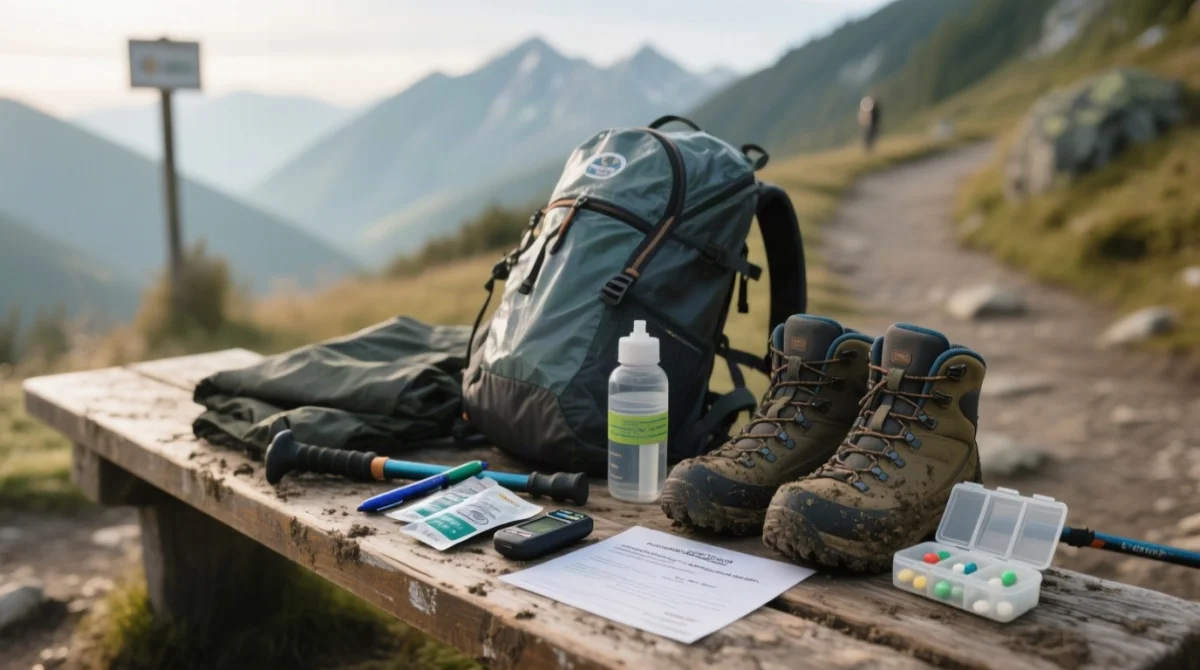
- Gear: Hiking pole(s), rainproof jacket and trousers, shirts, pants, socks – no luggage transfer service exists on Sapa hikes, so carry a day pack only and store main luggage at your hotel.
- Permits: Fansipan mountain requires permits and guides; Ha Giang province sits near the Chinese border, making a border zone permit check mandatory. US citizens must arrange an e-visa before departure – verify current requirements through the Vietnam Immigration portal as an external source.
- Safety: Stock up on water purification tools, as a reusable bottle alone is insufficient. Trailhead elevations reach 1500 m in the Lai Chau area, requiring altitude sickness prevention. Travel insurance covering medical costs, cancellations, and valuables is strongly recommended.
Self-Guided Multi-Day Trekking in Vietnam establishes a mobile dead zone protocol – cell coverage drops in unsupported mountain sections, so download offline GPS routing and carry a satellite communicator for emergencies.
FAQ
Do I need a guide for trekking in Vietnam?
No, a guide is not strictly required for all routes, allowing you to plan a self-guided trek in Vietnam. However, certain areas like Fansipan mountain explicitly require permits and guides. For unmarked Sapa trails, hiring local indigenous Hmong day-guides per section is an option to mitigate navigation errors.
What is the best time of year to trek in northern Vietnam?
The best time for a self-guided trek in Vietnam, specifically the northern region, is October to December. Another favorable window is March to May. These periods help you avoid monsoon trail degradation and ensure safer hiking conditions across the highland terrain.
How much does it cost to do a self-guided trek in Sapa?
Independent trekking is vastly cheaper than pre-packaged tours, which can cost USD $5,700 per person or AUD $1,690. While exact independent daily costs vary, you must carry VND cash for rural homestays, street food, and moto-taxis, as ATMs are only available in Sapa and Hanoi.
Are trekking permits required for Ha Giang?
Yes, Ha Giang province is located near the Chinese border, making it a designated border zone. You must secure necessary trekking permits and perform a border zone permit check before departure. Always verify current checkpoint documentation requirements through external government portals prior to your trip.
How do I find homestays along the trail without booking in advance?
While booking local homestays in advance is recommended, especially during peak season, you can coordinate village pickup points upon arrival. The village homestay network is the primary accommodation solution in rural provinces. Carry sufficient VND cash, as card terminals and mobile wallets are unavailable in these remote areas.
What should I pack for a multi-day trek in Vietnam?
You must pack light for multi-day hikes. Essential gear includes a small backpack with a waterproof cover, sturdy waterproof hiking shoes, hiking poles, and rainproof jackets and trousers. Bring warm clothes for colder months between November and March, and prioritize pack weight optimization for hilly, muddy trails.
Is it safe to drink tap water or stream water while trekking?
No, a reusable water bottle is insufficient. You must stock up on water purification tools to treat stream or tap water. Implementing proper hydration systems and water purification methods is critical for preventing illness during a self-guided trek in Vietnam’s remote highland regions.
What happens if I get lost or injured on an unmarked trail?
Sapa trails are unmarked, making offline GPS routing essential. If lost or injured, a mobile dead zone protocol is necessary since cell coverage drops in unsupported sections. Carry satellite communicators for emergency communication, ensure you have travel insurance for medical evacuation, and know local emergency contact numbers.