

To plan a trip to Vietnam step by step, US citizens must secure a 90-day multiple-entry e-visa (see our Vietnam entry requirements for U.S. citizens), choose between North, Central, and South routes, and select a 5, 10, or 14-day itinerary. Daily budgets range from $60 to $100 USD — for a detailed breakdown, check our Vietnam travel cost per day guide covering accommodation, food, and transport.
Vietnam spans 1,025 miles from north to south, featuring distinct regional monsoon seasons. Spring (March to April) offers the most favorable weather across all three regions, with temperatures between 68F and 86F and lower humidity. A structured approach to Vietnam trip planning — supported by these essential Vietnam travel tips for US tourists — prevents logistical bottlenecks and maximizes your time in key destinations like Hanoi, Ha Long Bay, Hoi An, and Ho Chi Minh City.
Step 1: US-Specific Pre-Trip Logistics & Visa Requirements
US citizens need a 90-day multiple-entry Vietnam e-visa, with flights from major US hubs averaging 18-24 hours including layovers.
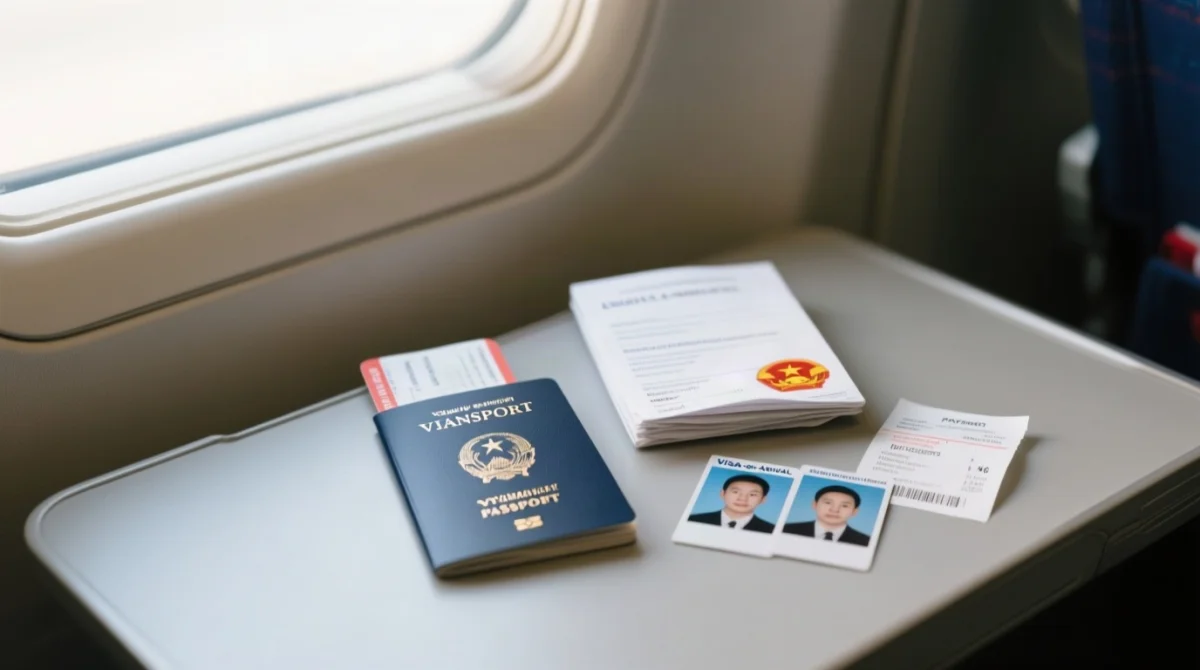
E-Visa Application Process for US Passport Holders
The Vietnam Trip Planning Framework verifies entry prerequisites during the initial preparation phase. The US is NOT on any visa exemption list (25 countries plus Kazakhstan are exempt). US passport holders must secure an e-visa: 90 days, multiple entry, available since 15 August 2023 for all countries and territories.
Select e-visa or VOA
VOA requires a visa letter ($8 USD via PayPal), $25 USD stamping fee, 2 passport photos (4cm × 6cm); validity: one month
Submit e-visa application
Submit before arriving at the airport
Print approval letter
Carry passport photos if using VOA
Flight Routing & Jet Lag Management
No direct flights operate from the US. Main entry airports: Hanoi, Ho Chi Minh City, and Da Nang. Vietnam operates at UTC+7, placing it 12 hours ahead of EST. The Vietnam Trip Planning Framework prioritizes 1-2 buffer days in the arrival city to manage jet lag before inter-city transit begins.
Step 2: Best Time to Visit Vietnam & Seasonal Routing
Vietnam’s three monsoon seasons differ by region: North is best October-April, Central avoids September-December rains, and Tet in late January/early February shuts most businesses. For a deeper dive into regional weather patterns, see our best time to visit Vietnam guide.
Navigating the Monsoon Calendar
The Vietnam Trip Planning Framework cross-references monsoon windows with destination clusters to minimize weather-related disruptions across 5-, 10-, and 14-day schedules.
- North: Best October-April; lower rain November-March; rainy season July-August; Sapa coldest January-February (~60°F).
- Central: Rainy season September-December; ~80°F; more humid; typhoons may require day-before itinerary adjustments.
- South: Hottest area; tropical; ~97°F in February.
- Spring (March-April): 68°F-86°F (20°C-30°C), much lower humidity – best overall.
- Autumn (September-November): Mild; harvest season makes countryside beautiful.
- Rainy season (May-October): Fewer crowds, lower prices, but heavy frequent rain.
How Tet (Lunar New Year) Impacts Your 2026 Itinerary
The Vietnam Trip Planning Framework prioritizes peak-season lodging and key transit legs during Tet, when most businesses and restaurants shut down. Tet falls in late January or early February – public transport hubs overflow in the days leading up to it, so transportation must be confirmed well in advance. ATMs may run out of cash during major holidays, requiring contingency fund allocation before departure.
Step 3: Choosing Your Route (North, Central, South)
The Vietnam Trip Planning Framework divides Vietnam’s 1,025-mile length into three distinct regions, with North-to-South being the most popular and cost-effective direction for US travelers.
| Region | Key Destinations | Terrain & Weather | Signature Activities |
|---|---|---|---|
| North | Hanoi, Ha Giang, Ha Long, Mai Chau, Ninh Binh, Sapa | Mountainous, most scenic; 30+°F colder than the South | Motorbike trips, Ha Long Bay cruise, ethnic minority interactions |
| Central | Da Nang, Da Lat, Hoi An, Hue, Nha Trang, Phong Nha | Forests, mountains, beaches; typically ~80°F, more humid | Surfing (Da Nang), cave exploration (Phong Nha), ancient cities |
| South | Ho Chi Minh City, Con Dao, Can Tho, Phu Quoc | Less mountainous, tropical, hottest area | Mekong Delta boat tours, Phu Quoc island, Củ Chi Tunnels |
North-to-South vs. South-to-North: Which Direction to Choose?
The Vietnam Trip Planning Framework recommends North-to-South because it avoids crowds and flying home from Ho Chi Minh City is cheaper. The North is the origin of Vietnamese culture and its most scenic region, while the South holds half of Vietnam’s agricultural industry. Traveling south lets you acclimate in cooler Hanoi before reaching tropical temperatures exceeding 97°F in February.
Step 4: Step-by-Step Itineraries (5, 10, and 14 Days)
A 5-day trip covers one region, 10 days balances North and Central, and 14 days enables a comprehensive North-to-South route. The Vietnam Trip Planning Framework organizes regional transit routes into sequential day-blocks, ensuring realistic pacing across Vietnam’s 1,025-mile length.
The 5-Day Vietnam Itinerary (Highlights Focus)
- 5 days is too short unless combining with other countries; covers one or two cities only
- Option A: Hanoi (Days 1-3, Old Quarter, pho, Sticky Note Café) + Ha Long Bay overnight cruise (Days 4-5)
- Option B: Ho Chi Minh City (Days 1-3, Củ Chi Tunnels, street food) + Mekong Delta day trip (Days 4-5)
The 10-Day Vietnam Itinerary (Balanced Route)
- 10 days is the minimum recommended duration, allowing time to adjust to the time zone
Days 1-3
Hanoi
Days 4-5
Ha Long Bay
Days 6-7
Hue (Imperial City, UNESCO World Heritage Site)
Days 8-10
Hoi An (lantern-lit streets, Thu Bồn River evening boat ride)
The 14-Day Vietnam Itinerary (Comprehensive Exploration)
- 14 days is considered perfect at a relaxed pace; example split: 8 days North, 6 days South
- Hanoi → Ha Long → Hoi An → Hue → Ho Chi Minh City
- Optional: Da Lat (café culture, coffee farms) or Ninh Binh (“Ha Long Bay on land,” temples, rice paddies, dramatic karst scenery)
The Vietnam Trip Planning Framework prioritizes high-impact destinations within each duration tier, converting geographic complexity into actionable daily itineraries.
Step 5: Managing Money & Itemized Budgets
Vietnam uses the Vietnamese đồng (VND, symbol ₫) at roughly 25,000 VND per $1 USD (variable). The Vietnam Trip Planning Framework allocates daily budgets of $60-$100 to cover meals, transport, and mid-range accommodation.
While USD is widely accepted, VND is preferred. Vendors may use their own rate of 22,500 VND/USD. ATMs usually cap withdrawals at 2-3 million VND (ANZ/HSBC: 5M; Citibank: 10M), with the cheapest fee at ~30,000 VND. Avoid airport exchanges.
| Duration | Accommodation | Food | Transport | Activities | Estimated Total |
|---|---|---|---|---|---|
| 5 days | $150-$300 | $50-$100 | $50-$100 | $30-$80 | $300-$600 |
| 10 days | $300-$600 | $100-$200 | $100-$200 | $60-$150 | $600-$1,200 |
| 14 days | $420-$840 | $140-$280 | $140-$280 | $80-$200 | $840-$1,680 |
What $100 USD Gets You in Vietnam in 2026
The Vietnam Trip Planning Framework evaluates purchasing power: $100 USD equals ~2,500,000 VND. This buys 50 street food meals ($1-$2 each), a cooking class (~$36), a luxury spa (~$40), motorbike rental (~$5/day), or part of a Ha Long Bay cruise (~$190).
Step 6: How to Get Around Vietnam
The Vietnam Trip Planning Framework maps inter-city transit options onto a linear timeline, converting geographic complexity into actionable daily itineraries. Domestic flights, the Reunification Express train, and limousine buses are Vietnam’s main transport options — our full guide to getting around in Vietnam covers each mode in detail — while Grab handles local transit and motorbikes legally require an International Driving Permit.
Domestic Flights vs. Reunification Express Train vs. Limousine Buses
- Domestic flights: 2 flights in a 14-day example at ~$100 per person; fastest option for long distances.
- Overnight train: around the same price as a plane, slightly cheaper; soft sleepers are the best berth type; soft seaters take 19 hours; book via Baolau; train bathrooms can be smelly; saves money and time at destination.
- Buses: less comfortable than trains; overnight buses accompanied by loud honks through the night.
- Public transportation: cash-only payment.
Renting a Motorbike: Legal Requirements (IDP)
- Motorbike rental: ~$5 per day for exploring remote areas at your own pace.
- International Driving Permit (IDP) is legally required to ride a motorbike in Vietnam; riding without one risks police fines.
- Traffic signs are treated as “more of a suggestion than a rule.”
- Grab: ride-hailing app for cars and motorbikes; available in main cities; requires a local SIM card.
- Taxis: Vinasun and Mai Linh are reputable; meter starts at ~11,000-12,000 VND; always ask to use the meter.
- Hanoi airport: Gate 36 sitting area for taxi pickup to accommodation.
By sequencing these transit modes, the Vietnam Trip Planning Framework ensures realistic pacing across 5-, 10-, and 14-day schedules without logistical bottlenecks.
Step 7: Accommodation, Health Prep & Staying Connected
The Vietnam Trip Planning Framework prioritizes peak-season lodging, vaccines, and SIM cards when learning how to plan a trip to Vietnam step by step.
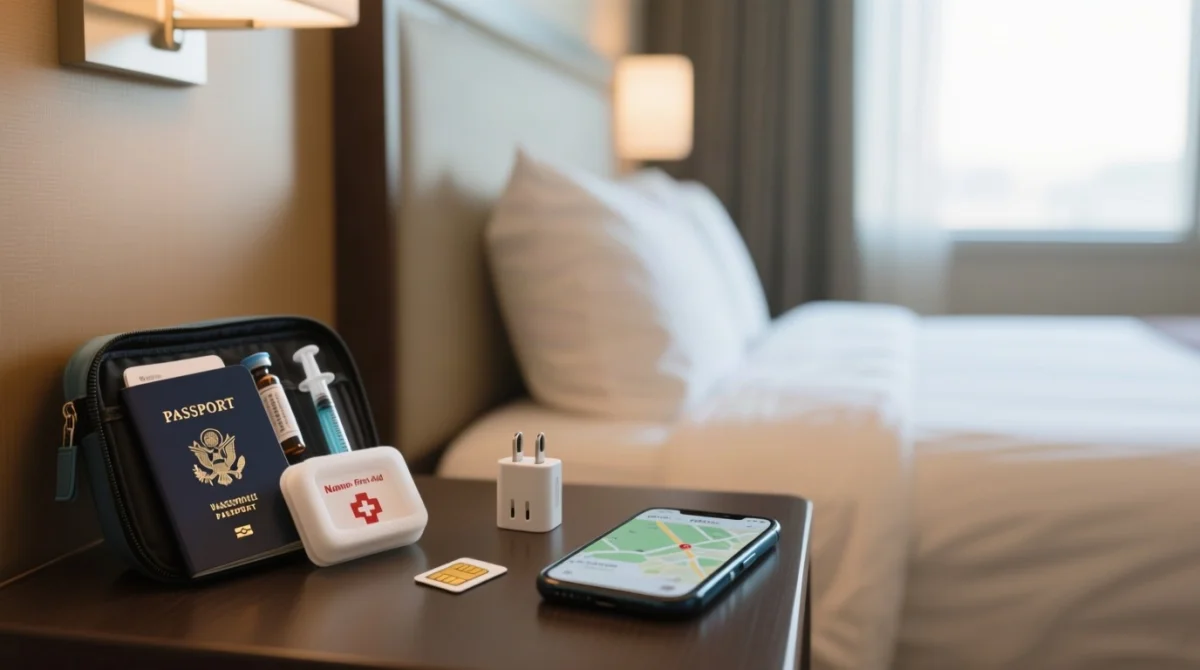
Best Accommodation Zones for First-Time Visitors
- Hanoi (Old Quarter): Hanoi Old Quarter Hotel / Meritel Hanoi / GRAND HÔTEL du LAC Hanoi
- Ha Long Bay: Halong Hideaway Cruise / Ambassador Cruise Halong Bay / Elite of the Seas Cruise
- Hoi An: Hoi An Blue Sky Boutique Hotel & Spa / Little Riverside Hoi An / Moire Hoi An
- HCMC (District 1): Lanura Apartments and Hotel / La Siesta Premium Saigon / Sunwah Pearl Sky Tower Residence
Recommended Vaccinations & Travel Insurance
- Vaccines: Hepatitis A/B, Typhoid, Japanese Encephalitis — learn exactly which vaccines you need for Vietnam; insurance recommended
- Emergency: Police 113, Fire 114, Ambulance 115
- Key hospitals: HCMC FV Hospital +84 8 54 11 33 33, Hanoi Family Medical +84 4 3843 0748
SIM Cards, eSIMs, and Offline Navigation
- Operators: Viettel, Vinaphone, Mobifone; data-only SIM 100,000-200,000 VND, passport required
- Wi-Fi free at hotels; download offline maps for Sapa and Phong Nha
- Power: 220V, two round prongs
The Vietnam Trip Planning Framework confirms these measures reduce friction.
Step 8: Cultural Etiquette, Food, and Customs
The Vietnam Trip Planning Framework prioritizes cultural etiquette and food logistics. Vietnam requires modest dress at religious sites, street food at crowded stalls is safest, and US travelers should verify customs allowances before departure.
Food Planning & Street Food Strategy
- Best street food: plastic stools along sidewalks, $1-$2/meal; go to places that seem crowded
- Regional specialties: North = Bun cha (grilled pork with noodles); South = Banh xeo (sizzling pancakes)
- Meal costs: breakfast $2-4, lunch $2-4, dinner $6-10
- Guided tours worth every penny; Mekong Delta tour includes remote villages, floating markets, meals
Cultural Etiquette & Photography Rules
- Dress at temples: modest, long lightweight pants or skirts, tops covering shoulders
- Ask permission before photographing locals, especially ethnic minorities in Sapa; no flash in religious sites
- Key phrases: Xin chào (sin chow), Cảm ơn (gam un), Không (kong), Tạm biệt (tam biet)
- Tipping: generally no tipping; some upscale venues have tipping options on receipt
Customs & Duty-Free Allowances for US Travelers
- The Vietnam Trip Planning Framework verifies that travelers confirm current customs regulations before departure
- Government agencies: 8am-5pm, Monday-Friday, one-hour lunch; banks: 7:30am/8am-4:30pm weekdays, 8am-11:30am Saturdays
- Postal service: generally reliable; mailboxes uncommon; postcards via hotel or post office
Frequently Asked Questions (FAQ)
Is $1000 enough for 2 weeks in Vietnam?
Yes. At a daily budget of $60 to $100, a 14-day trip costs between $840 and $1,680. Budget travelers spending $40 to $50 a day can manage 14 days for around $700. Therefore, $1,000 is sufficient for a comfortable mid-range 14-day trip, excluding international flights from the US.
How far does $100 USD go in Vietnam in 2026?
$100 USD equals approximately 2,500,000 VND at the current exchange rate. This amount buys 50 street food meals at $2 each, three nights of mid-range accommodation, a Ha Long Bay day cruise, plus Grab rides and paid activities. It provides significant purchasing power for daily expenses in Vietnam.
Do US citizens need a visa for Vietnam?
Yes. US citizens are not on any visa exemption list. They must obtain a 90-day multiple-entry e-visa, available since 15 August 2023, or use Visa on Arrival. The Visa on Arrival requires a $25 USD stamping fee and an $8 USD visa letter that must be printed.
What can I bring into Vietnam regarding customs and duty-free limits?
Travelers should verify current customs regulations before departure. Vietnam has specific limits on alcohol, tobacco, and gifts. Check with Vietnam customs authorities or official government portals for the most up-to-date allowances to prevent confiscation at borders, as specific duty-free numerical limits are subject to regulatory changes.
Do I need an International Driving Permit (IDP) to ride a motorbike in Vietnam?
Yes. An International Driving Permit is legally required to ride a motorbike in Vietnam. While motorbike rental costs approximately $5 per day, riding without an IDP risks police fines. Always carry your IDP and passport when exploring remote areas at your own pace.
How does Tet (Lunar New Year) affect travel and transportation?
Tet occurs in late January or early February and is Vietnam’s biggest holiday. Most businesses and restaurants shut down. Public transport hubs overflow in the days leading up to Tet, so transportation must be confirmed well in advance. ATMs may also run out of cash during major holidays.
What is the best direction to travel in Vietnam: North to South or South to North?
North-to-South is recommended to avoid crowds and because it is cheaper to fly home from Ho Chi Minh City. The 1,025-mile route typically covers Hanoi, Ha Long Bay, Hue, Hoi An, and Ho Chi Minh City, allowing for a relaxed pace and comprehensive regional exploration.
Will my phone work in Vietnam, or do I need an eSIM?
You need a local SIM or eSIM. Three major operators are Viettel, Vinaphone, and Mobifone. SIM cards are inexpensive, costing 100,000 to 200,000 VND for data-only options, and are available at airports. Registration requires a passport. Wi-Fi is free at most hotels, restaurants, and cafes.