

Weighing Vietnam vs Thailand for travel in 2026? Vietnam wins on budget, cultural depth, and dramatic landscapes, while Thailand offers better beaches, easier transport, and smoother infrastructure. Both are very safe with rich street food scenes. Choose Vietnam for adventure and value, Thailand for convenience and coastal resorts.
For US travelers planning a Southeast Asian getaway, the choice often comes down to specific priorities. Vietnam provides a rawer, more authentic street food scene alongside limestone karsts and rice terraces. Conversely, Thailand delivers a polished tourist infrastructure with crystal-clear island waters and world-class amenities. This guide breaks down the exact costs, safety metrics, and culinary experiences to help you decide.
Whether you are stretching a backpacker budget or seeking a luxury resort holiday, understanding the nuances between these two destinations is crucial. From visa requirements and ATM withdrawal fees to weather patterns and transportation networks, we compare the essential factors for a seamless 2026 journey.
Vietnam vs Thailand for Travel: Costs & Visas
Vietnam is cheaper than Thailand across most categories, with lower ATM fees and accommodation costs, though it requires a $50 e-visa for US citizens.
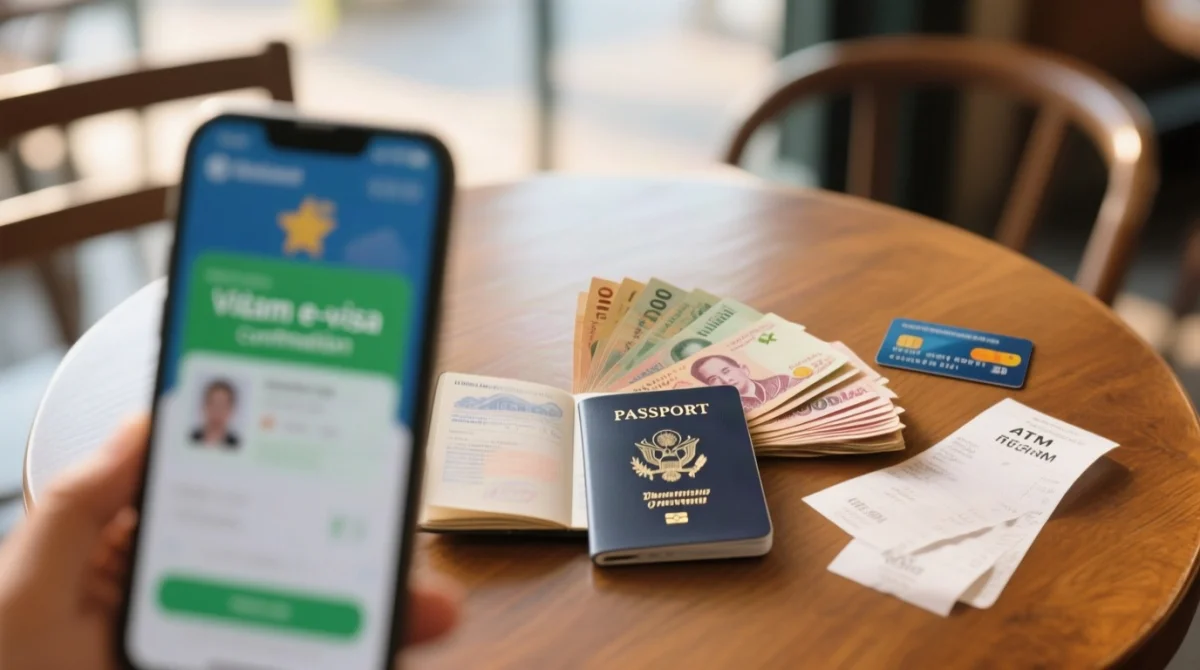
The Vietnam vs Thailand for travel cost comparison shows Vietnam winning on accommodation, alcohol, and coffee, while Thailand offers cheaper food, transport, and experiences. Bangkok costs approximately 50% more than Ho Chi Minh City according to Numbeo. ATM withdrawal fees highlight the gap: $2 per withdrawal in Vietnam versus $6 in Thailand.
Estimated Daily Costs (USD)
| Expense | Vietnam | Thailand |
|---|---|---|
| Accommodation (per night) | $20-40 | $50-60 (mid-range) |
| Dorm bed (per night) | N/A | $5 |
| Seafood hotpot | $10 | $30+ |
| Domestic flight (one-way) | $26 (HCMC to Da Nang) | $38 (BKK/DMK to Phuket) |
| ATM fee per withdrawal | $2 | $6 |
| Visa for US citizens | $50 (90-day multiple-entry e-visa) | Free (30 days, extendable to 60) |
US citizens entering Vietnam must obtain an e-visa before flying: a 90-day multiple-entry visa costs $50. Thailand grants 30 days visa-free on arrival, extendable to 60 days within the country. The Vietnam vs Thailand for travel visa landscape favors Thailand for short trips, while Vietnam’s 90-day window suits longer stays. Vietnam accepts cards and Apple Pay in some places; Thailand operates almost exclusively on cash.
Beaches, Landscapes & Food
The Vietnam vs Thailand for travel comparison favors Thailand for beaches and islands, while Vietnam wins on dramatic landscapes and fresher street food.
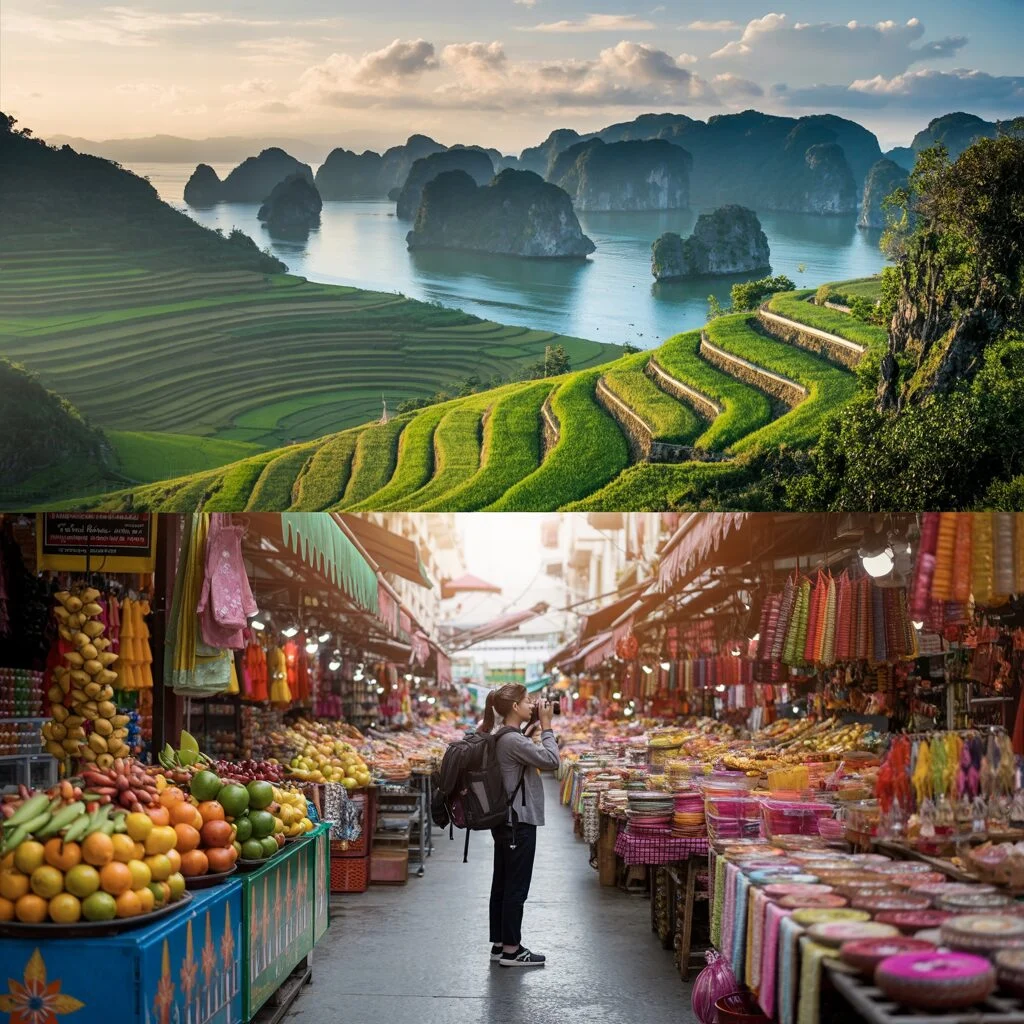
Thailand’s southern coast delivers warm, crystal-clear water across far more island destinations. Beach quality at Koh Lipe, Koh Lanta, and Phi Phi ranks as genuinely “next level.” Vietnam’s Da Nang beach is superb but overly regulated with development, and the sea tends to be rougher and less clear overall. The Vietnam vs Thailand for travel comparison also highlights that Thailand maintains 156 national parks versus Vietnam’s 34, though Vietnam’s landscapes offer more variety and wow moments: limestone karsts in Ninh Binh, rice terraces in Sapa, the Ha Giang Loop, and Ha Long Bay.
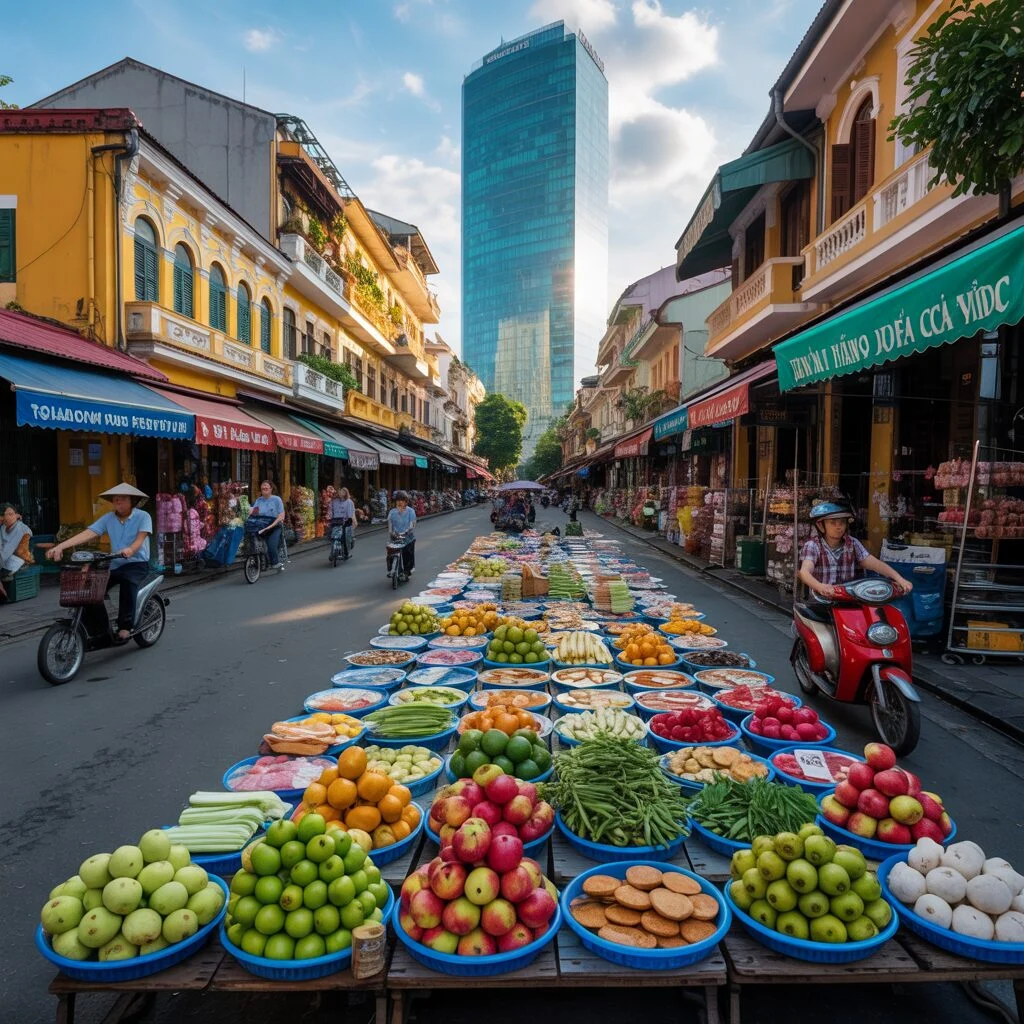
Culinarily, Vietnam serves lighter, fresher dishes like phở bò and egg coffee, with a rawer and more authentic street food scene. Thailand counters with bolder, spicier flavors including Massaman curry and pad thai with prawns, presented through a polished and tourist-friendly vendor culture.
Safety, Health & Infrastructure
Both Vietnam and Thailand are rated very safe for tourists, but Thailand features better transport infrastructure and Wi-Fi speeds up to 500 Mbps.
The Vietnam vs Thailand for travel comparison confirms both countries carry low crime rates, yet scam patterns differ. Vietnam employs dual pricing at many attractions, while Thailand sees recurring taxi-meter manipulation and jet-ski rental fraud. Traffic behavior also diverges sharply: Thai drivers stop for pedestrians, whereas Vietnamese drivers navigate around them. Tap water is unsafe in both countries; stick to bottled or filtered water.
Infrastructure favors Thailand. Bangkok’s BTS opened in 1999 and the MRT in 2004, while Hanoi’s first metro line launched in 2021 and Ho Chi Minh City’s in December 2024.
1999
Bangkok’s BTS opened
2004
Bangkok’s MRT opened
2021
Hanoi’s first metro line launched
Dec 2024
Ho Chi Minh City’s metro launched
Thailand ranks top 15 globally for Wi-Fi speed, reaching 500 Mbps; Vietnam sits at top 35. The Vietnam vs Thailand for travel comparison shows Thailand’s networks are more polished, while Vietnam’s developing infrastructure rewards extra planning.
Best Time to Visit & Culture
The Vietnam vs Thailand for travel comparison shows Thailand’s prime months are November to February, while Vietnam peaks in March to April or September to November.

- Thailand cool dry season: November to February brings pleasant temperatures but bigger crowds, especially in November.
- Thailand hot season: March to May, with April described as brutally hot.
- Thailand wet season: May to October; September brings proper wet-season rainfall, while mid-October marks improving conditions.
- Thailand burning season: Avoid the north early in the year due to agricultural burning.
- Vietnam ideal months: March and April for most of the country; September to November for the north.
- Vietnam central risk: Typhoon and heavy rain season runs August to November, with rain often lingering until February.
- Vietnam south: Warm year-round with short tropical showers during the rainy season.
Culturally, the Vietnam vs Thailand for travel comparison reveals sharply different histories. Vietnam was colonized by China for over 1,000 years and later by France, producing layered architecture from dynasties, war-era landmarks, and French colonial buildings. Thailand, never colonized, has been an independent kingdom since 1350, featuring fancier Buddhist temples such as the Grand Palace, Wat Phra Kaew, and Wat Pho in Bangkok.
Vietnam vs Thailand Travel FAQ
Is $1000 enough for 2 weeks in Vietnam or Thailand in 2026?
Yes, $1000 is enough for two weeks in Vietnam, especially for backpackers, as accommodation is $20 to $40 per night and a seafood hotpot costs $10. In Thailand, $1000 covers a tight mid-range budget, with dorms at $5 and mid-range hotels at $50 to $60 per night. Vietnam is generally cheaper overall.
Where is safer for tourists, Thailand or Vietnam?
Both Vietnam and Thailand are rated as very safe for tourists. However, traffic behavior differs: Thai drivers typically stop for pedestrians, while Vietnamese drivers drive around them. Travelers should remain cautious of petty scams, such as dual pricing in Vietnam and jet-ski rental frauds in Thailand.
Do US citizens need a visa for Vietnam and Thailand in 2026?
Yes, US citizens need an e-visa for Vietnam, which costs $50 for a 90-day multiple-entry visa and must be arranged before flying. For Thailand, US citizens receive 30 days of visa-free entry, which can be extended to 60 days within the country. Vietnam generally allows visa runs, while Thailand is cracking down on abusers.
Which country has better beaches, Vietnam or Thailand?
Thailand is the clear winner for beaches, offering more island choices with warm, crystal-clear water. Destinations like Koh Lipe, Koh Lanta, and Phi Phi are considered next level. Vietnam has nice beaches like Da Nang, but they are less developed, and the sea is generally rougher and less clear than in Thailand.
Is street food safe to eat in Vietnam and Thailand?
Street food is safe and highly recommended in both countries. Vietnam offers a rawer, more authentic street food scene with lighter, fresher broth-based dishes that are easier on stomachs. Thailand provides a more polished and tourist-friendly street food experience with bolder, spicier flavors like Massaman curry and pad thai.
Can you drink tap water in Vietnam or Thailand?
No, you cannot safely drink tap water in either Vietnam or Thailand. Travelers should rely on bottled water or properly filtered water for drinking and brushing teeth. While Vietnamese cuisine is generally lighter and easier on the stomach, consuming tap water poses health risks in both Southeast Asian destinations.
Which destination is better for solo female travelers, Vietnam or Thailand?
Both are very safe for solo female travelers, but the choice depends on preferred travel style. Thailand offers a smoother, more streamlined vacation experience with better English proficiency and polished tourist infrastructure. Vietnam rewards those seeking an adventurous feel with more authentic and spontaneous interactions, especially in rural regions.
What is the best month to visit Vietnam and Thailand to avoid bad weather?
For Thailand, November to February offers the best cool dry season weather. For Vietnam, March and April are ideal for most of the country, while September to November is best for the north. Avoid Central Vietnam from August to November due to typhoons, and Northern Thailand early in the year due to burning season.