

To enter Vietnam in 2026, U.S. citizens must hold a passport valid for six months and obtain a mandatory visa. Most travelers get a 90-day e-visa online for $25 (single) or $50 (multiple entry). A pre-arrival declaration is required only for Tan Son Nhat Airport arrivals.
Understanding the complete Vietnam entry requirements for U.S. citizens involves preparing several documents before departure. Your passport must have at least two blank visa pages and be issued within the past ten years. While standard visa-free travel exemptions do not apply to American passport holders, the electronic visa system provides a streamlined application process through the government portal evisa.gov.vn.
Beyond visa acquisition, U.S. travelers must comply with specific customs rules, including cash declaration limits and duty-free allowances. Health and vaccination documentation may also be reviewed at international airports, though a yellow fever certificate is required only if arriving from an endemic country. This guide covers every prerequisite to ensure a smooth border entry.
Visa Requirements & Passport Validity for U.S. Citizens
Vietnam Entry Requirements for U.S. Citizens mandate a mandatory visa for all American passport holders, as the 45-day visa-free exemption available to some nationalities does not apply to U.S. citizens. Travelers must present a passport valid for at least six months beyond the exit date, with two blank visa pages and proof of a return ticket.
Visa Exemption Eligibility Thresholds
Standard short-stay visa exemptions do not cover U.S. passport holders. Overseas Vietnamese residing in the U.S. may qualify for a 5-year visa exemption certificate, but ordinary tourists must obtain a visa before departure.
Passport & Document Checklist
- U.S. passport valid for at least 6 months beyond the intended exit date from Vietnam
- At least 2 blank visa pages for entry and exit stamps
- Passport issuance date within the past ten years
- Approved visa or e-visa confirmation printed or digitally accessible
- Proof of onward or return travel
Vietnam Entry Requirements for U.S. Citizens also require travelers to register temporary residence with the local police station where they stay overnight, applying to all visitors regardless of visa type.
Vietnam E-Visa for U.S. Citizens
Vietnam Entry Requirements for U.S. Citizens include a streamlined e-visa allowing stays up to 90 days, costing $25 (single) or $50 (multiple entry), with processing in 3-7 business days.

How to Apply for a Vietnam E-Visa
Access the government portal
Visit evisa.gov.vn to start your application
Upload your documents
Submit a passport-style photo and your passport data page
Pay and receive your e-visa
Pay the fee online and get the approved e-visa by email
E-Visa Photo Requirements & Common Mistakes
Submit a recent passport photo with a plain background. Common rejection reasons include incorrect background color and file size exceeding portal limits.
E-Visa Costs and Processing Times
Single entry costs $25; multiple entry costs $50. Allow 3-7 business days for approval before booking flights.
Single vs. Multiple Entry E-Visas
Single-entry e-visas permit one crossing; multiple-entry visas allow re-entry within the 90-day validity window.
Ports of Entry for E-Visa Holders
Vietnam Entry Requirements for U.S. Citizens designate 42 international border gates accepting e-visas across airports, seaports, and landports.
Visa on Arrival (VOA) vs. E-Visa
VOA requires a pre-approved letter, allows 30 days maximum stay, and is valid only at airports with an average 30-minute wait. E-visas offer longer stays and broader port coverage.
Vietnam Customs Rules for U.S. Travelers
Vietnam Entry Requirements for U.S. Citizens enforce strict customs rules, including declaring cash over $5,000 USD or equivalent and obtaining permits for restricted items like drones.
Duty-Free Allowances and Cash Declaration Limits
Vietnam Entry Requirements for U.S. Citizens require arriving passengers to declare currency exceeding $5,000 USD or its equivalent in foreign denominations. Travelers must also report gold and commercial goods. For exact duty-free monetary limits on alcohol, tobacco, and general merchandise, consult Vietnamese customs authorities, as specific thresholds fall under national customs regulations subject to change.
| Category | Declaration Rule |
|---|---|
| Cash (foreign currency) | Must declare amounts exceeding $5,000 USD or equivalent |
| Drones | Specific import permit required prior to arrival |
| Prescription medications | Maximum 30-day supply in original packaging with signed doctor’s note matching passport name |
Bringing Drones and Electronics into Vietnam
Drones require a specific import permit obtained before arrival. Travelers without proper documentation face confiscation at the border.
Pet Import Regulations
Pets entering Vietnam require valid vaccination records and health certificates. Verify current quarantine requirements with Vietnamese customs authorities before departure.
Pre-Arrival Declarations, Health & Vaccination Rules
Vietnam Entry Requirements for U.S. Citizens include a pre-arrival digital declaration that applies only to flights arriving at Tan Son Nhat International Airport (SGN) in Ho Chi Minh City, and must be submitted three days prior to arrival. While routine vaccinations are recommended, a yellow fever certificate is required only if traveling from an endemic country.
2026 Digital Declaration for SGN Airport
The pre-arrival declaration form, introduced on April 15, 2026, is currently required only for Tan Son Nhat Airport (SGN) arrivals. Passengers flying into any other Vietnamese airport do not need to complete it. Travelers submit the form through the government portal at prearrival.immigration.gov.vn no earlier than three days before their scheduled arrival date. Vietnam Entry Requirements for U.S. Citizens treat this declaration as a mandatory border-control step for SGN; failure to complete it may delay processing at immigration counters.
Health and Insurance Requirements
Recommended vaccinations include Hepatitis A, Hepatitis B, Typhoid, Rabies, Measles, and Japanese encephalitis. A yellow fever vaccination certificate is mandatory only for travelers arriving from endemic countries. Prescription medication guidelines limit personal supply to a 30-day quantity in its original packaging, accompanied by a signed doctor’s note matching the passport holder’s name.
Overstay Penalties, Visa Extensions & Dual National Rules
Overstaying a Vietnam visa results in daily fines and potential deportation, but travelers can avoid penalties by legally extending their visa through provincial immigration offices. U.S.-Vietnam dual nationals must use their Vietnamese passport for entry, and may need a Vietnamese exit visa if departing on a U.S. passport.
What Happens If You Overstay Your Visa?
Vietnam entry requirements for U.S. citizens enforce strict duration-of-stay limits. Overstaying triggers fines calculated per day and potential deportation. For exact penalty amounts in VND or USD, contact the Vietnam Immigration Department at
foreigners@xuatnhapcanh.gov.vnor technical support at
technical_support@immigration.gov.vn.
How to Extend Your Visa in Vietnam
Travelers must submit extension requests through provincial immigration offices before their current visa expires. All visitors must also complete temporary residence registration at the local police station where they stay overnight.
Guidelines for U.S.-Vietnam Dual Nationals
Vietnam entry requirements for U.S. citizens with dual nationality require using a Vietnamese passport for entry. A U.S. citizen child exiting Vietnam must hold either a Vietnamese passport or a Vietnamese exit visa. Departing on a U.S. passport without the proper Vietnamese exit document will result in border delays.
Embassy Visa Applications & U.S. Consular Support
Travelers needing long-term visas can apply at Vietnamese embassies in Washington D.C., New York, Houston, or San Francisco. The U.S. Embassy in Hanoi and Consulate General in Ho Chi Minh City provide emergency consular support for American citizens experiencing border delays. This informational portal directs travelers to external government sources for policy verification.
Applying for a Traditional Visa at Vietnamese Embassies
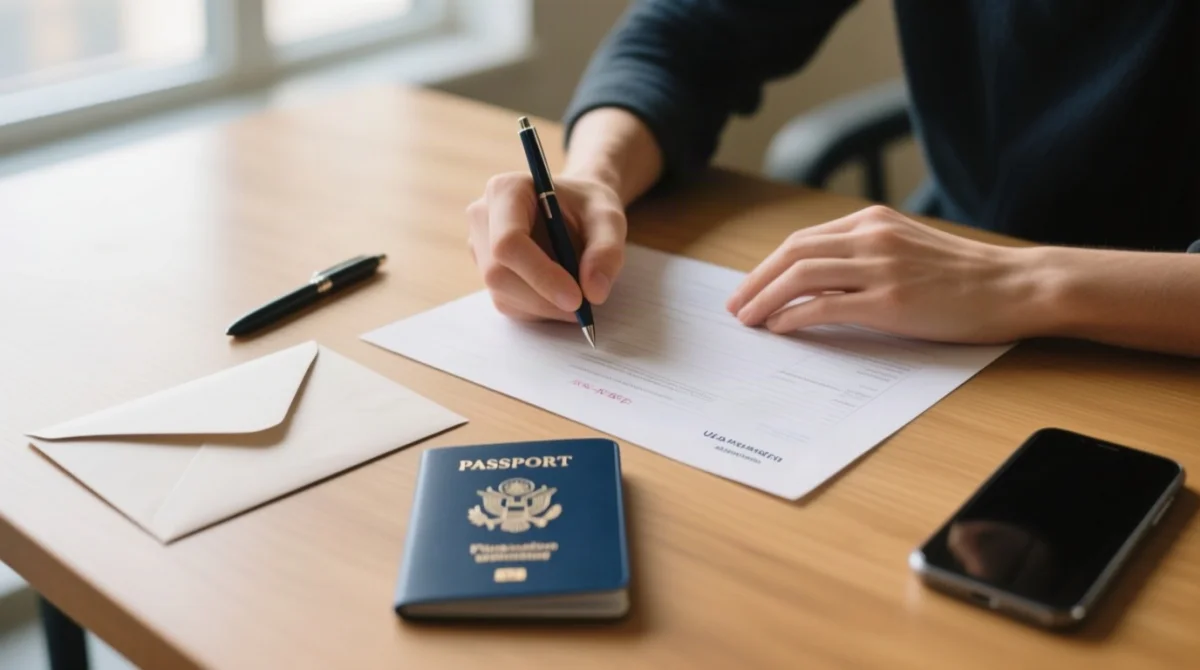
Vietnam entry requirements for U.S. citizens allow applicants seeking visas beyond the 90-day e-visa limit to submit traditional visa applications at four Vietnamese diplomatic missions in the United States: Washington D.C., New York, Houston, and San Francisco.
U.S. Embassy Consular Support in Vietnam
Vietnam entry requirements for U.S. citizens include access to consular support during unexpected border delays. U.S. Embassy Hanoi: +84-24-3850-5000. U.S. Consulate General HCMC: +84-28-3520-4200. State Department Consular Affairs: +1-202-501-4444. Register with STEP at step.state.gov. Vietnam holds a Level 1: Exercise Normal Caution advisory per travel.state.gov. For immigration issues, contact Vietnam Immigration Department at foreigners@xuatnhapcanh.gov.vn or technical_support@immigration.gov.vn. Full embassy resources: vn.usembassy.gov.
FAQ
What are the Vietnam entry requirements for U.S. citizens in 2026?
U.S. citizens must hold a passport valid for at least six months beyond the exit date with at least two blank pages, and obtain a mandatory visa. Most travelers use the 90-day e-visa available via evisa.gov.vn. A pre-arrival digital declaration is required only for arrivals at Tan Son Nhat Airport (SGN).
How long does it take to process a Vietnam e-visa for US citizens?
The processing time for a Vietnam e-visa typically takes 3 to 7 business days. Travelers should apply well in advance of their departure date through the government portal at evisa.gov.vn to ensure the visa is issued before boarding.
Can US citizens get a visa on arrival in Vietnam?
Yes, but a Visa on Arrival (VOA) requires a pre-approved visa letter before boarding the plane. The VOA allows a maximum stay of 30 days, is eligible only at airports, and involves an average wait time of 30 minutes at the airport for processing.
What is the passport validity requirement for US citizens traveling to Vietnam?
U.S. passports must be valid for at least six months beyond the traveler’s exit date from Vietnam. Additionally, the passport must have been issued within the past ten years and contain at least two blank visa pages for entry stamps.
How much cash can I bring into Vietnam without declaring it?
Vietnam enforces specific currency declaration thresholds for mandatory cash declaration, but the exact monetary limits are not specified in our current data. Travelers carrying significant cash should consult the official Vietnamese customs rules to verify the current declaration limits.
Is the pre-arrival digital declaration required for all airports in Vietnam?
No, the pre-arrival declaration form is currently required only for flights arriving at Tan Son Nhat Airport (SGN) in Ho Chi Minh City. It is not required for any other airport. The form can be submitted up to three days prior to arrival.
What is the fine for overstaying a Vietnam visa for US citizens?
Overstaying a Vietnam visa results in daily fines and potential deportation. While the exact daily fine amounts in USD or VND are not specified in our current data, travelers can avoid these penalties by legally extending their visa through provincial immigration offices before their authorized stay expires.
Can dual US-Vietnam citizens enter on their US passport?
U.S. citizen children exiting Vietnam require a Vietnamese passport or a Vietnamese exit visa. Dual nationals should use their Vietnamese passport for entry, and may need a Vietnamese exit visa if departing on a U.S. passport. Always consult the U.S. Embassy for specific dual national guidelines.