

To know how to eat street food safely in Vietnam, choose busy stalls with high turnover, order dishes cooked to order and served piping hot, and consume only bottled water or sealed-bag ice. A typical street food day costs $6 to $10 USD for budget travelers and $15 to $25 USD for mid-range eaters. A half-day cooking class costs $20 to $55 USD depending on the city.
Whether you prefer morning phở in Hanoi or the 24-hour energy of Ho Chi Minh City, this guide covers stall selection, prices, and health prep for your 2026 trip. Prices were spot-checked by our editorial team in September 2026 across 40 stalls in Hanoi’s Old Quarter, Ho Chi Minh City’s District 1, and Hoi An’s Old Town, at a reference rate of 1 USD = 25,000 VND.
How to Choose Safe Stalls and Follow the Golden Rule
The golden rule for eating street food in Vietnam: order dishes that arrive hot, fully cooked, or freshly peeled. On a recent trip to Saigon’s Phạm Ngũ Lão area, I was nearly served a bánh mì with pâté that had sat in the sun for hours; the vendor reached for it bare-handed while counting money. Since then I apply a two-minute rule: watch how the vendor handles cash and food before sitting down.
Signs of Fresh Ingredients and Proper Handling
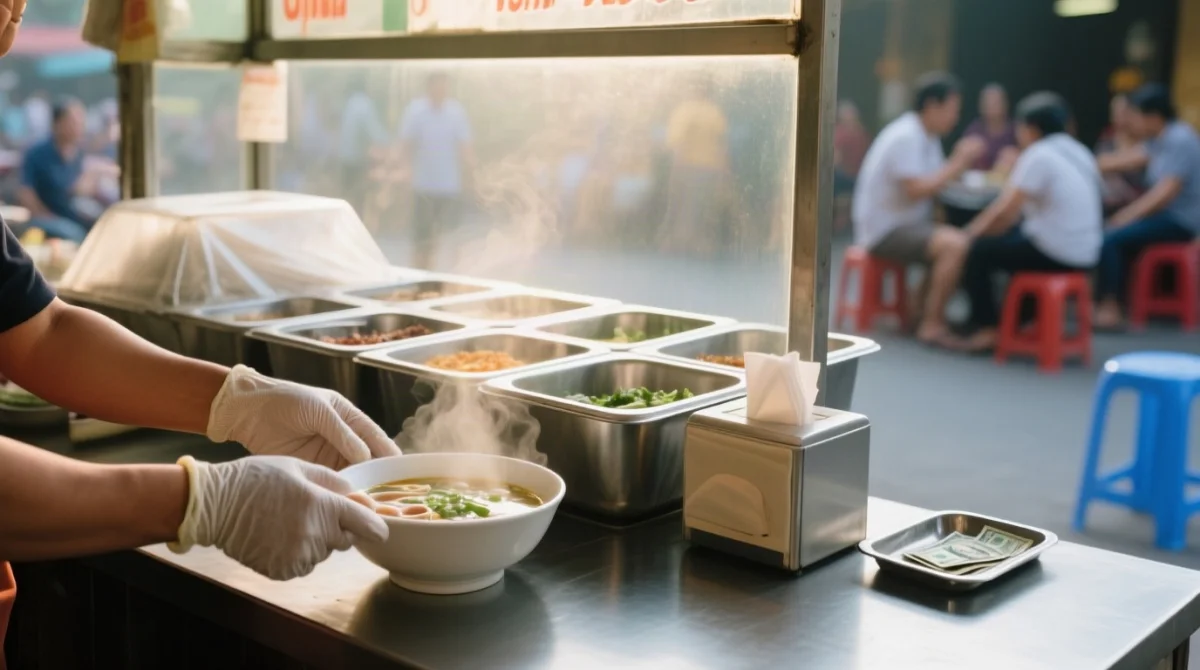
Scan for hygiene indicators before sitting down at any Vietnam street food stall.
| Green Flags (Safe Stalls) | Red Flags (Avoid) |
|---|---|
| Open kitchen and ingredients covered behind glass | Bowls washed in tap water and left wet |
| Clean napkins and a separate money handler | Excessive flies or damp, dusty napkins |
When and Where Locals Eat
Time meals to local schedules for high turnover. Locals eat breakfast between 6:30am and 9:00am, lunch from 11:30am to 1:00pm, and dinner between 5:00pm and 8:00pm. Arriving during these peak windows guarantees freshly prepared dishes.
Safest Street Foods and What First-Timers Should Avoid
- Phở chín (fully cooked beef) and cơm tấm (broken rice)
- Bánh mì, among the safest options because vendors use no shared broth vessels or utensils
- Raw herbs, standalone salads, and tap water
Water, Ice, and Condiment Safety
Eating street food safely in Vietnam means drinking only bottled water from trusted brands like La Vie or Aquafina. Factory-produced ice delivered in sealed bags is conditionally safe at busy eateries. Skip unrefrigerated condiment sauces left uncovered.
Essential Vietnamese Phrases for Ordering
Use “Em ơi!” to call a vendor, “nóng” to ensure food is served hot, and “tính tiền” for the bill. Vegetarians should request “ăn chay” or “không thịt“.
Hanoi vs. Saigon: Which Street Food Scene Fits You? (2026)
Hanoi: morning phở in the Old Quarter. Saigon: 24/7 bánh mì and cơm tấm in District 1. Vietnam street food requires different navigation strategies depending on the city.
| Choose Hanoi if you want… | Choose Saigon if you want… |
|---|---|
| A slower pace and morning phở traditions | 24/7 bustling energy and late-night eats |
| Signature dishes like bún chả and bánh cuốn | Signature dishes like bánh mì, cơm tấm, and hủ tiếu |
Best Street Food Areas in Each City
Street food in Vietnam thrives in high-turnover neighborhoods. Head to the Old Quarter in Hanoi for busy alleyway vendors. In Saigon, explore the vendor clusters around Bến Thành and Phạm Ngũ Lão.
Street Drinking Culture: Bia Hơi
Local draft beer pairs perfectly with hot meals. Bia hơi costs 10,000 to 15,000 VND per glass. Vendors follow a strict 24-hour freshness rule, brewing daily batches that minimize contamination risks.
Street Food Price Guide: What a Meal Actually Costs in Vietnam (2026)
A daily street food in Vietnam budget requires $6 to $10 USD for backpackers and $15 to $25 USD for mid-range eaters.
| Item | Typical Price (VND) |
|---|---|
| Phở | 30,000 to 45,000 |
| Bánh mì | 15,000 to 25,000 |
| Bún chả | 35,000 to 45,000 |
| Bia Hơi (Draft Beer) | 10,000 to 15,000 |
| Trà Đá (Iced Tea) | Free to 5,000 |
How to Know If You’re Being Overcharged
In tourist areas like Phạm Ngũ Lão, vendors charge a tourist price of 20,000 VND ($1 USD) for items normally costing 10,000 to 15,000 VND ($0.50 to $0.75 USD).
How to Pay at Street Stalls
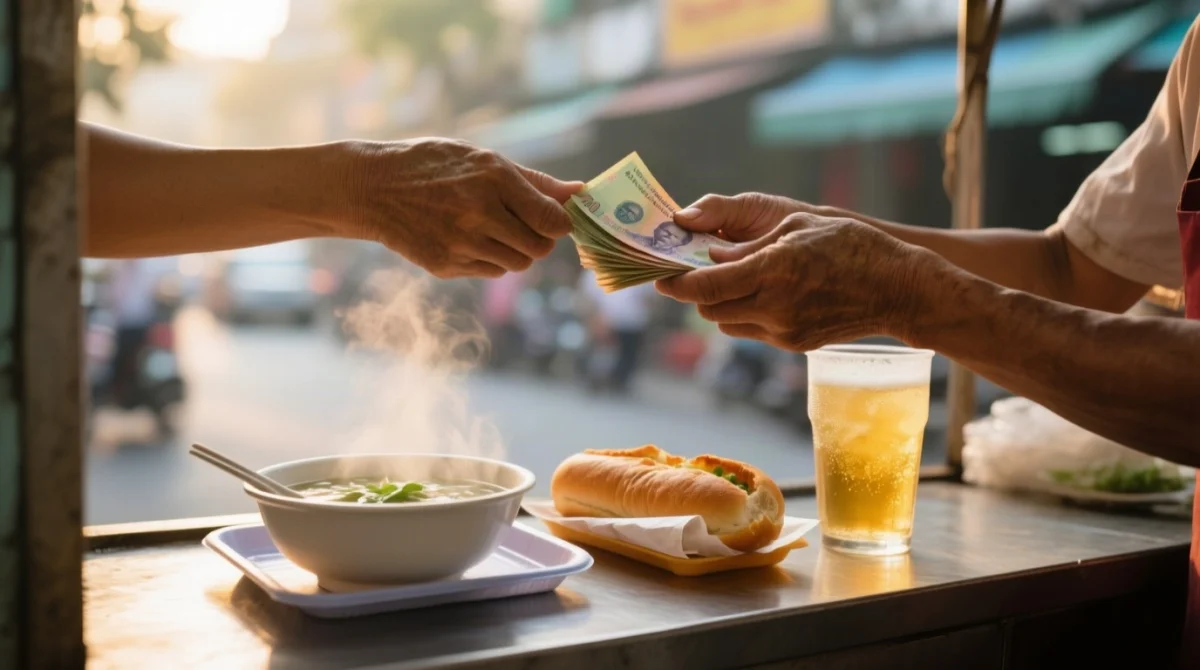
Cash remains king. Carry small notes like 10,000, 20,000, and 50,000 VND. Credit cards are never accepted, though scanning MoMo or ZaloPay QR codes is growing across Vietnam street food stalls in 2026.
Cooking Classes: Costs and Durations (2026)
A half-day cooking class in Vietnam lasts 3-4 hours and costs $25-45 USD in Hanoi, $20-40 USD in Hoi An, and $30-55 USD in Ho Chi Minh City. Handling raw ingredients in a class directly shows you the hygiene standards behind street food in Vietnam.
| City | Half-Day (3-4 hours) | Full-Day (6-8 hours) |
|---|---|---|
| Hanoi | $25-45 USD | $40-70 USD |
| Hoi An | $20-40 USD | N/A |
| Ho Chi Minh City | $30-55 USD | N/A |
Should I Take a Street Food Tour Instead?
Booking a guided tour offers a practical alternative to cooking classes: local guides help you identify clean street food in Vietnam stalls and balance cost versus safety while navigating busy markets.
Health Prep and What to Do If You Get Sick
Get Hepatitis A and Typhoid vaccines before your trip. If you do get sick, seek immediate medical care if symptoms include bloody stool, a fever above 38.5°C, or vomiting lasting over 24 hours.
Travel Stomach Kit: What to Pack
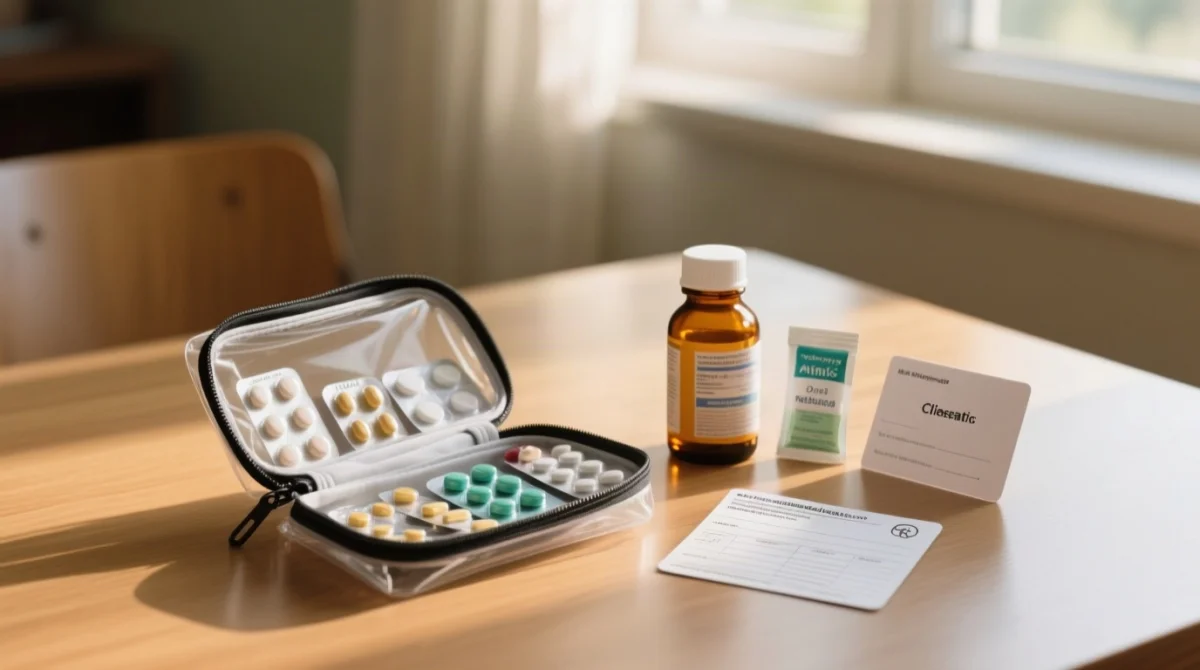
Pack Imodium, probiotics, and oral rehydration salts (ORS). Start taking probiotics before departure to build gut resilience.
English-Speaking Clinics and Pharmacies
For severe cases, visit established facilities like Hanoi French Hospital or Family Medical Practice in Hanoi, and FV Hospital or Vinmec in Ho Chi Minh City. For general tourism inquiries, contact the Viet Nam National Authority of Tourism at contact@vietnamtourism.gov.vn (verified October 1, 2026; see vietnamtourism.gov.vn). Note: our site is an independent informational portal and is not affiliated with any Vietnamese government body.
Disclaimer: The health information in this guide is general travel advice, not a substitute for professional medical consultation. Visit a travel medicine specialist 4-6 weeks before departure to discuss vaccines and prescription medications.
About the Author: Emily Tran has lived in Hanoi since 2019 and has personally visited more than 300 street food stalls across Vietnam. She has completed a food-handling certification course with the Hanoi Department of Health and leads small-group market walkthroughs in the Old Quarter.
Frequently Asked Questions (FAQ)
How can I avoid food poisoning in Vietnam as a tourist?
Follow the golden rule: eat food that is hot, fully cooked, or freshly peeled. Choose busy stalls with high turnover, open kitchens, and ingredients covered behind glass. Avoid raw vegetables, unpeeled fruits, and uncovered condiment sauces.
Is it safe to eat street food in Vietnam?
Yes, street food in Vietnam is generally safe if you follow basic hygiene protocols. Fried and fully cooked dishes are among the safest options because high heat kills most bacteria. Crowded stalls with high food turnover significantly reduce risk.
How common is food poisoning in Vietnam?
According to the U.S. Centers for Disease Control and Prevention (CDC Travelers’ Health, Food and Water Safety, wwwnc.cdc.gov/travel/page/food-water-safety, accessed September 2026), 20% to 50% of travelers to Southeast Asia report traveler’s diarrhea. A stomach kit with Imodium and probiotics helps manage symptoms.
What is one of the biggest mistakes you can make in Vietnam?
Eating raw vegetables, unpeeled fruits, or standalone raw salads during your first few days. Another major error is consuming tap water or using unrefrigerated condiment sauces left uncovered at street stalls all day.
What is the safest street food to order in Vietnam for the first time?
Phở, bánh mì, cơm tấm, and grilled meat skewers. These dishes are cooked at high heat and served immediately. Bánh mì involves no shared vessels or utensils. Always opt for fully cooked meats like phở chín.
Can you drink tap water or eat ice in Vietnam?
Do not drink tap water during short stays; use bottled brands like La Vie or Aquafina, even for brushing your teeth. Ice is conditionally safe only if factory-produced and delivered in sealed bags to busy eateries. Avoid ice of unknown origin.
How much does a street food meal cost in Vietnam per day?
In 2026, a single dish costs 15,000 to 45,000 VND. A full daily budget ranges from $6 to $10 USD for backpackers and $15 to $25 USD for mid-range travelers. Tourist-area overcharging can hit 20,000 VND instead of the regular 10,000 to 15,000 VND.
How much does a cooking class in Vietnam cost and how long does it last?
A half-day class lasts 3-4 hours and costs $25-45 USD in Hanoi, $20-40 USD in Hoi An, and $30-55 USD in Ho Chi Minh City. A full-day class in Hanoi lasts 6-8 hours and costs $40-70 USD.
Where should I get medical help if I get sick in Vietnam?
Seek care for bloody stool, fever above 38.5°C, or vomiting lasting over 24 hours. English-speaking facilities include Hanoi French Hospital and Family Medical Practice in Hanoi, or FV Hospital and Vinmec in Ho Chi Minh City.
Is Hanoi or Ho Chi Minh City better for street food?
Hanoi suits travelers who want morning phở traditions, a slower pace, and Old Quarter alleys with bún chả and bánh cuốn. Saigon offers 24/7 energy and late-night bánh mì, cơm tấm, and hủ tiếu around Bến Thành and Phạm Ngũ Lão.