

What are the main religions in Vietnam? The country recognizes 16 religions. According to 2023 data from the Government Committee for Religious Affairs (GCRA), the largest registered groups are Mahayana Buddhism (13.3%), Catholicism (6.6%), Hòa Hảo (1.4%), and Cao Dai (1%). Over 26.5 million Vietnamese are registered believers.
Beyond registered statistics, Vietnamese spirituality is deeply rooted in ancestor worship and a blend of beliefs known as tam giáo, combining Buddhism, Confucianism, and Taoism. For tourists planning a trip to Vietnam in 2026, knowing the temple dress code (shoulders/knees covered) and pagoda incense rules (odd numbers, two-handed bow) prevents cultural missteps.
Overview of Main Religions and Demographics in Vietnam
Vietnam’s religious landscape encompasses 16 recognized religions and 43 religious organizations. Over 26.5 million registered believers, roughly 27% of the population, formally practice a faith across 29,658 places of worship (GCRA 2022 data), though millions more observe folk traditions informally. Under Article 24 of the Constitution of Vietnam, all religions are equal before the law.
Buddhism arrived in Vietnam in the 2nd century A.D. via China and India and is one of the country’s oldest, most deeply embedded religions. Mahayana Buddhism dominates, with Pure Land, Zen, and Trúc Lâm branches, while Theravada Buddhism is practiced mainly by Khmer communities in the south. Independent estimates suggest 45 to 50 million Vietnamese practice Buddhist customs, far above the registered figure. The 2023 GCRA data highlights the largest registered groups:
| Religion | Share of Population (2023) | Notes |
|---|---|---|
| Buddhism | 13.3% | Mahayana and Theravada branches; arrived in the 2nd century A.D. |
| Catholicism | 6.6% (approx. 6.2 million) | Introduced by Portuguese and French missionaries in the early 17th century |
| Hòa Hảo | 1.4% | Indigenous Buddhist tradition |
| Protestantism | 1.00% (approx. 1 million) | Introduced in 1911 by Canadian missionary Robert A. Jaffray |
| Cao Dai | ~1% | Founded in 1926 in Tây Ninh |
The Syncretic Blend: Tam Giáo, Folk Religion, and Ancestor Worship
Vietnamese religious life blends Mahayana Buddhism, Confucianism, and Taoism into a unified system known as tam giáo (the Triple Religion). Confucianism became the state ideology under the Lê dynasty in the 15th century, shaping family hierarchy, education, and the Temple of Literature.
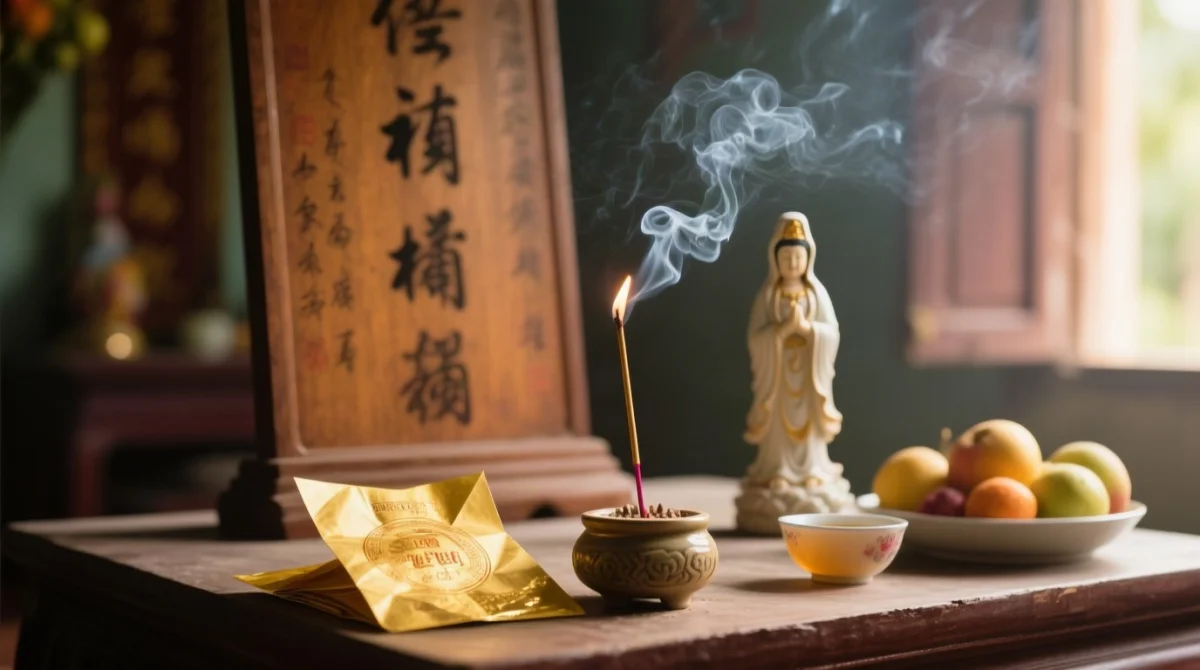
Vietnam‘s cultural foundation rests on ancestor worship (kính thờ ông bà), a universal expression of filial piety (hiếu thảo). Vietnamese families maintain home altars and burn votive paper (tiền vàng) to provide for deceased relatives in the afterlife. As a guest in homestays, restaurants, or shops, never move objects on these altars or point your feet toward them.
Local folk religion includes animism, village gods (thành hoàng), and Đạo Mẫu, the veneration of Mother Goddesses, practiced in communal houses across Vietnam.
Cao Dai: Vietnam’s Unique Homegrown Faith
Vietnam’s religious landscape features Caodaism, a uniquely Vietnamese syncretic faith founded in 1926 in Tây Ninh that blends Buddhism, Taoism, Confucianism, Christianity, and Islam. According to 2023 GCRA data, it claims ~1% of the population, about 1 million registered followers, across Vietnam.
Travelers on a day trip from Ho Chi Minh City can observe daily mass at the Cao Dai Holy See at 12:00 and 17:00. The temple requires modest clothing, with white garments highly recommended, and flash photography is generally banned inside the halls.
Temple Dress Code: What to Wear to Vietnamese Pagodas
Travelers entering any sacred space in Vietnam must follow a strict dress code. When exploring a Vietnamese pagoda, both men and women must cover their shoulders and knees to show respect for local worshippers. Hats must come off inside the halls at every temple in Vietnam. For a broader overview of behavioral expectations, check our guide to Vietnamese do’s and don’ts.
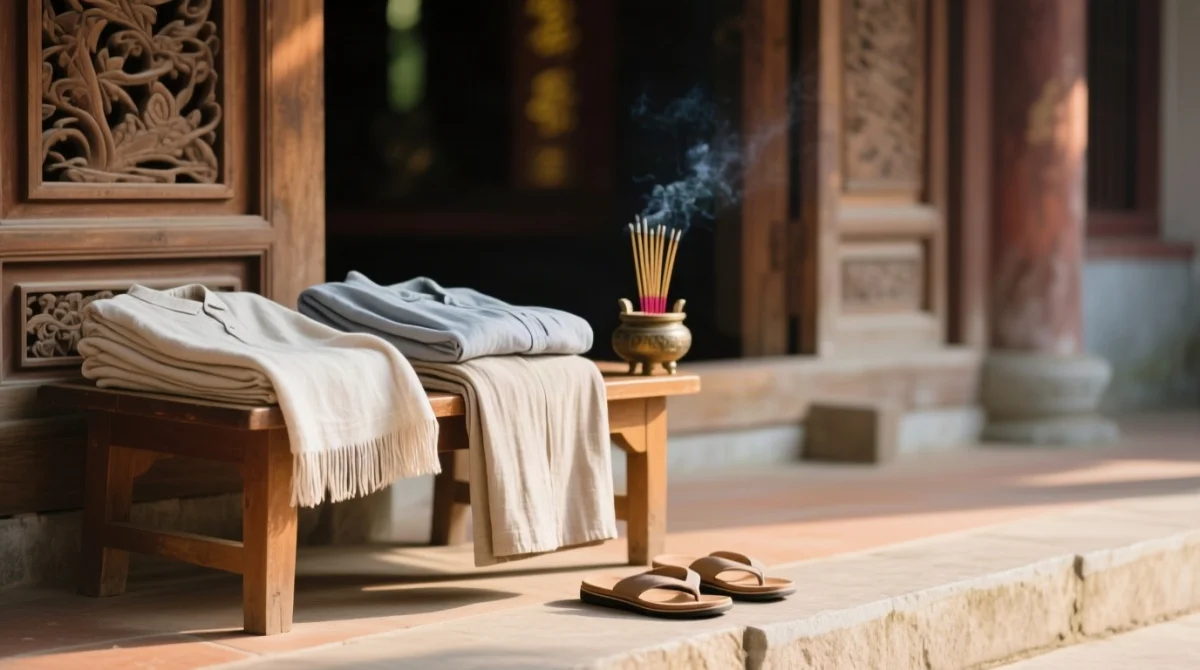
| OK to Wear | NOT OK to Wear |
|---|---|
| T-shirts covering shoulders | Sleeveless tops |
| Long pants and trousers | Shorts |
| Maxi skirts | See-through fabrics |
| Modest, opaque layers | Hats inside the hall |
How to Visit a Vietnamese Pagoda: Step-by-Step Etiquette
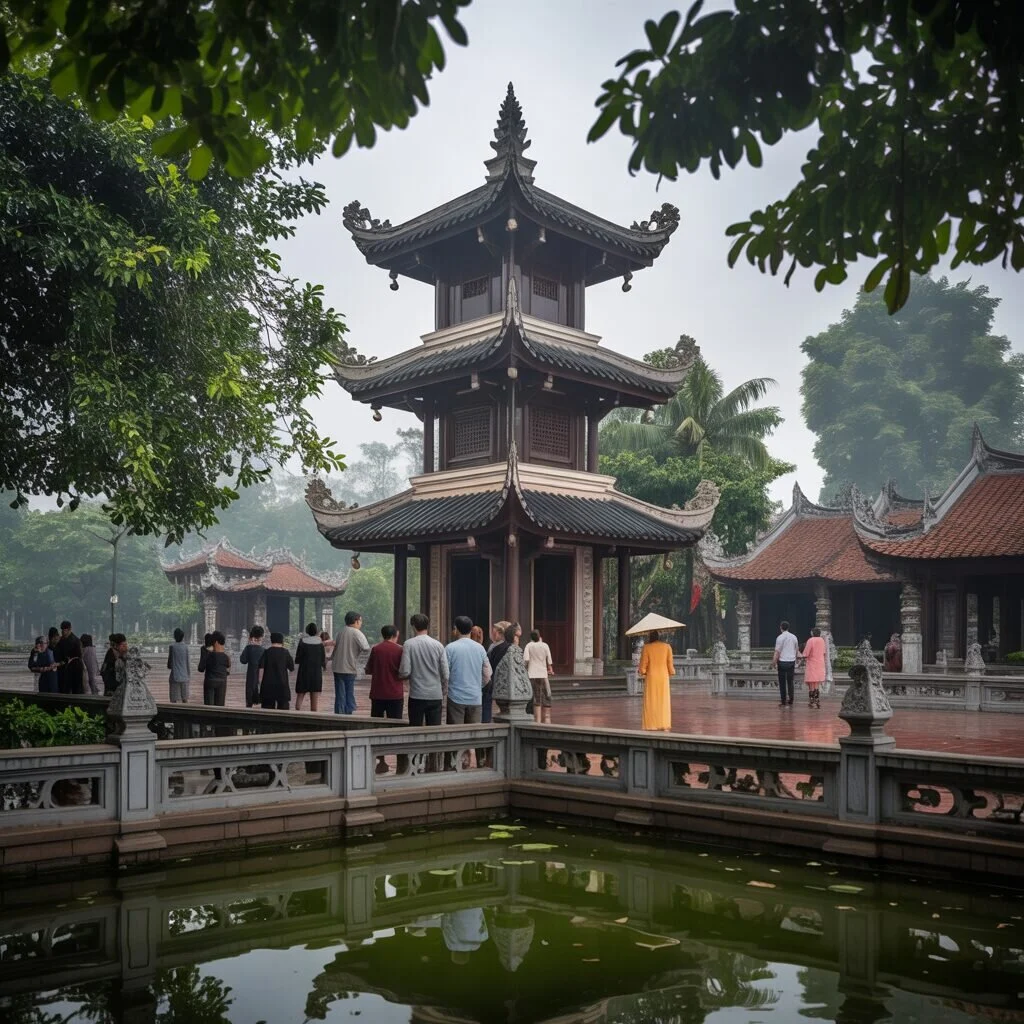
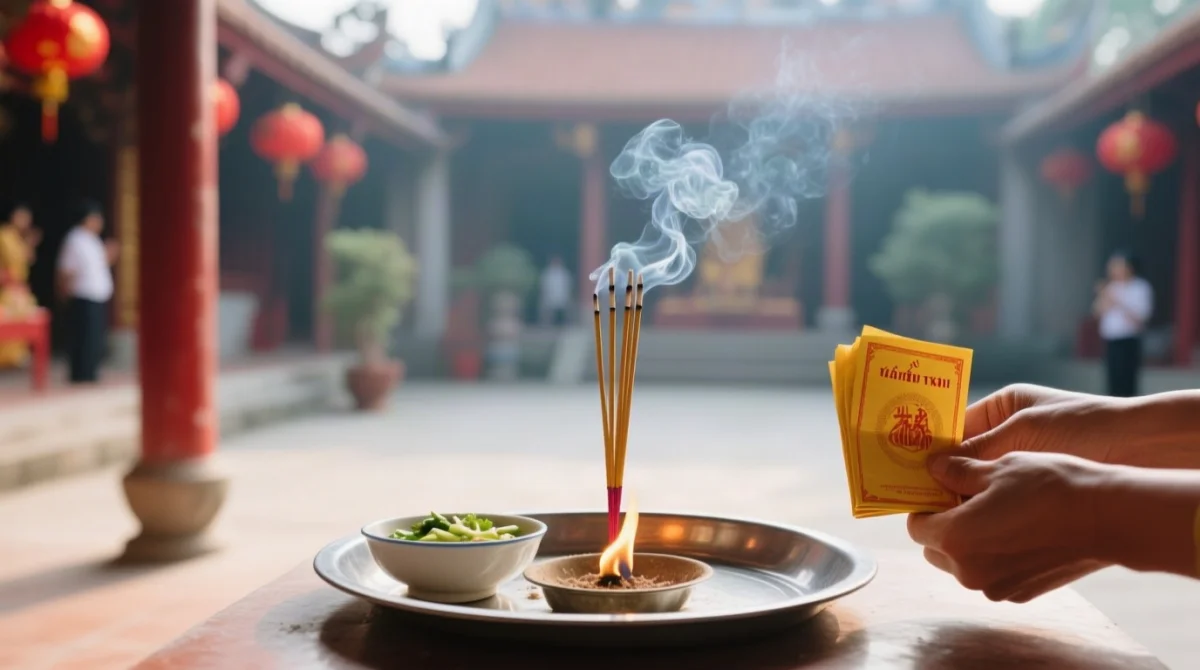
Navigating a Vietnamese pagoda requires specific etiquette, from removing footwear to preparing an offering. During my February 2025 visit to the Perfume Pagoda, I watched locals hold incense with both hands and bow three times, a ritual I adopted myself. Visitors must follow these precise behavioral rules to maintain sanctity:
Remove shoes before entering the inner sanctum
Never place them on altars.
Use odd numbers (1, 3, 5) of incense sticks
Odd numbers are the standard for offerings.
Hold the incense with both hands and bow 3 times
Bow toward the main altar.
Never touch Buddha statues or point your feet at them
Do not sit blocking the main threshold.
Women must not touch monks
Do not hand objects directly to them.
Most pagodas in Vietnam are free to enter; leave donations in the hòm công đức (contribution) box, a standard practice across Vietnam.
The Role of Spirituality and Religious Festivals in 2026
Daily routines in Vietnam revolve around lunar-calendar rituals. Vietnamese locals observe vegetarian days on Buddhist holidays, consult fortune-tellers, burn tiền vàng (votive paper) for spirits, and light incense at home and business altars. Small spirit houses outside shops and homes across Vietnam receive the same offerings.
Religious Festivals in Vietnam: Dates for Your Trip
Festival dates follow the Vietnamese lunar calendar and shift each year, so confirm exact days before booking.
| Event | 2026 Schedule |
|---|---|
| Hương Pagoda Festival (Perfume Pagoda) | February to March |
| Vesak | May |
| Vu Lan | August |
Frequently Asked Questions (FAQ)
Is Vietnam a Buddhist country?
In 2023, registered Buddhists made up 13.3% of the population, but independent estimates suggest 45 to 50 million practice Buddhist customs alongside ancestor worship and folk religion.
What is the percentage of Christians in Vietnam?
Based on 2023 GCRA data, Catholicism accounts for 6.6% of the population (about 6.2 million) and Protestantism 1.00% (about 1 million). Portuguese and French missionaries introduced the faith in the early 17th century.
Do I have to take off my shoes in Vietnamese pagodas?
Yes, visitors must remove their shoes before entering the inner sanctum. Leave footwear outside the main threshold and never place shoes on or near the altars.
What is Cao Dai and where is it practiced?
Cao Dai is a Vietnamese syncretic religion founded in 1926 in Tay Ninh, blending Buddhism, Taoism, Confucianism, Christianity, and Islam, with about 1 million registered followers. Tourists can attend daily masses at the Cao Dai Holy See at 12:00 and 17:00.
How does Vietnam treat religious freedom?
Under Article 24 of the Constitution of Vietnam, all religions are equal before the law. The country recognizes 16 religions and 43 religious organizations, with over 26.5 million registered believers across 29,658 places of worship (GCRA 2022 data).
What is the difference between a temple and a pagoda in Vietnam?
Pagodas are primarily associated with Buddhism, which arrived in Vietnam in the 2nd century. Temples often honor village gods or Mother Goddess (Đạo Mẫu) figures, or serve as spaces for practicing tam giáo.
Can I take photos inside Vietnamese temples?
Always ask permission before photographing monks. Flash photography is generally banned inside the temple halls to maintain a respectful environment.
What is ancestor worship in Vietnamese culture?
Ancestor worship (kính thờ ông bà) is an expression of filial piety (hiếu thảo) practiced by the vast majority of Vietnamese through home altars, daily incense offerings, and burning votive paper (tiền vàng) on death anniversaries.
What are the rules for offering incense in Vietnam?
Use odd numbers of incense sticks (1, 3, or 5), hold them with both hands, and bow three times toward the main altar.
What should male tourists wear to a Vietnamese temple?
The temple dress code requires shoulders and knees covered for all visitors, including men. Avoid sleeveless tops and shorts, and take your hat off before entering the halls.
Last updated: October 2026. Statistics from Government Committee for Religious Affairs (GCRA) reports, 2022 and 2023.