
So, is it safe to drive a motorbike in Vietnam? Riding in 2026 is manageable but carries real risk due to heavy traffic and strict enforcement. To stay legal and protected, US tourists must carry a 1968 Convention International Driving Permit (IDP) and maintain a strict 0.0% BAC. Navigating Hanoi or Ho Chi Minh City demands full compliance with road safety rules for scooters in Vietnam: unlicensed riding or an invalid 1949 IDP brings on-the-spot fines of 6,000,000 to 8,000,000 VND, vehicle detention, and voided insurance, leaving you liable for medical evacuation costs that can reach tens of thousands of dollars. Accident prevention depends on defensive riding and proper gear: always wear a helmet meeting the QCVN 2:2008/BKHCN standard, avoid unlit provincial roads at night, and carry the mandatory third-party liability yellow certificate.
Safety Verdict and Risk Levels by Setting
Motorbike riding in Vietnam carries medium-high risk depending on the setting, with urban congestion, rural speeds, and night conditions posing distinct hazards.
| Setting | Risk Level | Primary Hazards |
|---|---|---|
| Urban Cities | Medium | Congestion, strict 40 km/h speed limits |
| Countryside | Medium-High | Speeds of 60-80 km/h, sleeper buses |
| Ha Giang Loop | High | Mountain passes, unpredictable right-of-way |
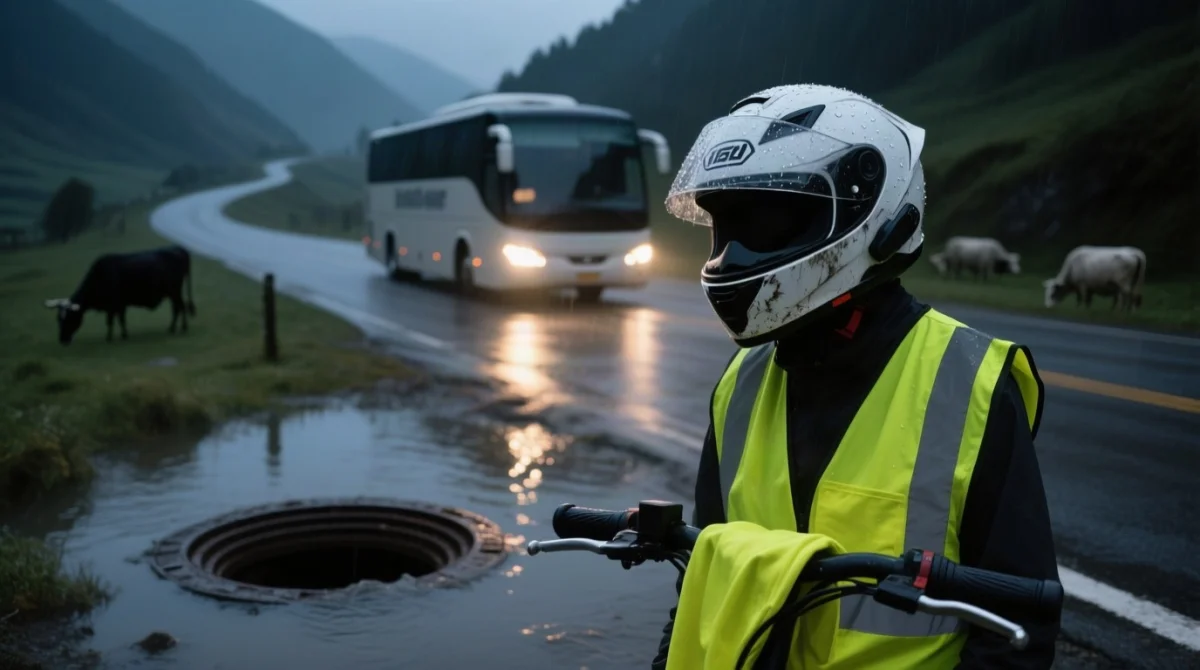
| Night Riding | Extreme | Unlit provincial roads, wandering livestock |
| Monsoon Rain | High | Street flooding (ngập lụt), open manholes |
City vs. Countryside: Where Is It Safer?
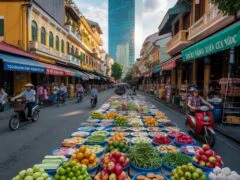
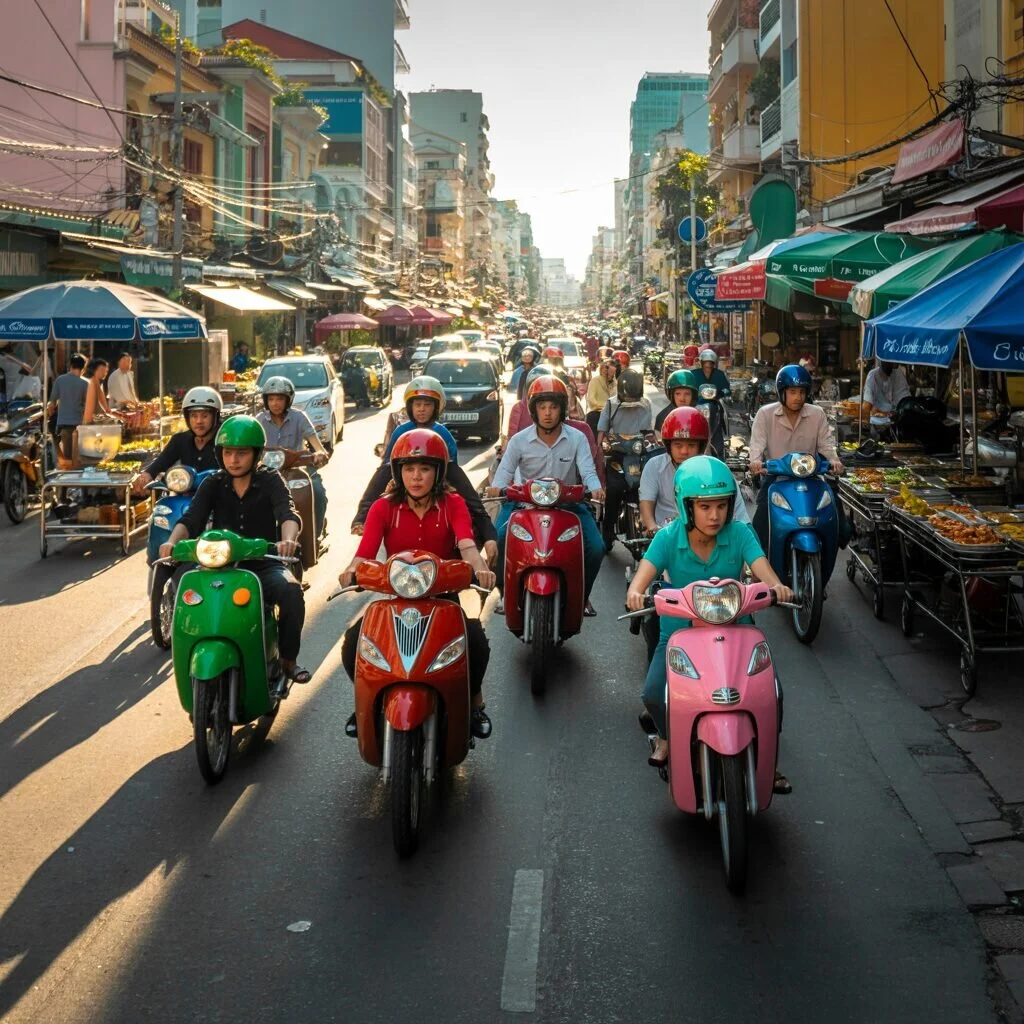
Motorbike safety in Vietnam presents a volume versus speed paradox. Urban hubs force riders through intense congestion, but collisions typically occur at lower speeds. Rural routes expose riders to high-beam glare from sleeper buses and unclear right-of-way. Deciding where to ride a motorbike in Vietnam depends on matching your environment to your defensive driving skills.
Legal Requirements: IDP and Vietnamese Licenses
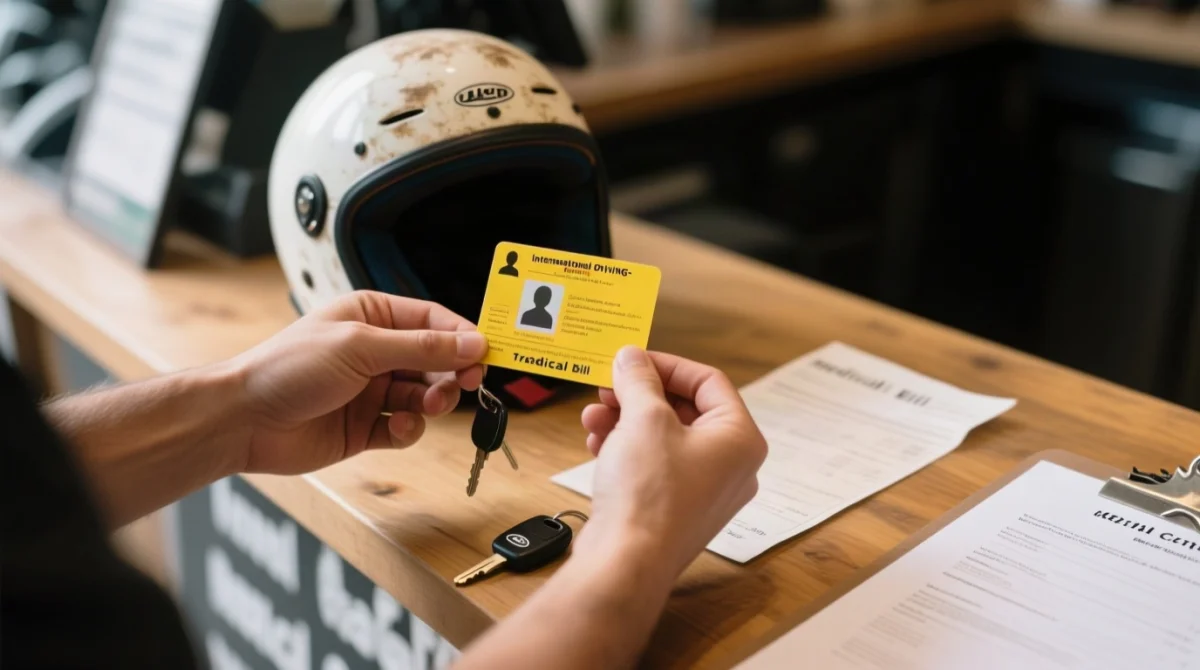
As of 2026, US tourists must carry a 1968 Vienna Convention International Driving Permit (IDP) alongside their valid US license; riding without one triggers fines up to 8,000,000 VND. Riding without a valid IDP removes legal protection and voids insurance claims.
Engine Capacity Rules: 50cc, 125cc, and 175cc
The 1968 Vienna Convention IDP is mandatory for standard rentals over 50cc to 175cc (Category A). The 1949 Geneva Convention IDP, issued by the USA and Canada, is not recognized. Riding without recognized documents on a bike over 125cc results in fines of 6,000,000 to 8,000,000 VND; on a bike 125cc or under, the fine is roughly 100 USD. Motorcycles over 175cc require an A2 Vietnamese license or a 1968 IDP with an A2/M stamp. Vehicles under 50cc and electric bikes under 4kW are exempt from motorcycle license requirements. Tourists converting licenses (minimum 3-month tourist visa and local residential address) must visit local offices:
| Facility | Address |
|---|---|
| Centre for Automotive Training | 83a Ly Thuong Kiet St, Hanoi |
| Office of Transportation | 63 Ly Tu Trong St, Ben Nghe Ward, District 1, Ho Chi Minh City |
Fake IDP Red Flags
Assessing motorbike safety in Vietnam requires validating your permit. Fake IDPs often feature instant digital cards, lack a named government agency, use generic emails, and are missing from the AIT/FIA directory.
Helmet Laws and Required Gear in Vietnam
Vietnam law mandates helmets meeting the QCVN 2:2008/BKHCN certification standard for all riders and passengers; non-compliant rental helmets void insurance and carry on-the-spot fines. Reject fake plastic “fashion” caps from rental shops. Use this 3-point rental helmet checklist: check the visor for cracks, confirm the strap locks securely, and verify the interior foam is real impact-absorbing material, not thin decorative padding.
Road Rules, Traffic Culture, and Police Checks
As of 2026, Vietnam enforces a strict 0.0% blood alcohol limit, prohibits right-turns on red, bans motorbikes from expressways, and requires carrying passport, IDP, home license, rental contract, and third-party insurance at all times. Police routinely check for a valid IDP, helmet, and TPL insurance at frequent checkpoints.
- Right-of-Way: Right-turns on red are illegal unless an explicit green arrow or auxiliary sign board is present. At marked roundabouts, circulating traffic has priority; use your left indicator when entering.
- Capacity and Access: Standard motorbikes carry a maximum of 2 persons, and motorbikes are prohibited on expressways. Speed limits range from 40 km/h in cities to 60-80 km/h on rural roads.
Zero Tolerance: Riding After Drinking
Motorbike safety in Vietnam is severely compromised by alcohol consumption under the 0.0% BAC limit. Violating this zero-tolerance policy results in heavy fines, license revocation, and immediate motorbike impoundment.
Mandatory Third-Party Insurance Certificate
Police routinely inspect documents at checkpoints. Riders must carry a physical or digital yellow certificate (Bảo hiểm bắt buộc TNDS xe máy) proving mandatory Third-Party Liability coverage.
Accident Prevention and Defensive Riding
Assume others will not yield. Never ride on unlit provincial roads at night. Obey the 0.0% BAC limit. Motorbike safety in Vietnam demands constant 360-degree observation; avoid sleeper buses and trucks. As of 2026, urban riders face severe street flooding (ngập lụt) during monsoon season in HCMC and Da Nang, with the critical risks of engine flooding and hidden, open manholes.
Should You Ride at Night in Vietnam?
No. Night riding on a motorbike in Vietnam is extreme risk: avoid unlit provincial roads entirely. Primary hazards include blinding high-beam glare from oncoming sleeper buses, unseen potholes, and wandering livestock. Restricting motorbike travel in Vietnam to daylight hours remains the most effective accident prevention strategy.
Motorbike Insurance Coverage and Exclusions
As of 2026, motorbike safety in Vietnam is severely compromised when tourists ride without a valid 1968 Convention IDP, because standard travel insurance providers strictly exclude accidents involving unlicensed riders. Riding illegally guarantees the refusal of medical, personal accident, and vehicle-damage claims, meaning an emergency medical evacuation can cost tens of thousands of dollars out-of-pocket.
| Coverage type | What it covers | Provided by | Required for riding legally |
|---|---|---|---|
| Third-Party Liability (TPL) | Injury or damage to other people and property | Rental shop (issued as a physical or digital yellow certificate) | Yes |
| Personal Medical and Accident | Rider hospital bills and emergency evacuation | Tourist travel insurance (requires valid IDP and motorcycle endorsement) | No |
| Vehicle Damage and Theft | Repairs or replacement of the rented motorcycle | Rental shop or separate vehicle policy | No |
How to Rent a Motorbike Safely and Legally
Rent only from licensed shops providing a written contract, insurance paperwork, and a physically inspected bike; unlicensed street vendors offer zero accountability after an accident.
Verify the paperwork
Ensure the vendor provides a formal rental agreement and the mandatory yellow third-party liability insurance certificate.
Review pricing and deposits
Expect a typical daily rate of 100,000 to 160,000 VND in 2026. Shops usually demand a deposit of US$100-500 or your physical passport. Protect your travel documents by offering a laminated passport copy instead.
Inspect the vehicle
Check tire tread depth, test both front and rear brakes, ensure headlights and indicators work, and verify the horn functions loudly.
Refuel cautiously
Fill the tank with recommended RON 95 or E5 RON 92 gasoline. Always watch the attendant clear the previous transaction to zero to avoid pump meter reset scams.
Emergency Protocol: What to Do After a Motorbike Crash
After a motorbike crash in Vietnam: call 115, photograph the scene, and notify your insurer within 24 to 48 hours.
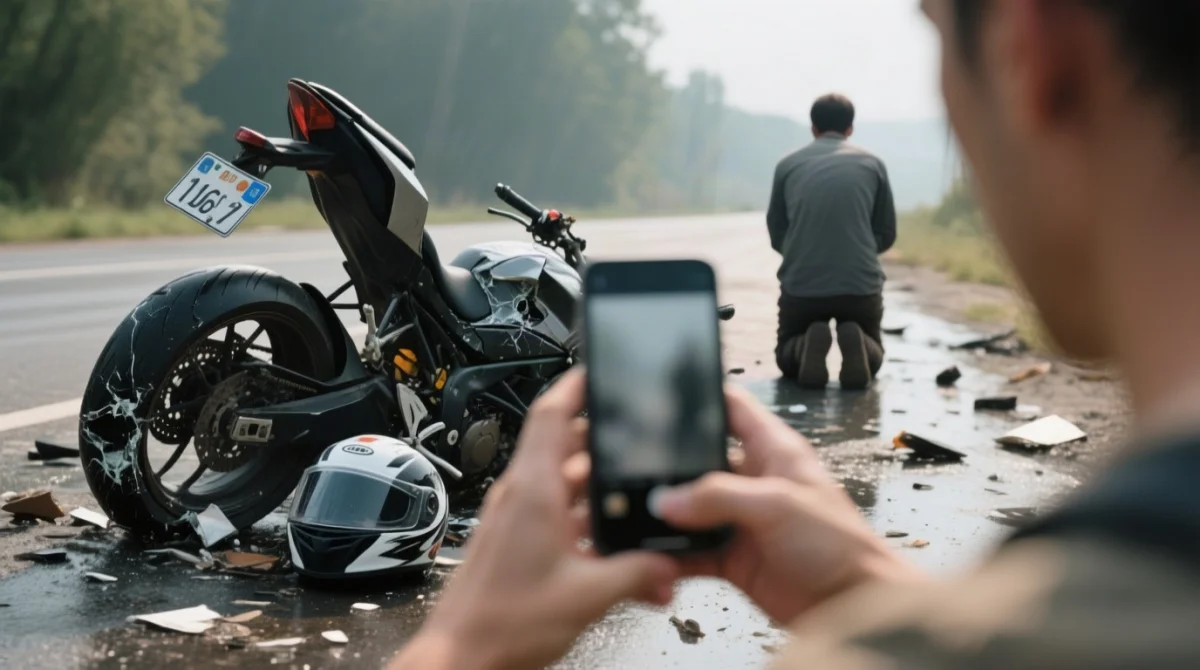
Call Emergency Services
Dial 115 for an ambulance, 113 for the police, and 114 for the fire department.
Secure the Scene
Do not move injured individuals unless they face immediate danger from oncoming traffic.
Document Everything
Photograph the vehicles, license plates, and surrounding area before moving the bikes. Exchange contact details with the other party.
Contact Your Insurer
Notify your provider immediately to authorize hospital treatment. Uninsured medical evacuation can cost tens of thousands of dollars.
FAQ: Motorbike Safety, Licenses, and Rules in Vietnam
Can tourists drive motorbikes in Vietnam?
Yes, tourists can ride a motorbike in Vietnam with a valid home country motorcycle license plus a 1968 Vienna Convention IDP. Long-term visitors on a tourist visa of at least three months can apply for a Vietnamese motorcycle licence conversion.
Are US citizens allowed to drive in Vietnam?
Yes, but the 1949 Geneva Convention IDP issued by the USA is not recognized for driving a motorbike in Vietnam. US travelers must obtain a valid 1968 Convention IDP or ride under-50cc or electric vehicles, which are exempt from license requirements.
Can I drive a motorcycle in Vietnam with an international license?
Yes, but only with a 1968 Vienna Convention IDP; the 1949 Geneva Convention permits held by US, Canadian, and Australian citizens are invalid. Riding a motorbike in Vietnam without the recognized 1968 IDP triggers fines up to 8,000,000 VND.
What happens if I get into an accident on a motorbike in Vietnam?
Immediately call 115 for an ambulance and 113 for police. A crash while riding a motorbike in Vietnam without a valid 1968 IDP results in refused insurance claims, and uninsured medical evacuation can cost tens of thousands of dollars.
How dangerous is driving a motorbike in Vietnam?
Driving a motorbike in Vietnam is medium-high to high risk depending on the environment: unpredictable right-of-way, urban congestion, street flooding, and night hazards like wandering livestock and high-beam glare. Defensive riding and the strict 0.0% BAC limit are crucial.
Can you drive a motorbike in Vietnam without a license?
No, you cannot legally ride a standard motorbike in Vietnam over 50cc without a valid license and 1968 IDP; penalties include fines between 6,000,000 and 8,000,000 VND and roughly 30 days of vehicle detention. Motorbikes under 50cc are exempt.
What are the helmet laws in Vietnam for tourists?
Helmet law compliance in Vietnam is strictly enforced: both riders and passengers on a motorbike in Vietnam must wear a helmet meeting the QCVN 2:2008/BKHCN standard. Fake plastic fashion helmets result in on-the-spot fines and voided insurance.
How to avoid police checkpoints on a motorbike in Vietnam?
You cannot avoid police checkpoints on a motorbike in Vietnam, so full legal compliance is the only strategy. Present a 1968 IDP, passport, home license, rental contract, and the yellow Third-Party Liability certificate to pass without fines.
Last verified: 2026. Penalty amounts are based on Decree 100/2019/ND-CP (as amended by Decree 123/2021/ND-CP); the helmet standard QCVN 2:2008/BKHCN is mandated under the 2008 Road Traffic Law. Confirm current rules with the US Embassy in Hanoi’s travel advisory before your trip.
Disclaimer: This article is for general information only and does not constitute legal advice. Traffic laws in Vietnam change frequently; always check with your embassy or rental shop before riding. This site is an independent travel information portal and is not affiliated with any government entity.