


Learning how to avoid taxi scams in Vietnam in 2026 means using licensed operators (Mai Linh, Vinasun, Xanh SM) or verified apps like Grab, confirming the license plate, insisting on the meter, and checking your route via GPS.
Unlicensed street cabs and fake Grab drivers still target US tourists at airports and transit hubs, using rigged meters or heavily inflated fixed prices. Written by the Vietnam Travel Editorial Team and last reviewed on October 1, 2026, this guide maps every transport scam in Vietnam, from overcharging tricks to pickpocketing, plus the exact steps to report fraud.
Why Transport Scams Are Still a Problem for Tourists in 2026
Transport scams in Vietnam persist in 2026 because unlicensed street taxis, fake Grab impostors, and pickpocket rings still concentrate where tourists arrive: airports, bus stations, and nightlife districts. The U.S. State Department rates Vietnam at Level 1 (Exercise Normal Precautions), yet taxi and ride-hailing fraud remains the most frequently reported tourist complaint. The four most common transport scams in Vietnam:
- Taxi overcharging: rigged meters running 3-5 times the correct rate.
- Fake Grab drivers: green-jacket impostors demanding off-app cash.
- Pickpocketing: distraction teams and unsolicited luggage handlers, the most underreported transport scam in Vietnam.
- Xe ôm price inflation: agreed motorbike fares doubled on arrival.
How to Tell a Licensed Taxi From a Fake One
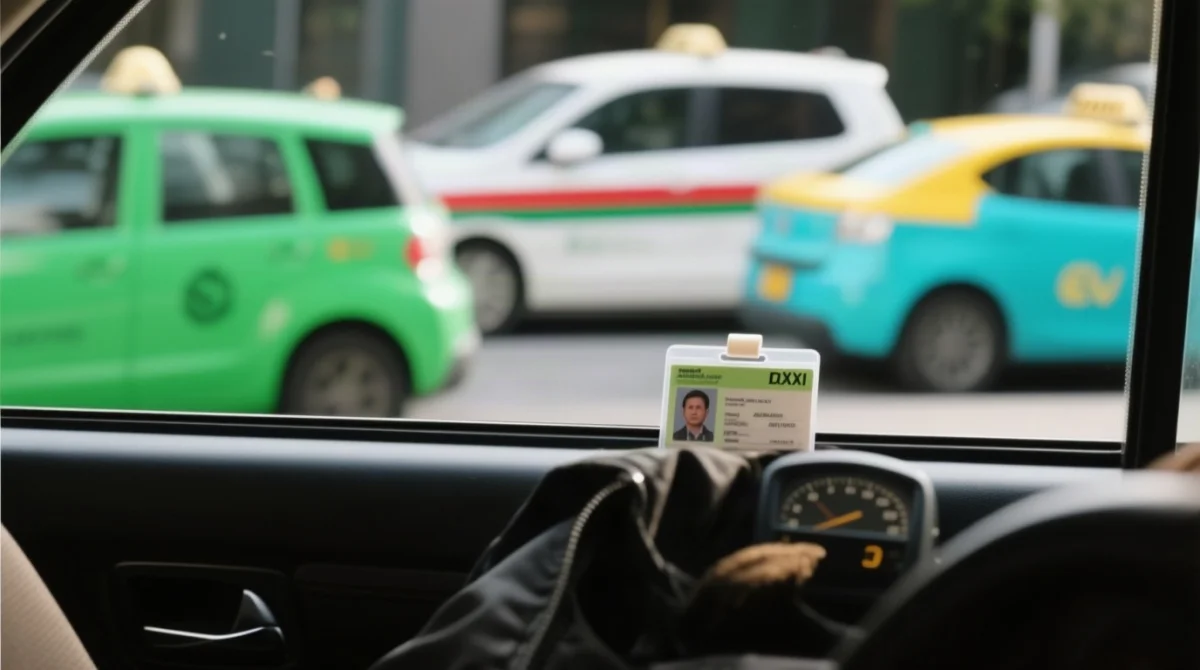
A licensed taxi shows brand livery, a numbered driver identification badge, a working meter, and a dispatcher phone number. Unmarked cabs with handwritten “taxi” signs and aggressive drivers without uniforms are the fake taxis behind most transport scams in Vietnam.
Trusted Taxi Companies in Vietnam
Mai Linh, Vinasun, Taxi Group, and Xanh SM are the licensed operators that prevent most taxi scams in Vietnam.
| Brand | Vehicle Livery | Details |
|---|---|---|
| Mai Linh | Green cars | Nationwide coverage |
| Vinasun | White cars with red and green lettering | Operates primarily in the South |
| Xanh SM | Cyan/green-yellow | VinFast electric vehicles |
How to Read a Vietnamese Taxi Meter
Taxi meters in Vietnam omit three trailing zeros: a display showing “35” means 35,000 VND (about $1.40 USD), not 350,000 VND. This three-zero rule blocks the most common 10x overcharge scam. Legitimate drivers also display an ID with their name and a unique 4-5 digit number.
Airport Taxi Scams and Fair Fares in USD
At Noi Bai and Tan Son Nhat airports, unlicensed touts quote fixed fares 3-5 times the metered rate, and rigged airport meters remain the most common taxi scam in Vietnam.
Meter or Fixed Price? How to Decide
Demand a running meter for any ride under 15 km; negotiate a fixed price only after checking the Grab fare estimate for the same route.
| Route | Standard Fare (VND) | Approx. USD (2026) | Scammer Quote (VND) |
|---|---|---|---|
| Noi Bai to Hanoi Old Quarter | 300,000-400,000 VND | $12-$16 | 800,000-1,500,000 VND |
| Tan Son Nhat to District 1 | 200,000-300,000 VND | $8-$12 | N/A |
| Da Nang Airport to City Centre | 50,000 VND | ~$2 | 500,000 VND |
Cheapest Airport Transfers: Bus Route 86 and Route 109
Express airport buses eliminate taxi-scam risk entirely with fixed tickets direct to the city centers.
| City & Route | Fixed Ticket Price | Approx. USD (2026) |
|---|---|---|
| Hanoi: Route 86 | 40,000-45,000 VND | $1.60-$1.80 |
| HCMC: Route 109 | 40,000-45,000 VND | $1.60-$1.80 |
Fair Fares in USD: A Quick Reference for US Travelers
Fair fares are the antidote to taxi scams in Vietnam. If a quoted price is more than double these 2026 reference figures, walk away. On a recent metered ride from Tan Son Nhat Airport to District 1, our editorial team paid 230,000 VND, inside the fair range.
| Route | Fair Fare (VND) | Approx. USD (2026) |
|---|---|---|
| Noi Bai Airport to Hanoi Old Quarter | 300,000-400,000 VND | $12-$16 |
| Tan Son Nhat Airport to District 1 | 200,000-300,000 VND | $8-$12 |
| Da Nang Airport to City Centre | 50,000 VND | ~$2 |
| Hanoi Train Station to Cathedral area | 30,000-40,000 VND | $1.20-$1.60 |
| Airport express bus (Route 86 / Route 109) | 40,000-45,000 VND | $1.60-$1.80 |
Quotes far above these ranges signal transport scams in Vietnam; decline and head to a licensed taxi queue instead.
How to Protect Yourself When Using Grab and Backup Apps
Grab’s GPS-tracked, in-app cashless system is the safest ride-hailing option in Vietnam. Download the app before arrival, link a card to skip cash disputes, and read the fare estimate before confirming each ride.
How to Spot Fake Grab Drivers
Never trust a Grab driver solely because they wear a green Grab jacket; impostors buy the same jackets at airports and transit hubs.
Match the driver’s photo
Match the driver’s photo shown in the app
Verify the license plate
Verify the exact license plate number before entering the vehicle
Reject off-app cash
Reject any driver demanding an off-app cash payment
The Off-App Cancellation Trick
Transport scams in Vietnam frequently involve drivers asking you to cancel the booking in-app and pay cash instead. Refuse immediately: canceling removes your GPS tracking, fare protection, and receipt record.
Backup Ride Apps in Vietnam: Be and Gojek
Be and Gojek operate across major cities and offer the same cashless, in-app-tracked protection when Grab surge pricing spikes during rain or late-night hours.
Common Overcharging Tricks and Motorbike (Xe Ôm) Scams
In 2026, Vietnam taxi overcharging tricks include rigged meters, night fare inflation, and banknote swaps, while motorbike taxis often inflate agreed prices upon arrival.
Banknote-Swap Scams
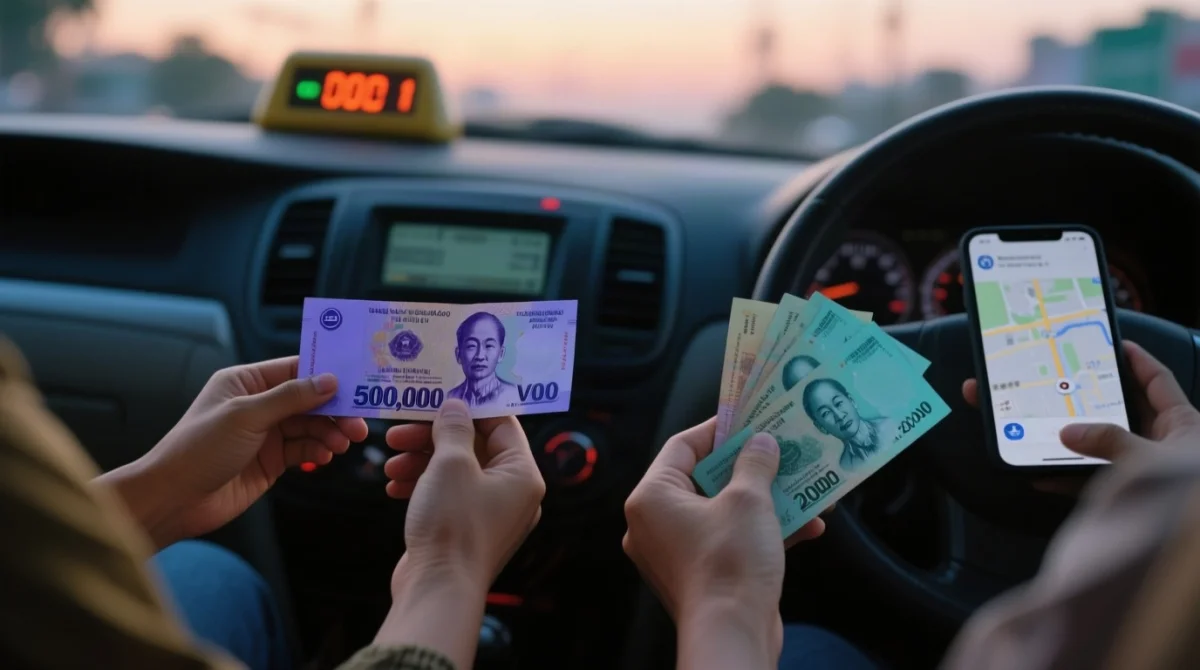
Taxi scams in Vietnam often involve drivers swapping a 500,000 VND (deep blue-purple) note for a 20,000 VND (lighter teal-blue) note mid-transaction, costing tourists about 480,000 VND ($18 USD). Hand payment visibly and count change before exiting.
Route Padding and Night Fares
Transport scams in Vietnam also include unjustified detours and fake late-night fees. Track every ride on Google Maps and request an immediate stop if the driver deviates without traffic justification. Legitimate meters apply a 20-30% surcharge after 10 PM; anything higher signals a scam.
Motorbike Taxi (Xe Ôm) Scams
Xe ôm scams in Vietnam follow one pattern: a small agreed fee, inflated on arrival. Agree on the exact fare before riding, or book via Grab Bike to lock the price in-app.
- Keep your phone in your lap, never in your hand at the curb, to prevent drive-by snatching.
- Hand payment visibly and count change before walking away; xe ôm riders use the same banknote-swap tricks as taxi drivers.
Traffic Safety and Pickpocketing Around Transit Hubs
Transport scams in Vietnam are not limited to taxis. Pickpocketing at transit hubs relies on unsolicited luggage handlers and crowd distraction, while drive-by phone snatching is the main street-level theft. Hotspots include Hanoi Old Quarter, Saigon District 1, and train stations.
- Preventing transit theft: Refuse unsolicited luggage handlers at train stations.
- Avoiding drive-by snatching: Never hold your smartphone curbside while waiting for a ride; keep the device in your lap or a zipped bag.
- Reporting theft: Pickpocketing counts among transport scams in Vietnam; report it to the tourist police hotline 108.
Traffic Safety Tips for Foreign Visitors
Traffic safety tips complete any guide to transport scams in Vietnam. Cross streets at a steady pace without stopping; local traffic flows around a predictable pedestrian. Never use your phone curbside, since drive-by scooter thefts are the street-level face of transport scams in Vietnam.
- Street smarts: Keep a constant walking pace when crossing; sudden stops confuse the traffic flow around you.
- Helmets: Wear a properly fastened helmet on every motorbike ride, as Vietnamese traffic rules require.
- Riding a rental scooter legally: Riding requires an IDP with motorbike endorsement, and riding without a valid license can invalidate your travel insurance. Never leave your actual passport as collateral; provide a photocopy or a $50-$100 USD cash deposit instead.
What to Do If You Get Scammed by a Taxi
Taxi scams in Vietnam are best fought with evidence: photograph the license plate, meter display, and driver identification badge, then report to the tourist police hotline 108.
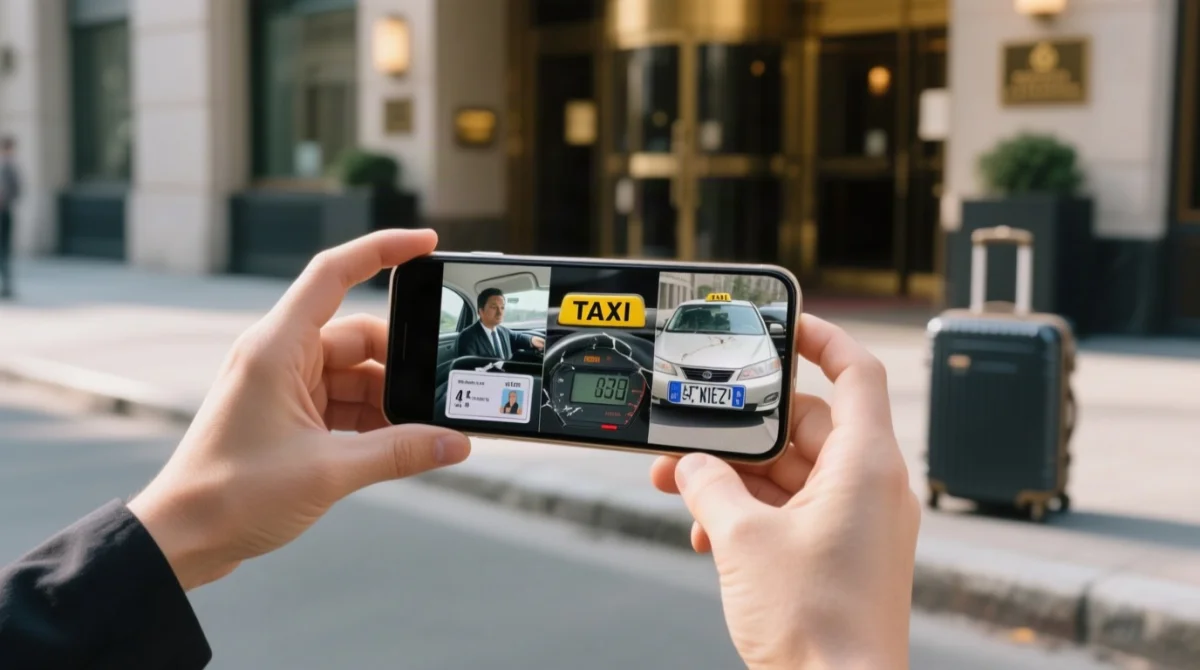
Secure evidence
Photograph the driver’s 4-5 digit ID badge, meter display, and exterior license plate before exiting
Step away safely
Do not escalate a confrontation; retrieve luggage and move to a secure location such as a hotel lobby
Contact authorities
Report to Tourist Police at 108; for physical threats, call 113. Both are external, government-operated resources
Last reviewed on October 1, 2026. Fares and hotlines can change; confirm the meter before departure and call 113 for police emergencies or 108 for tourist police support. We are an independent travel information site, not affiliated with Grab, Mai Linh, Vinasun, or Xanh SM. For government safety guidance, check the U.S. State Department’s Vietnam travel advisory (currently Level 1) and the Vietnam National Authority of Tourism.
FAQ: Transport and Taxi Scams in Vietnam
How can I avoid taxi scams in Vietnam?
Use Grab with verified license plates or licensed operators such as Mai Linh, Vinasun, or Xanh SM. Insist on the meter or agree on a fixed price before departure.
Are taxis in Vietnam safe for tourists in 2026?
Yes, with normal precautions; the U.S. State Department maintains a Level 1 advisory. Use licensed operators with a displayed driver identification badge to avoid transport scams in Vietnam.
Is Grab a safer alternative to street taxis in Vietnam?
Yes. GPS driver tracking and linked card payments make Grab safer, but verify the license plate and driver photo to avoid fake Grab drivers in green jackets.
How do I know if a taxi in Vietnam is using a rigged meter?
A rigged meter runs 3-5 times faster than normal. Apply the three-zero rule: a display showing 35 means 35,000 VND, not 350,000 VND.
What is the average taxi fare from Tan Son Nhat Airport to District 1?
The average fare is 200,000-300,000 VND, roughly $8-$12 USD in 2026. Avoid unlicensed touts quoting higher fixed prices.
What should I do if a fake Grab driver takes my money in Vietnam?
Photograph the vehicle license plate and the driver identification badge immediately, then report the incident to the Vietnam Tourist Police hotline at 108.
How do I avoid pickpocketing on buses and at transport stations in Vietnam?
Stay alert in crowds at hubs like Hanoi Old Quarter and Saigon District 1, ignore unsolicited luggage handlers, and keep your phone in your lap or a zipped bag.
What are the emergency numbers for reporting a transport scam in Vietnam?
Call the Vietnam Tourist Police official hotline at 108 to report fraud, or dial 113 for the police emergency line.