
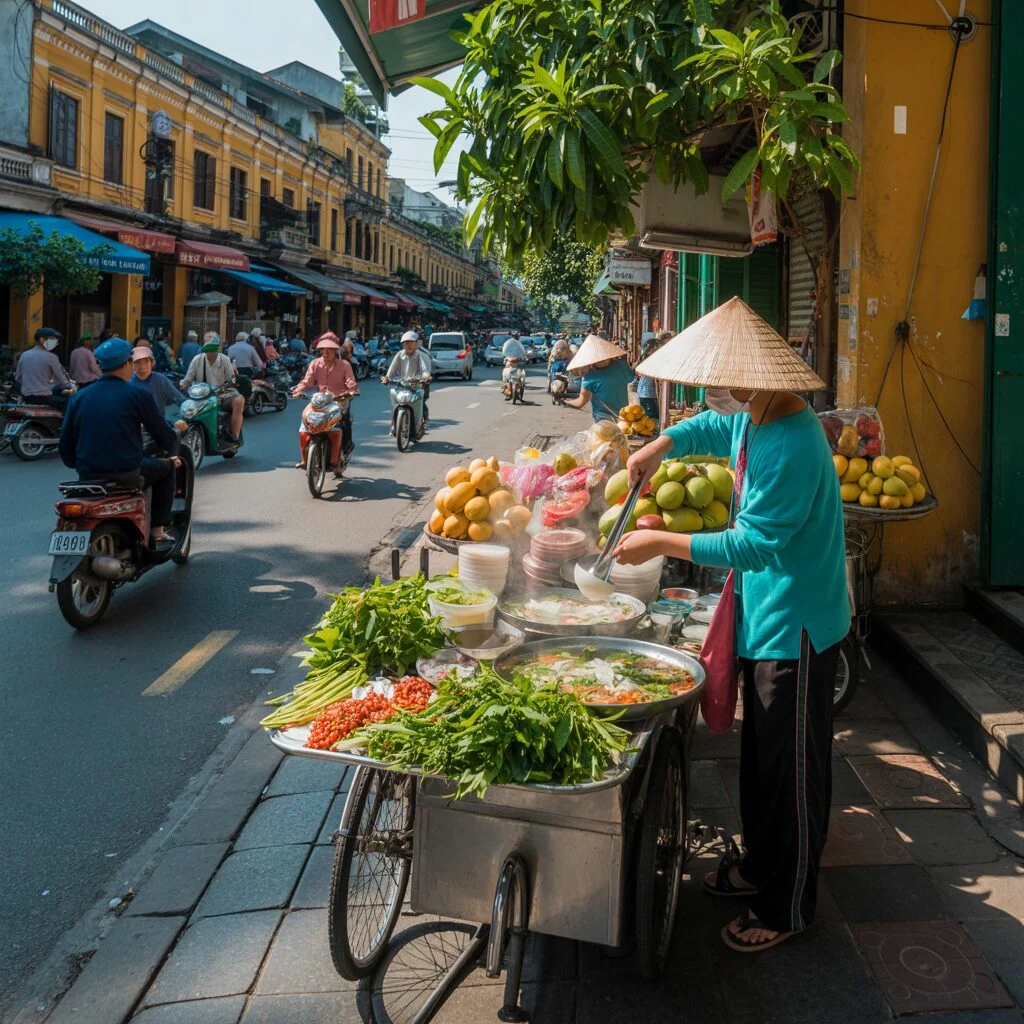
A 2-week Vietnam itinerary from Hanoi to Ho Chi Minh City spans 14 days across three climate zones, combining domestic flights, overnight trains, and private transfers. The route covers Ha Long Bay, Sapa, Hue, Hoi An, Da Nang, and the Mekong Delta, with daily costs from $25 to $300+.
US citizens need a 90-day e-visa with standard processing of 3 working days and fees of $25 to $50 USD before departure. The optimal travel window for the full route is October through April, avoiding Central Vietnam’s September-to-November typhoon season that can disrupt coastal segments.
This day-by-day guide splits the route into two segments: Days 1 through 7 (Hanoi to Hue) and Days 8 through 14 (Hue to Ho Chi Minh City). Each transition includes exact transport modes, durations, and price bands so you can book infrastructure with confidence before committing funds.
Pre-Trip Planning: Visas, Entry Rules & Best Time to Visit Vietnam
US passport holders need a 90-day Vietnamese e-visa costing $25-$50 USD, with standard processing taking 3 working days via the government portal (external source). The 2-week Vietnam itinerary spans 3,000+ km across three climate zones, making seasonal timing critical.

Step-by-Step E-Visa Application for US Passport Holders
- Upload a passport data page scan and a passport-style photo to the government portal (linked as an external resource).
- Pay the fee via Visa/Mastercard on the portal.
- Print the approval letter and present it at the arrival airport.
E-Visa Processing Times and Fees (2026)
Standard processing takes 3 working days; express processing takes 1 working day. The 90-day e-visa is available in both single-entry and multiple-entry formats, with fees ranging from $25-$50 USD.
Regional Weather Patterns (North, Central, South)
| Region | Optimal Season | Risky Season |
|---|---|---|
| North | Cool dry: Oct-Apr | Hot humid: May-Sep |
| Central | Dry: Feb-Aug | Typhoon season: Sep-Nov |
| South | Dry: Nov-Apr | Rainy: May-Oct |
The 2-week Vietnam itinerary performs best within the October-April window, when all three regions align for favorable travel conditions.
How to Navigate Vietnam – 2026 Transportation Guide
Domestic flights (Hanoi→Hue at 1 hr 15 min, Da Nang→HCMC at 1 hr 30 min, $40-$120 USD) and overnight trains (Hanoi→Lao Cai at $15-$35 USD) are the two primary transport modes in Vietnam for this 14-day route. The 2-week Vietnam itinerary locks in transit windows across carriers including Vietnam Airlines, Vietjet Air, and Bamboo Airways.
Domestic Flights vs. Overnight Trains – 2026 Comparison Matrix
| Mode | Route | Duration | Price | Pros | Cons |
|---|---|---|---|---|---|
| Domestic flight | Hanoi→Hue | 1 hr 15 min | $40-$120 USD | Fastest option; preserves daylight hours | Airport transfer time; baggage limits |
| Domestic flight | Da Nang→HCMC | 1 hr 30 min | $40-$120 USD | Covers 1,000+ km efficiently | Higher cost than rail |
| Overnight train | Hanoi→Lao Cai (Sapa) | ~8 hrs overnight | $15-$35 USD | Saves a hotel night; scenic Lao Cai-Hanoi rail corridor | Limited cabin comfort |
| Reunification Express | Hanoi-Hue-Da Nang | 12-14 hrs | $15-$35 USD | Coastal highway NC1 route views | Longest transit leg |
Booking and Riding Vietnam’s Sleeper Trains
The 2-week Vietnam itinerary relies on inter-city sleeper train booking for the Sapa leg via the Lao Cai-Hanoi rail corridor. Operators Livitrans and Victoria Express offer 4-berth and 6-berth cabins at $15-$35 USD. Book 2-3 weeks ahead for weekend departures.
Day-by-Day Itinerary: Days 1-7 (Hanoi to Hue)
The 2-week Vietnam itinerary structures the first seven days around Hanoi’s Old Quarter, a Ha Long Bay overnight cruise, and Sapa’s terraced rice fields, before transitioning south to Hue via a 1 hr 15 min domestic flight.
Days 1-2 – Hanoi Old Quarter & City Exploration
- Day 1: Arrival, Hoan Kiem Lake, evening street food tour – Bun Cha ($2-$4), egg coffee (unique to Hanoi).
- Day 2: Temple of Literature, Hoa Lo Prison, Water Puppet show. Budget accommodation in Hanoi starts at $10-$15/night.
Days 3-4 – Ha Long Bay Overnight Cruise
- Day 3: Transfer to Ha Long Bay, embark cruise, Sung Sot Cave. Book cruises 2-3 months ahead.
- Day 4: Ti Top Island kayaking, return to Hanoi, overnight train Hanoi→Lao Cai ($15-$35).
Days 5-6 – Sapa & the Terraced Rice Fields
- Day 5: Arrive Lao Cai, transfer to Sapa, Cat Cat Village trek.
- Day 6: Muong Hoa Valley hike through Sapa terraced rice landscapes, overnight train back to Hanoi.
Day 7 – Hanoi to Hue
- Morning flight Hanoi→Hue (1 hr 15 min), afternoon arrival, evening Perfumed River walk.
Day-by-Day Itinerary: Days 8-14 (Hue to Ho Chi Minh City)
Day 8 explores the Hue Imperial Citadel; Days 9-10 cover Hoi An Ancient Town; Day 11 hits Da Nang’s Central Coast; Day 12 flies to HCMC (1 hr 30 min); Days 13-14 navigate the Mekong Delta and Cu Chi Tunnels.
Day 8 – Exploring the Hue Imperial Citadel
- Morning: Hue Imperial Citadel ruins, Thien Mu Pagoda
- Afternoon: Royal tombs – Khai Dinh and Tu Duc
- Evening: Perfumed River walk
Days 9-10 – Hoi An Ancient Town Guide
- Day 9: Hai Van Pass transfer to Hoi An, lantern-lit Old Town evening; note Hoi An ancient town zoning restrictions on vehicle access
- Day 10: Japanese Covered Bridge, tailor shops, cooking class; Cao Lau $1.50-$3
Day 11 – Da Nang & the Central Coast
- Marble Mountains, My Khe Beach, Dragon Bridge (weekend evenings)
Day 12 – Da Nang to Ho Chi Minh City
- Flight Da Nang→HCMC (1 hr 30 min, $40-$120)
- Afternoon: War Remnants Museum, Ben Thanh Market
Days 13-14 – Navigating the Mekong Delta
- Day 13: Mekong Delta river network, Cai Be floating market, coconut candy workshop
- Day 14: Cu Chi Tunnels half-day, departure from Tan Son Nhat Airport; Banh Xeo $2-$3.50 in HCMC
The 2-week Vietnam itinerary locks these southern segments into fixed transit windows so that flight schedules and market hours align without wasted buffer days. As the 2-week Vietnam itinerary enters its final stretch, the Mekong Delta river network provides a deliberate slowdown before departure.
Accommodation, Budgets & Culinary Guide (USD)
Budget guesthouses start at $10-$15/night in Hanoi and Hoi An, while luxury hotels in HCMC reach $150-$300+/night. Total 14-day Vietnam travel costs range from $350-$560 (backpacker) to $2,100-$4,200+ (luxury). The 2-week Vietnam itinerary embeds a daily USD tracking framework that prevents budget drift by aligning accommodation tiers with regional price fluctuations – highest in HCMC, lowest in Sapa. Book Ha Long Bay overnight cruises 2-3 months ahead.

Accommodation Tiers by Region
| City | Budget | Luxury | Booking Lead Time |
|---|---|---|---|
| Hanoi / Hoi An | $10-$15/night | $150-$300+/night | 2-3 months (cruises) |
| HCMC | $10-$15/night | $150-$300+/night | Peak season essential |
| Sapa | Lowest regional cost | Homestay vs. hotel | Walk-in feasible |
Estimated Vietnam Travel Budgets (USD per Day)
| Tier | Daily | 14-Day Total |
|---|---|---|
| Backpacker | $25-$40 | $350-$560 |
| Mid-range | $50-$90 | $700-$1,260 |
| Luxury | $150-$300+ | $2,100-$4,200+ |
Regional Culinary Guide – What to Eat Where
- North: Bun Cha $2-$4, egg coffee (unique to Hanoi Old Quarter)
- Central: Cao Lau $1.50-$3 (Hoi An), Hue royal cuisine
- South: Banh Xeo $2-$3.50 (HCMC)
Customizing Your 2-Week Vietnam Itinerary
- Solo: Cut Ha Long Bay for extra Sapa trekking days
- Couples: Upgrade to luxury cruises and boutique stays
- Family-friendly: Add rest days in Hoi An, slower pacing
Health, Safety, Currency & Cultural Etiquette
The 2-week Vietnam itinerary embeds risk-mitigation protocols that protect travelers across three climate zones. Recommended vaccinations include Hepatitis A/B, Typhoid, and Japanese Encephalitis. Emergency numbers are 115 (ambulance) and 114 (police). Travel insurance covering medical evacuation is strongly advised before departure.
Health, Safety & Common Tourist Scams
- Taxi meter tampering: Use the Grab app for transparent, upfront pricing instead of street-hailed taxis.
- Motorbike deposit traps: Rental shops may withhold passports or charge inflated damage fees; document the bike’s condition with photos.
- Fake tour operators: Book through established platforms and verify business registration before paying to avoid common scams in Vietnam.
Practical Tips – Currency, Payments & Cultural Etiquette
- Currency: Vietnamese Dong (VND); cash-based economy outside major urban centers. ATMs dispense a maximum of 2-3 million VND per transaction.
- Temple dress code: Covered shoulders and knees required at all pagodas and religious sites.
- Motorbike rental permit rules: An International Driving Permit (IDP) is legally required; riding without one voids insurance coverage.
- Tipping: Not mandatory but appreciated; 5-10% is standard in restaurants.
- Connectivity: Purchase a local SIM card or eSIM at arrival airports for data access throughout the 2-week Vietnam itinerary.
FAQ: 2-Week Vietnam Itinerary Planning
Is 2 weeks enough time to travel from Hanoi to Ho Chi Minh City?
Yes. A well-structured 2-week Vietnam itinerary covers the full 3,000+ km route from Hanoi to Ho Chi Minh City with realistic travel times. The itinerary uses domestic flights (Hanoi to Hue at 1 hr 15 min, Da Nang to HCMC at 1 hr 30 min) and overnight trains (Hanoi to Lao Cai) to maximize sightseeing days while minimizing transit fatigue across three climate zones.
How much does a 2-week Vietnam itinerary cost for US travelers in 2026?
Total 14-day costs range widely by travel style. Backpackers spend $25 to $40 per day, totaling $350 to $560. Mid-range travelers budget $50 to $90 per day, totaling $700 to $1,260. Luxury travelers spend $150 to $300+ per day, totaling $2,100 to $4,200+. Regional prices are highest in Ho Chi Minh City and lowest in Sapa.
Do US citizens need a visa for Vietnam in 2026?
Yes. US passport holders must obtain a Vietnamese e-visa before departure. The 90-day e-visa costs $25 to $50 USD, with standard processing taking 3 working days and express processing taking 1 working day. Both single-entry and multiple-entry options are available. Apply through the government portal, upload your passport data page and photo, pay via Visa or Mastercard, and print the approval letter for presentation at arrival.
What is the best month to start a Hanoi-to-HCMC itinerary?
October through April is the optimal window for the full Hanoi-to-HCMC route. Northern Vietnam is cool and dry from October to April. Southern Vietnam is dry from November to April. Avoid Central Vietnam from September to November due to typhoon season. February to August is the dry season for the central coast, including Hoi An and Da Nang.
Should I fly or take the train between cities in Vietnam?
Both have merits. Domestic flights (Vietnam Airlines, Vietjet Air, Bamboo Airways) cost $40 to $120 USD and save time: Hanoi to Hue takes 1 hr 15 min, Da Nang to HCMC takes 1 hr 30 min. Overnight trains like the Hanoi to Lao Cai corridor cost $15 to $35 USD and save a night of accommodation while covering long distances on the Reunification Express corridor.
Is Ha Long Bay worth including in a 14-day Vietnam trip?
Yes. Ha Long Bay occupies Days 3 and 4 of this 2-week Vietnam itinerary, featuring an overnight cruise with Sung Sot Cave and Ti Top Island kayaking. Book cruises 2 to 3 months ahead, especially during peak season. The experience combines natural scenery with efficient overnight transit back toward Hanoi for the Sapa leg.
Can I customize this itinerary for a family with children?
Yes. Families should add rest days in Hoi An for slower pacing. The Hoi An Ancient Town section (Days 9 to 10) is naturally family-friendly with cooking classes and beach proximity. Consider skipping the more strenuous Sapa trekking days or replacing them with lighter cultural village visits. Domestic flights reduce transit fatigue compared to overnight trains.
Is it safe to rent a motorbike in Vietnam as a tourist?
An International Driving Permit (IDP) is legally required to rent a motorbike in Vietnam. Renting without one carries significant legal and insurance risks. Common motorbike rental deposit traps are documented tourist scams. For urban transport, use the Grab app instead of taxis to avoid meter tampering. Emergency numbers are 115 for ambulance and 114 for police.
What should I pack for a 2-week trip across Vietnam?
Pack for three climate zones. Northern Vietnam (Hanoi, Sapa) requires layers for cool October-to-April weather. Central and southern regions need lightweight, breathable clothing. Temple visits require covered shoulders and knees. Bring cash in VND, as ATMs dispense a maximum of 2 to 3 million VND per transaction. Overnight train trips require personal toiletries and sleep essentials.
How far in advance should I book domestic flights and Ha Long Bay cruises?
Book Ha Long Bay overnight cruises 2 to 3 months ahead, especially during peak season from October to April. Domestic flights ($40 to $120 USD via Vietnam Airlines, Vietjet Air, or Bamboo Airways) should be booked early for better pricing, particularly on the Hanoi to Hue and Da Nang to HCMC routes. Sapa sleeper trains (Livitrans, Victoria Express) also require advance booking.