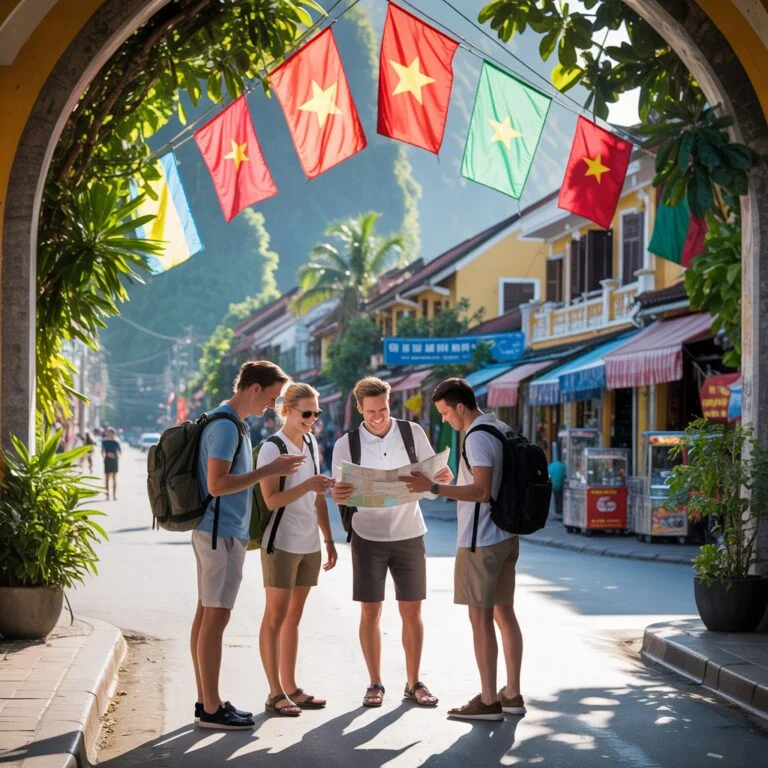
In the Vietnam vs Thailand for travel debate, Vietnam offers lower daily costs starting at $20 per night and rugged cultural immersion, while Thailand provides superior beach infrastructure and easier transport. Vietnam features a 90-day e-visa advantage, whereas Thailand allows 30-day visa-free entry for US citizens.
Both destinations present distinct advantages depending on your itinerary goals. Thailand boasts decades-ahead infrastructure development, including the Bangkok BTS opened in 1999 and MRT in 2004, alongside higher English proficiency. Conversely, Vietnam delivers a rawer, more authentic experience with dramatic mountain landscapes like the Sapa rice terraces and lighter, broth-based street food culture.
Choosing between Vietnam and Thailand ultimately depends on whether you prioritize polished tourist facilities and world-class tropical beaches or budget-friendly adventure and deep cultural exploration. This 2026 comparison breaks down costs, weather, food, and logistics to help you decide.
Costs & Logistics: Vietnam vs Thailand for travel
The Vietnam vs Thailand travel comparison demonstrates that Vietnam delivers consistently lower daily costs, with clean hotels at $20-40 USD per night versus Thailand’s $50-60 USD mid-range rate, while Thailand counters with simpler visa logistics for US passport holders.
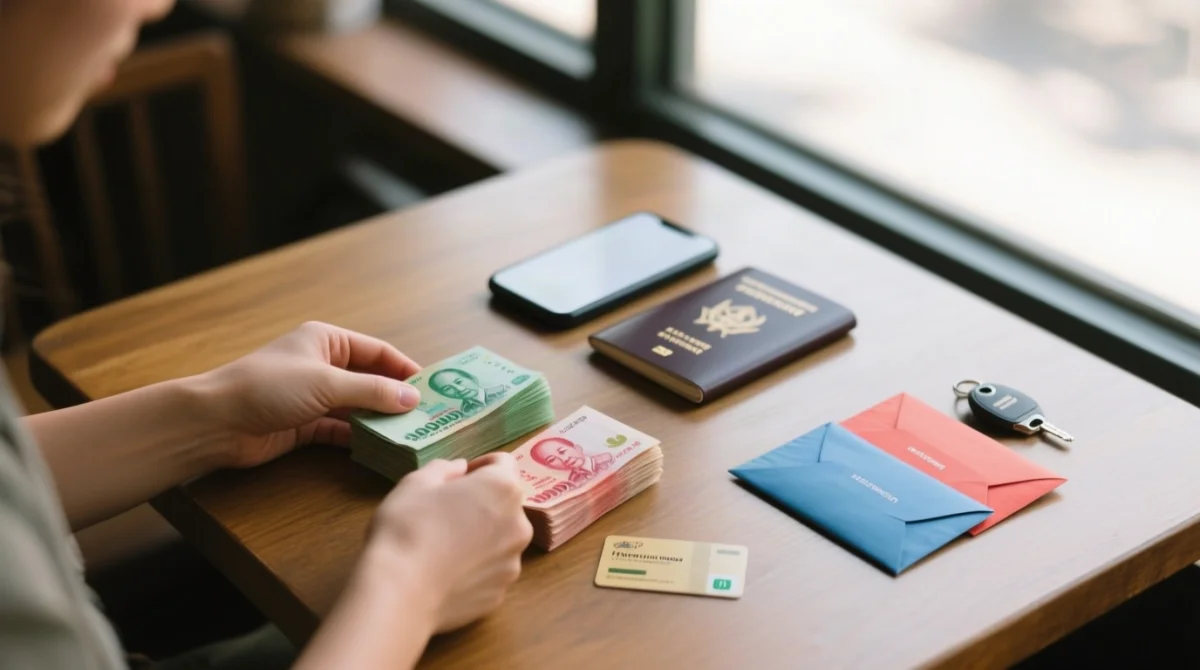
| Category | Vietnam | Thailand |
|---|---|---|
| Hotel (popular cities) | $20-40 USD/night | $50-60 USD/night |
| ATM fee per withdrawal | ~$2.00 | ~$6.00 |
| Grab ride in cities | Under $1.00 | Higher |
| Domestic flight (HCMC-Da Nang) | $26 USD | N/A |
| Visa (US citizens) | 90-day e-visa (arranged pre-arrival) | 30-day visa-free + 30-day extension |
Banking & ATM Fees
Both countries operate cash-reliant economies, yet ATM withdrawal fees diverge sharply. Vietnam charges around $2.00 per withdrawal, while Thailand’s fees sit closer to $6.00. The Vietnam vs Thailand travel comparison shows these recurring charges compound significantly over multi-week stays.
Visa & Transport Infrastructure
Vietnam’s 90-day single-entry e-visa suits longer itineraries and digital nomads, whereas Thailand grants 30-day visa-free entry extendable by another 30 days through local immigration. On transit, Thailand’s infrastructure is decades ahead: Bangkok’s BTS opened in 1999 and MRT in 2004, while Hanoi’s first metro line launched in 2021 and HCMC’s in December 2024.
Food & Culinary Landscapes
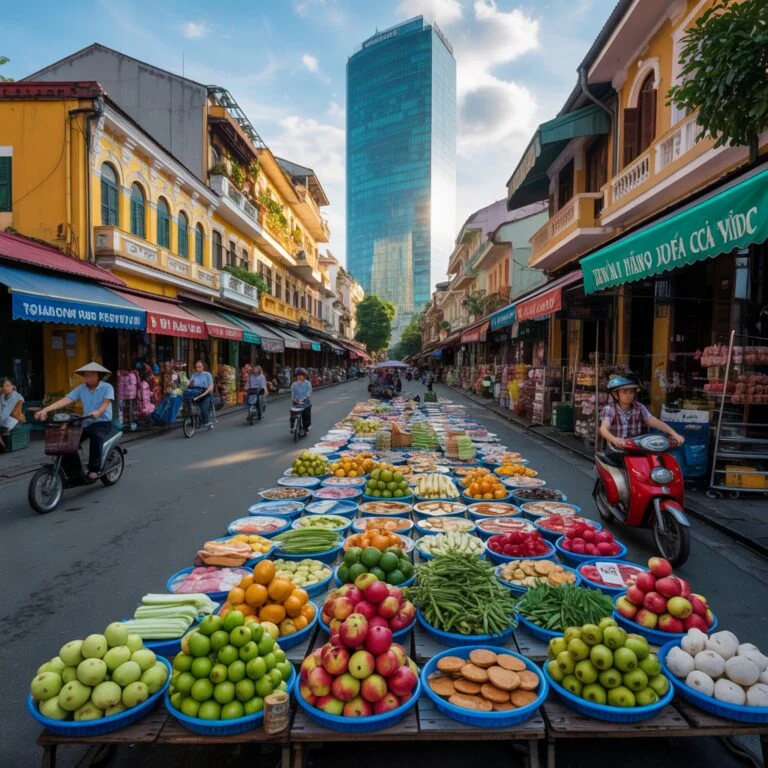
The Vietnam vs Thailand travel comparison reveals two distinct culinary identities: Vietnam delivers lighter, broth-based street food centered on fresh herbs, while Thailand serves spicier, more polished dishes geared toward tourist-friendly palates.
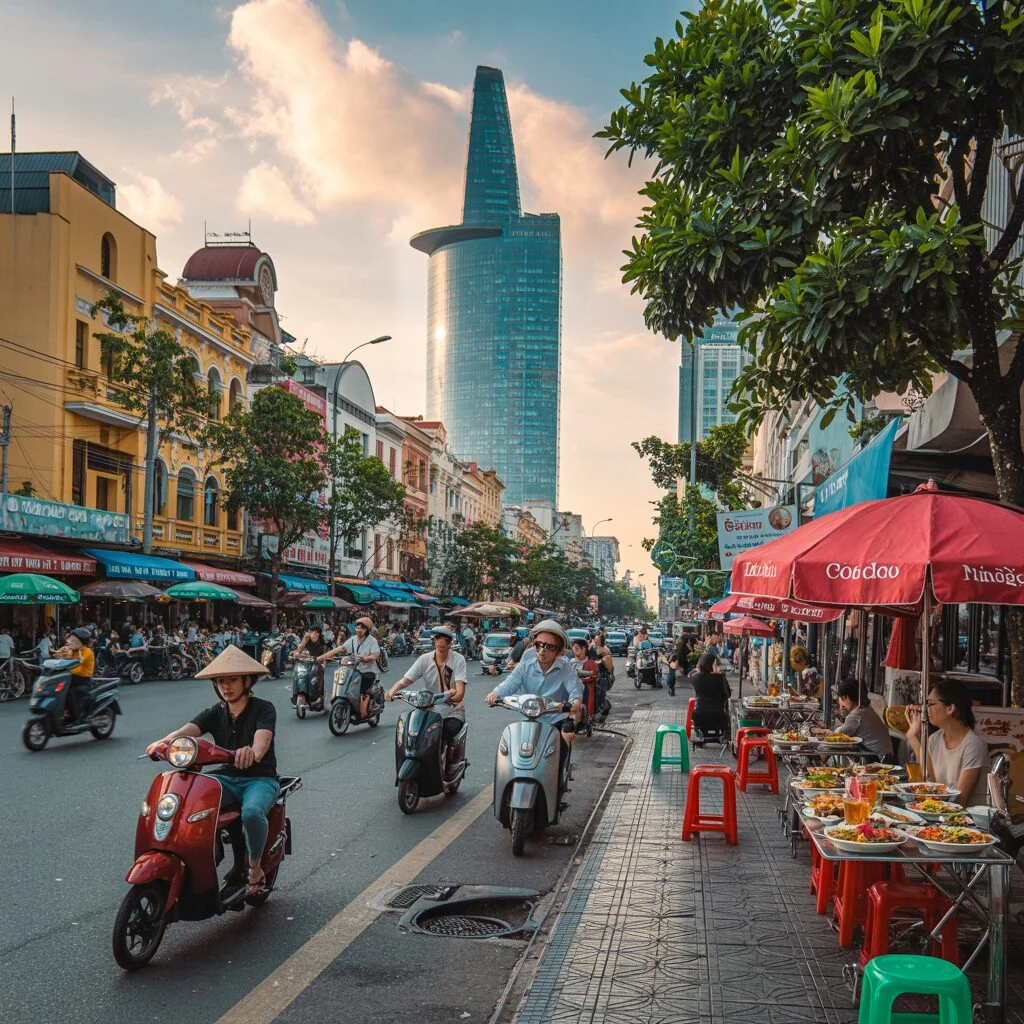
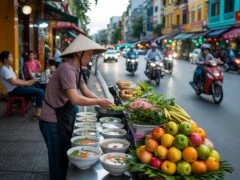
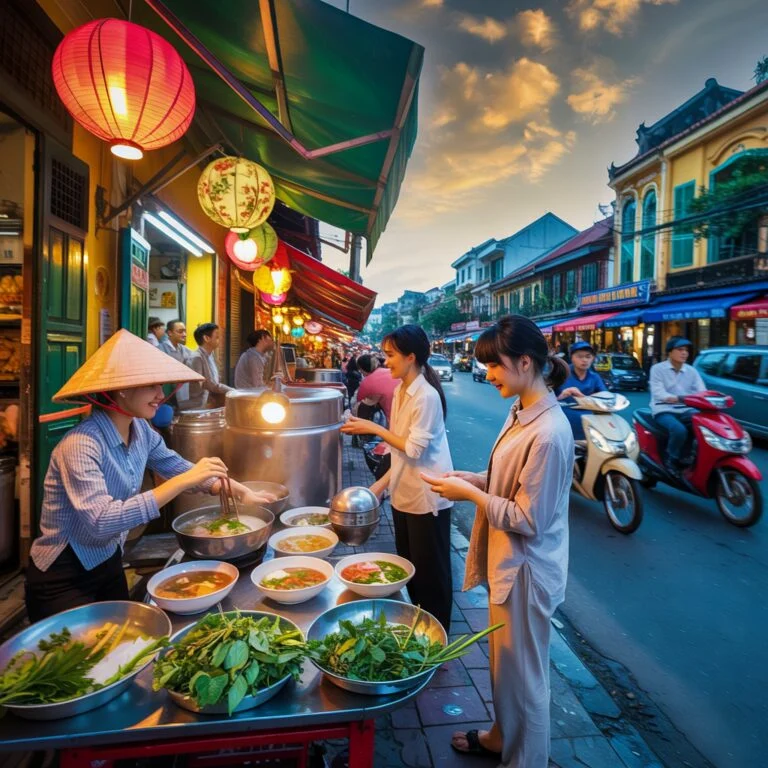
- Vietnam street food character: Lighter and healthier, emphasizing fresh herbs and broth-based dishes; rawer and more authentic, with diners squatting on plastic stools while food is prepared directly in front of them.
- Thailand street food character: Spicier and more intense, with a more polished, tourist-friendly presentation style.
- Signature dishes: Vietnam leads with phở bò (honorable mention: egg coffee); Thailand counters with massaman curry (honorable mention: pad thai with prawns).
- Dining price gap: A birthday seafood hotpot in Vietnam costs $10.00 and feeds four people; the equivalent dish in Thailand runs triple that price or more.
Tipping Culture & Etiquette
In the Vietnam vs Thailand travel comparison, tipping expectations diverge modestly. Thailand has a longer-established tourism economy where small tips in restaurants and hotels are increasingly normalized. Vietnam remains less tip-dependent, though rounding up the bill is appreciated in mid-range and upscale venues. Neither country enforces mandatory service charges across local stalls, where cash transactions dominate.
Geography, Culture & Climate Patterns
Thailand features world-class tropical beaches and distinct dry seasons, while Vietnam excels in dramatic mountain landscapes and unpredictable regional climates. The vietnam vs thailand for travel comparison reveals two fundamentally different geographic and cultural profiles that shape every itinerary decision.
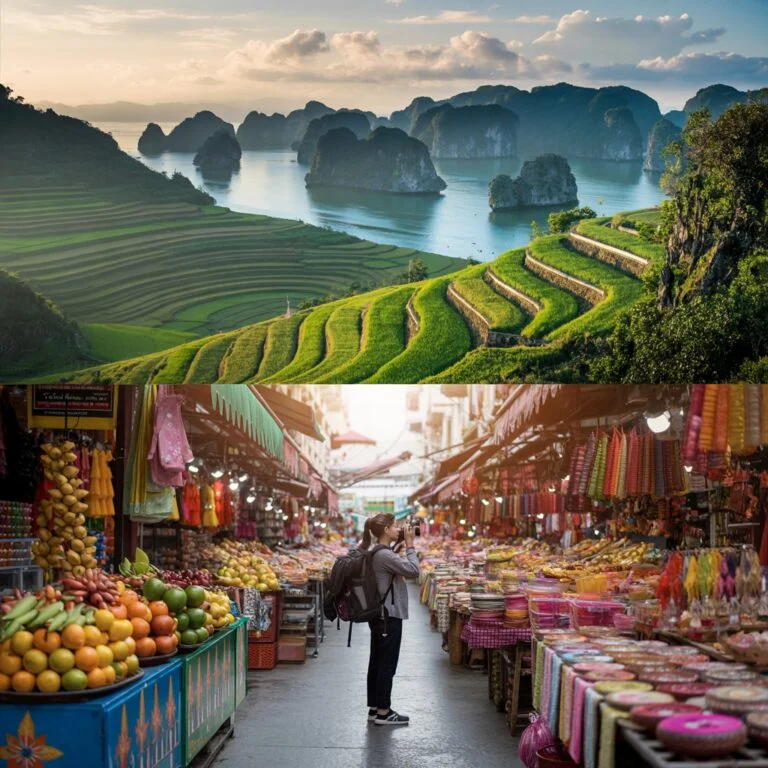
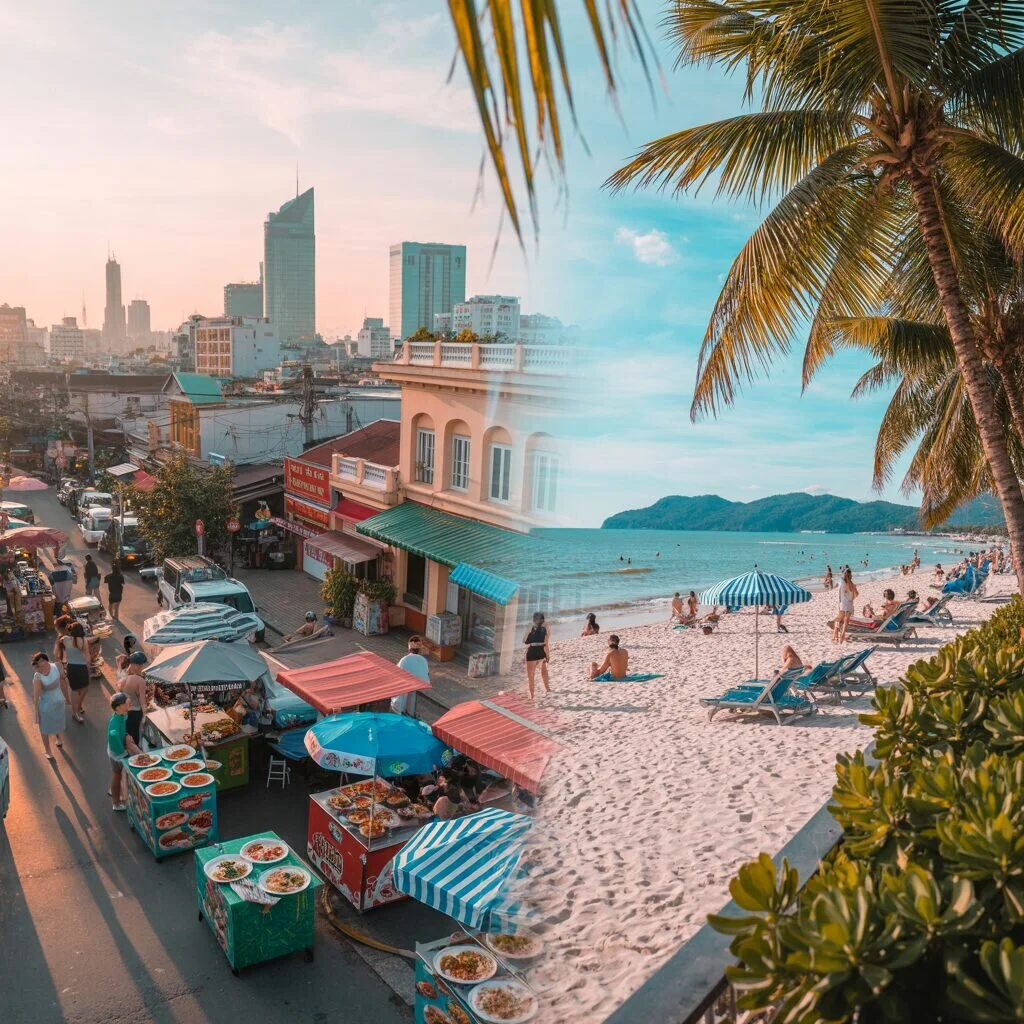
Thailand’s beaches – including Koh Lipe, Koh Lanta, and Koh Phi Phi – deliver next-level quality that Vietnam cannot match. Da Nang Beach is superb but overly regulated with development. Conversely, Vietnam dominates in mountains: Sapa’s Fansipan peak, Cat Cat village, and rice terraces outclass Thailand’s Doi Inthanon. Thailand holds 156 national parks versus Vietnam’s 34, and is larger by over 150,000 square kilometers. Culturally, Vietnam bears a French colonial legacy layered over 1,000+ years under the Chinese empire, while Thailand stands as the only Southeast Asian country that avoided colonization, maintaining an independent kingdom since 1350. English proficiency remains limited in Vietnam, even in tourist areas, whereas it is far more common across Thailand.
Best Time to Visit & Weather Patterns
Thailand offers a predictable cycle: optimal conditions from November to February, brutal heat in April, and proper wet-season rain by September. Vietnam’s climate is more diverse and unpredictable – typhoons can force itinerary shifts, as when Hue was skipped in favor of Hoi An. The vietnam vs thailand for travel comparison highlights that Thailand suits calendar-based planning, while Vietnam demands regional flexibility.
Essential Local Phrases
Vietnam: “Xin chào” (hello), “Cảm ơn” (thank you). Thailand: “Sawasdee” (hello), “Khob khun” (thank you). Learning these basics meaningfully improves interactions, especially in Vietnam where English barriers are more frequent.
Digital Nomad Readiness & Practical Health
The Vietnam vs Thailand travel comparison shows Thailand offers superior digital nomad infrastructure, while Vietnam provides cheaper living; tap water is unsafe for drinking in both countries.
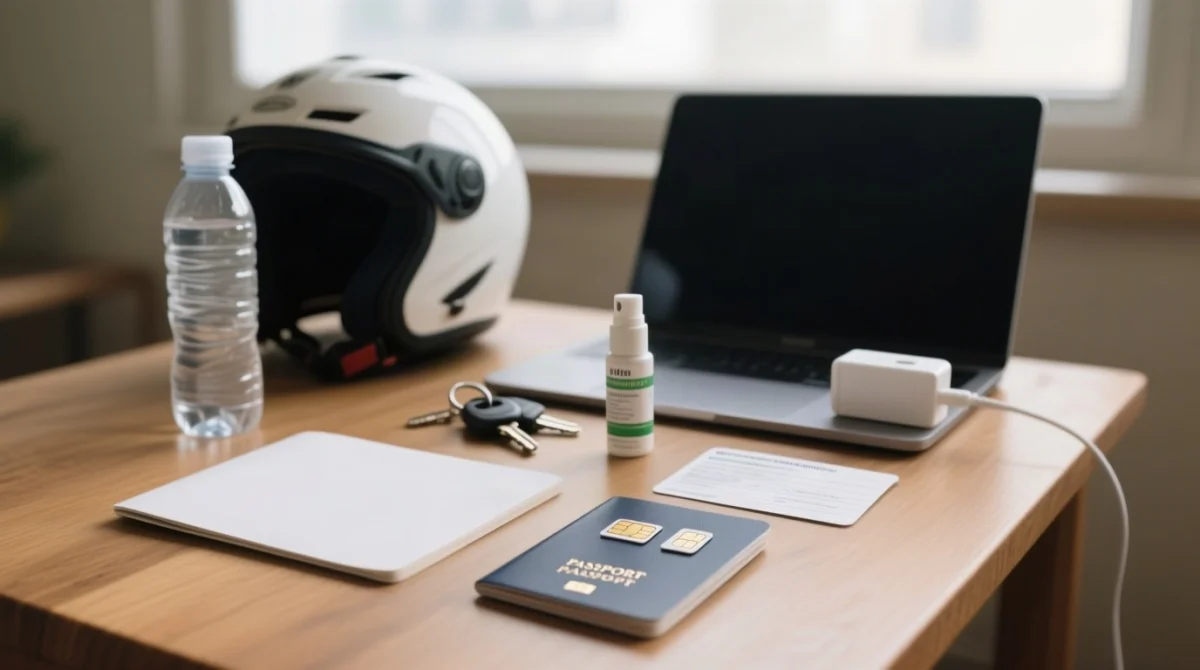
Thailand’s transport infrastructure is decades ahead, with Bangkok’s BTS operating since 1999 and MRT since 2004, whereas Hanoi’s first metro line opened in 2021 and HCMC’s in December 2024. Vietnam’s 90-day e-visa makes more sense for remote workers than constantly extending stays in Thailand.
- Choose Chiang Mai for established coworking ecosystems or Da Nang for lower living costs.
- Purchase a Viettel SIM in Vietnam or AIS in Thailand for reliable mobile data and eSIM availability.
- Drink only bottled or filtered water in both countries.
- Keep vaccinations current and guard against mosquito-borne illnesses.
- Stay alert for dual pricing, gem scams, and motorbike rental traps.
Health, Vaccinations & Water Safety
Tap water is unsafe for drinking in both Vietnam and Thailand. Use sealed bottled water exclusively. Ensure routine vaccinations are current and consult a travel clinic for region-specific recommendations, including mosquito-borne illness prevention.
Safety & Common Scams
Both countries are generally safe, yet the Vietnam vs Thailand travel comparison highlights recurring tourist traps: dual pricing at attractions, gem shop scams, and motorbike rental deposit disputes. Verify prices upfront and use reputable operators.
Frequently Asked Questions (FAQ)
Is Vietnam cheaper than Thailand for daily travel costs?
Yes, Vietnam is generally cheaper. Clean, well-located hotels in popular Vietnamese cities cost $20 to $40 USD per night, compared to $50 to $60 USD for a decent mid-range hotel in Thailand. Additionally, ATM withdrawal fees in Vietnam are around $2.00, while in Thailand they are closer to $6.00.
Do US citizens need a visa for Vietnam or Thailand in 2026?
US citizens must obtain a 90-day single-entry e-visa for Vietnam, which can be sorted before arriving. For Thailand, US citizens enjoy 30-day visa-free entry, which is extendable for another 30 days by signing a form at a hotel and getting approval at a local immigration office.
Which country has better beaches, Vietnam or Thailand?
Thailand has superior beaches, featuring world-class destinations like Koh Lipe, Koh Lanta, and Koh Phi Phi. While Da Nang Beach in Vietnam is superb, it is overly regulated with development, and Thailand’s beach quality is considered next level compared to Vietnam.
Is tap water safe to drink in Vietnam and Thailand?
No, tap water is unsafe for drinking in both Vietnam and Thailand. Travelers must rely on bottled water or use reliable filtration systems during their stay in either country to avoid potential health risks and stomach illnesses.
Which destination is better for digital nomads and remote work?
Vietnam offers a 90-day e-visa option which makes more sense for digital nomads than constantly extending stays in Thailand, alongside cheaper living costs. However, Thailand offers superior digital nomad infrastructure in established hubs like Chiang Mai.
What is the best time of year to visit Vietnam vs Thailand?
The best time to visit Thailand is from November to February during the dry season. Vietnam experiences more diverse and unpredictable regional climate patterns, requiring careful month-by-month planning to avoid issues like typhoons in the central region.
Is English widely spoken by locals in both countries?
English proficiency is far more common in Thailand among locals and service workers. In Vietnam, English proficiency is limited, even in popular tourist areas, which may require more preparation, translation apps, or guided tours for smooth communication.
What are the signature street food dishes to try in each country?
In Vietnam, the signature dish is pho bo, with egg coffee as an honorable mention. Vietnamese street food is lighter and healthier, emphasizing fresh herbs. In Thailand, the signature dish is massaman curry, with pad thai with prawns as a notable alternative, featuring spicier and more intense flavors.