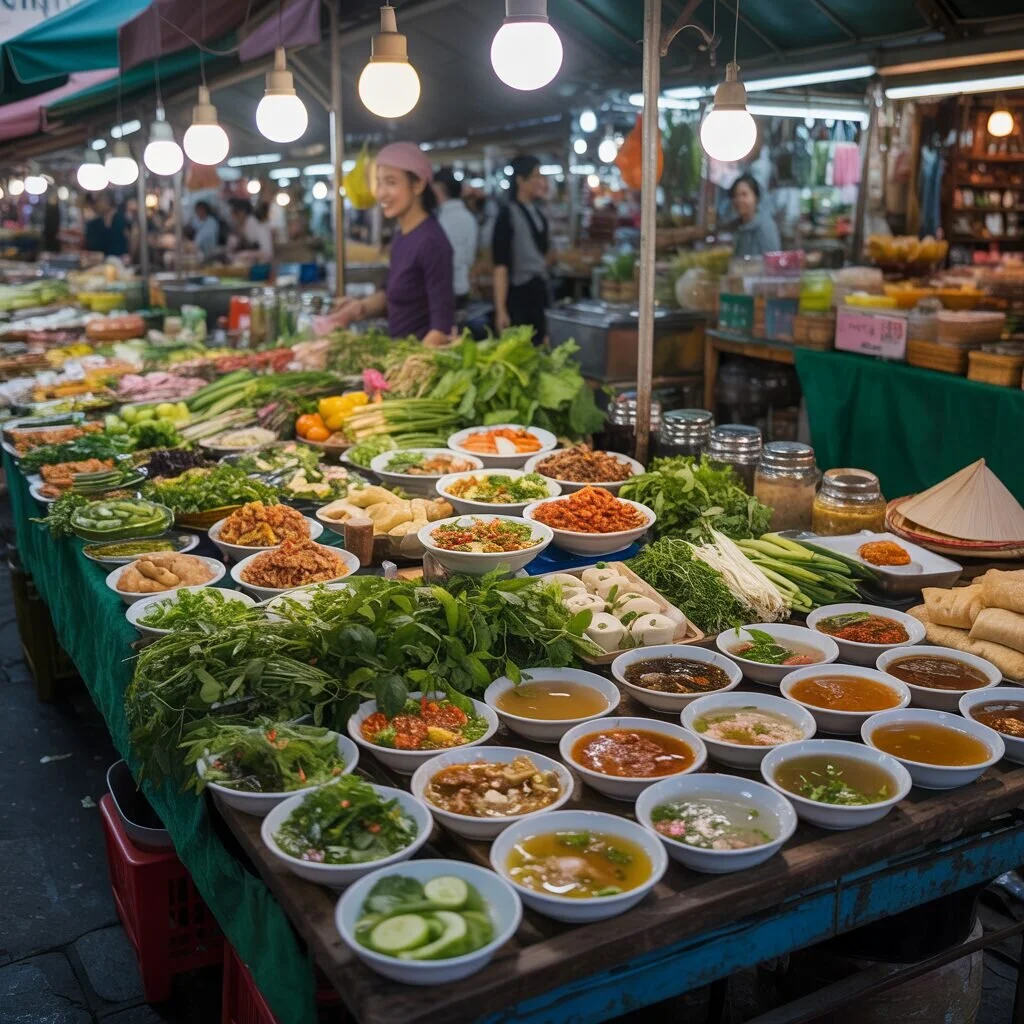


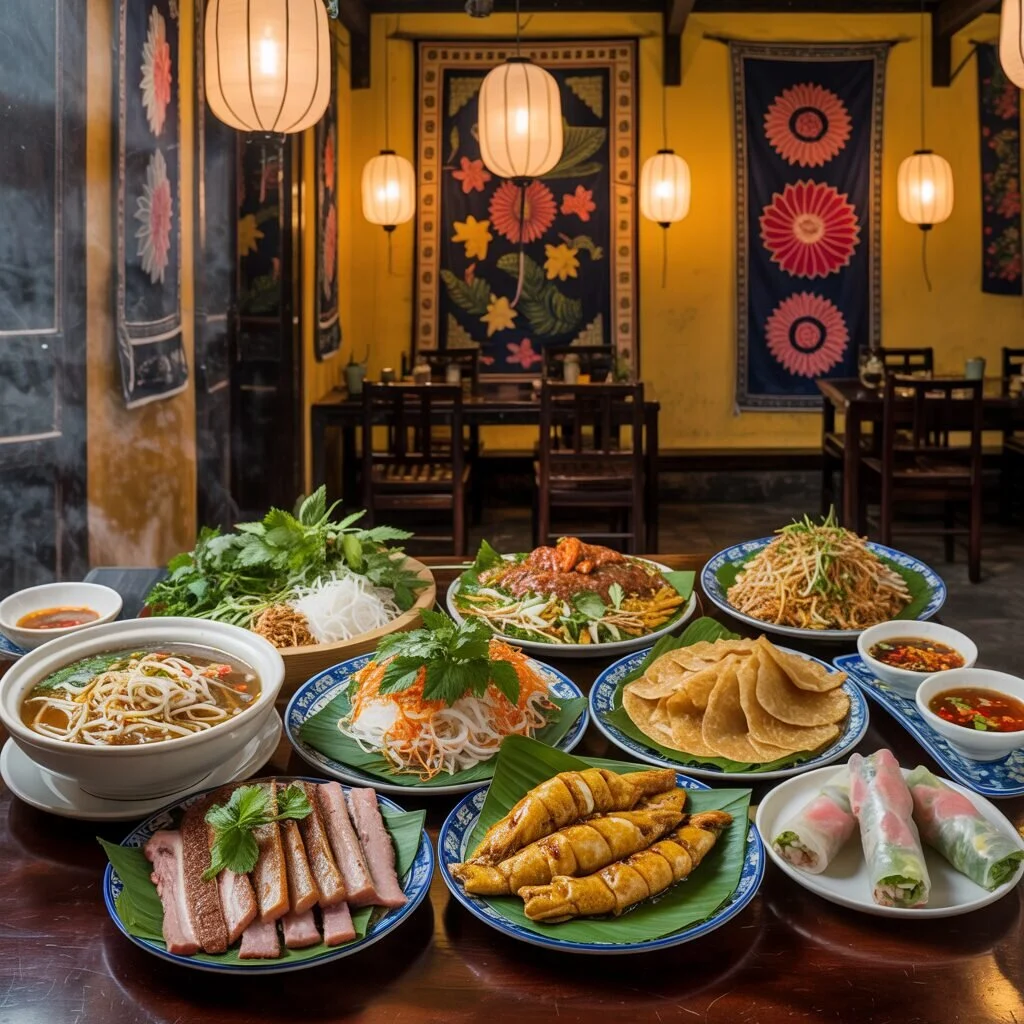
North vs South Vietnamese food splits along one clear line in 2026: the North favors subtle, salt-forward broths with minimal herbs, while the South embraces bolder, sweeter flavors built on sugar, coconut milk, and massive fresh herb platters.
In Hanoi, that means clear broths seasoned with pure nước mắm under the ngũ vị (five flavors) philosophy; in Ho Chi Minh City, it means coconut milk, garlic-sugar fish sauce, and heaping rau thơm (fresh herb platters). This guide covers 2026 prices (phở 50,000-70,000 VND, ~$2-$3; bánh mì 20,000-30,000 VND, ~$1), safety rules, and matchups against Thai, Chinese, and Korean cuisine.
The North-South Flavor Gradient: How Vietnam Tastes in Three Acts
North vs South Vietnamese food forms a three-act gradient: clean, salt-forward dishes in Hanoi, the country’s spiciest plates in Huế, and sweet, herb-heavy cooking in Ho Chi Minh City, all balanced by the ngũ vị (five flavors) philosophy.
| Region | Dominant flavor | Heat level | Signature condiment |
|---|---|---|---|
| North | Clean, subtle, salt-forward | Mild | nước mắm |
| Central | Bold, savory, umami | Spiciest | mắm tôm |
| South | Sweeter, herbaceous | Moderate | Sugar and garlic fish sauce |
North Vietnam: Subtle and Refined
Northern cooking relies on salt rather than sugar: pure nước mắm seasons clear broths in a cooler climate with real winters and limited arable land. Centuries of Chinese influence appear in stir-frying, steaming, braising, and noodle making, while herbs stay sparing: coriander, perilla, and green onion.
Central Vietnam: The Spiciest Region
Shaped by the Nguyễn dynasty, which ruled from Huế for nearly 150 years, Central Vietnam delivers the country’s highest heat. Bún bò Huế colors its broth red with annatto seeds, then layers in lemongrass, mắm tôm (fermented shrimp paste), chili, thick rice noodles, beef shank, and pork knuckles; try it at Bun Bo Hue O Phuong, 38 Nguyen Dinh Chieu Street, Hue.
South Vietnam: Bolder and Sweeter
In the South, the North vs South Vietnamese food contrast peaks: the tropical Mekong Delta supports sweeter, bolder cooking with heaping lettuce, Thai basil, bean sprouts, and sawtooth herb. Khmer and Cham influences bring curries, fermented fish, coconut milk, and bánh khọt; the French added baguettes, pâté, and coffee; fish sauce lands liberally with sugar and garlic as nước chấm.
Phở North vs South: Same Dish, Different Worlds
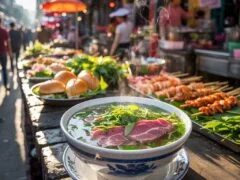
North vs South Vietnamese food is easiest to taste in phở: Phở Bắc is a minimalist, savory ritual; Phở Sài Gòn is sweeter and fully customizable.
In Hanoi, Phở Bắc features a clear, unsweetened broth served with quẩy (fried dough sticks) and strictly no hoisin. A classic bowl at Pho Gia Truyen (49 Bat Dan Street, Hanoi) or Phở Thin (13 Lo Duc Street, Hanoi) costs 50,000-70,000 VND (~$2-$3) in 2026. Phở Sài Gòn answers with a sweeter broth, a massive rau thơm (fresh herb platter), bean sprouts, lime, sliced chilies, and tableside hoisin and sriracha.
| Feature | Phở Bắc (North) | Phở Sài Gòn (South) |
|---|---|---|
| Broth | Clear, savory, salt-forward | Sweeter, bolder flavor |
| Garnish | Minimal, quẩy | Massive herb platter, bean sprouts |
| Condiments | No hoisin or sriracha | Hoisin and sriracha added by diner |
| Dining experience | Fast, minimalist ritual | Highly customizable, interactive |
Ordering phở in both regions is the fastest North vs South Vietnamese food lesson a 2026 traveler can get.
Head-to-Head Dish Matchups: Phở vs Bún Chả and Bánh Mì vs Phở
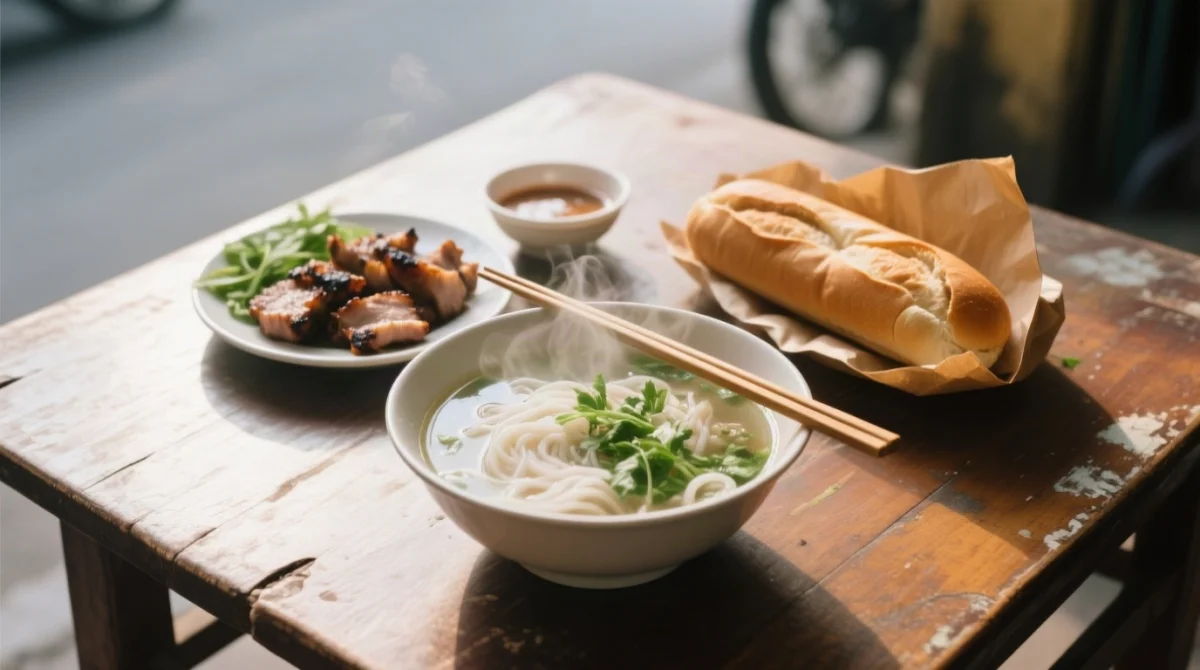
North vs South Vietnamese food sets daily rhythms: phở is a sit-down breakfast at 50,000-70,000 VND (~$2-$3), bún chả is a smoky lunch, and bánh mì is a portable 20,000-30,000 VND (~$1) snack.
Phở vs Bún Chả: Breakfast Soup or Lunch Grille?
Bún chả is Hanoi’s signature lunch: grilled pork patties and pork belly, warm dipping broth, rice vermicelli, and fresh herbs, spotlighted globally by Barack Obama and Anthony Bourdain’s 2016 visit. Eat it at Bun Cha Huong Lien, Le Van Huu Street, Hanoi, or try chả cá, turmeric fish pan-fried tableside with dill, scallions, and mắm tôm, at Cha Ca Thang Long, 6B Duong Thanh Street, Hanoi’s Old Quarter, for 120,000-150,000 VND ($5-$7).
| Dish | Meal Time | Format | 2026 Price | Verdict |
|---|---|---|---|---|
| Phở | Breakfast | Soup | 50,000-70,000 VND (~$2-$3) | Try first morning |
| Bún Chả | Lunch | Grilled pork | 50,000-70,000 VND (~$2-$3) | Try first afternoon |
Bánh Mì vs Phở: Portable Snack vs Iconic Ritual
In North vs South Vietnamese food terms, bánh mì is the $1 transit meal and phở the $3 ritual: a Ho Chi Minh City bánh mì splits a French-influenced baguette with pâté for 20,000-30,000 VND (~$1), while phở demands a stool, a spoon, and time.
| Dish | Format | Occasion | 2026 Price | Verdict |
|---|---|---|---|---|
| Bánh Mì (HCMC) | Portable baguette | Quick snack | 20,000-30,000 VND (~$1) | Try for transit |
| Phở | Sit-down bowl | Iconic ritual | 50,000-70,000 VND (~$2-$3) | Try for dinner |
Vietnamese vs Thai, Chinese, and Korean Food: A Culinary Matrix
However different North vs South Vietnamese food tastes region by region, the cuisine shares one foundation: fish sauce, clear broths, fresh herb platters, and the ngũ vị five-flavor balance.
That separates it from Thai chili-coconut richness built on shrimp paste, palm sugar, and bird’s eye chili; Chinese soy-and-sesame umami depth with minimal fresh herbs; and Korean gochujang heat anchored by fermented savory broths and banchan.
The matrix below places North vs South Vietnamese food traditions beside their three most-confused neighbors for US tourists weighing 2026 destinations.
| Cuisine | Foundation | Heat & Broth | Signature Elements |
|---|---|---|---|
| Vietnamese | Fish sauce | Clear broths | Fresh herb platters, 5-flavor balance |
| Thai | Fish sauce, shrimp paste, palm sugar | Bird’s eye chili, chili-coconut richness | Herb baskets |
| Chinese | Soy sauce, sesame oil | Sichuan pepper | Umami-heavy depth, minimal fresh herbs |
| Korean | Gochujang, sesame oil | Fermented savory broths | Scallion, garlic, banchan |
What I’ve Eaten in America Is Different: US vs Regional Styles
US tourists researching North vs South Vietnamese food are often surprised: American Vietnamese restaurants almost exclusively serve southern-style dishes, making northern cuisine an entirely new experience.
The US diaspora, centered on Little Saigon in California, skews heavily Southern. American phở thus arrives with hoisin, sriracha, and a mountain of herbs, a hallmark of Phở Sài Gòn; a clear, unsweetened northern bowl is exceptionally rare in the United States. Menus also favor hủ tiếu, a Cambodian-influenced pork noodle soup with clear broth and egg noodles.
Once you know the North vs South Vietnamese food divide, Hanoi’s bare tables read as tradition, not missing service.
Eating Vietnam Like a Local: 2026 Prices, Safety, and Etiquette
Eating North vs South Vietnamese food like a local in 2026 means three rules: bottled water only, busy stalls only, machine-made ice only. Budget 30,000-60,000 VND ($1.25-$2.50) per average street meal. All prices in this guide are 2026 street-food benchmarks converted at roughly 25,000 VND per dollar and updated October 2026; restaurant addresses are editorial picks, not sponsored listings.
- Southern Benchmarks: cơm tấm (broken rice, grilled pork chop, fried egg) runs 40,000-60,000 VND ($2-$3); bánh xèo, a sizzling turmeric-coconut crepe wrapped in lettuce and herbs, costs 60,000-100,000 VND ($3-$5).
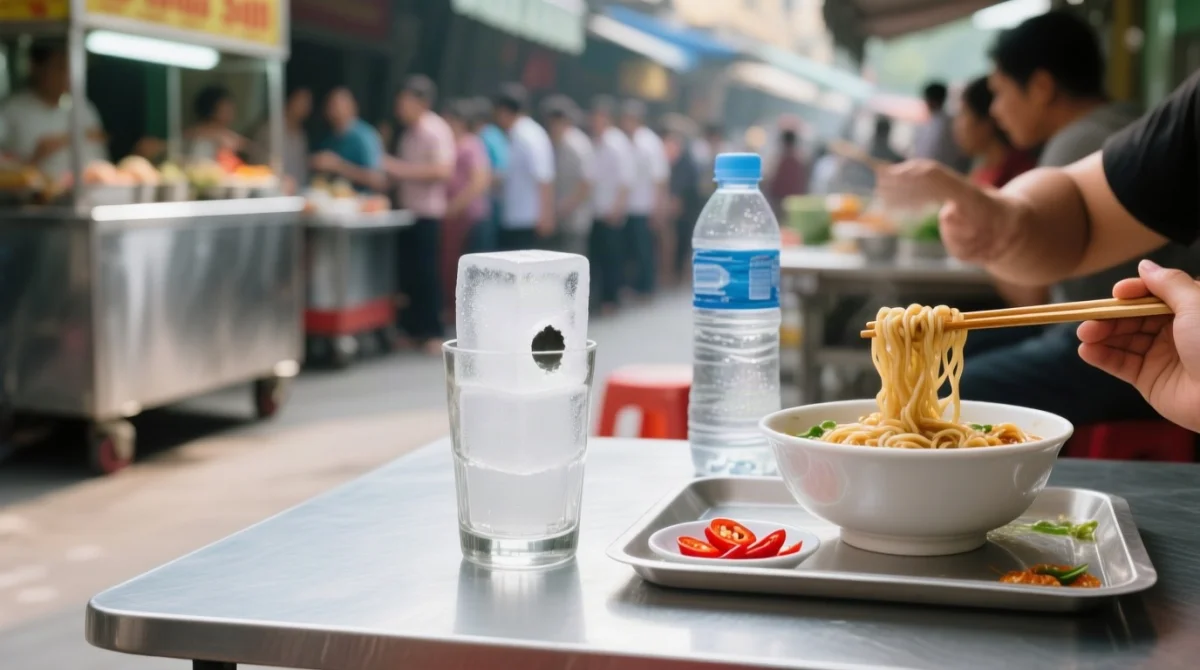
- Hydration: Drink bottled water only and accept ice exclusively as a machine-made cube with a hole punched in it.
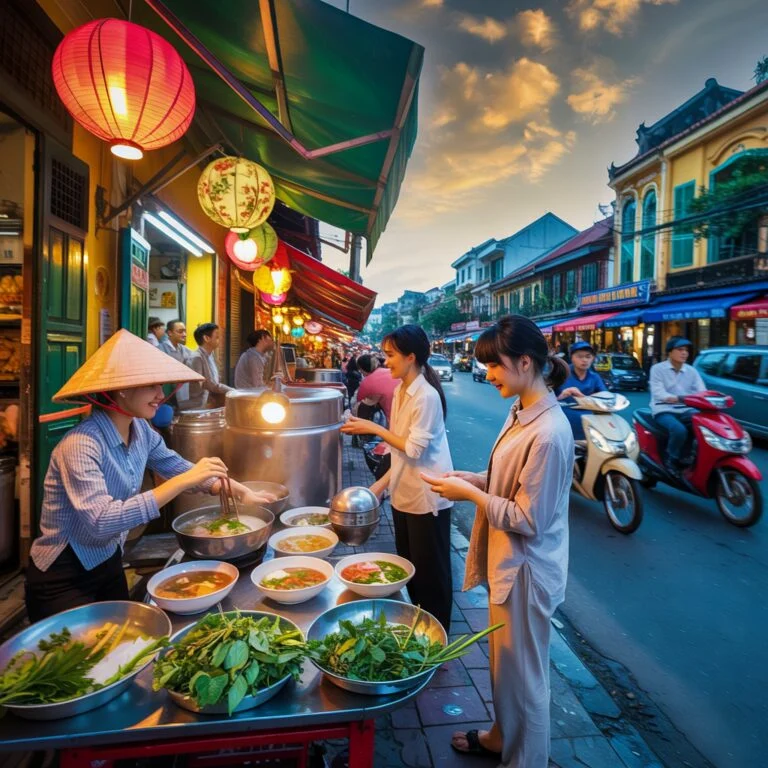
- Stall Selection: Eat at busy stalls with long lines to guarantee fresh ingredient turnover.
- Etiquette: Control heat by ordering “không cay” (not spicy); slurping noodles is polite.
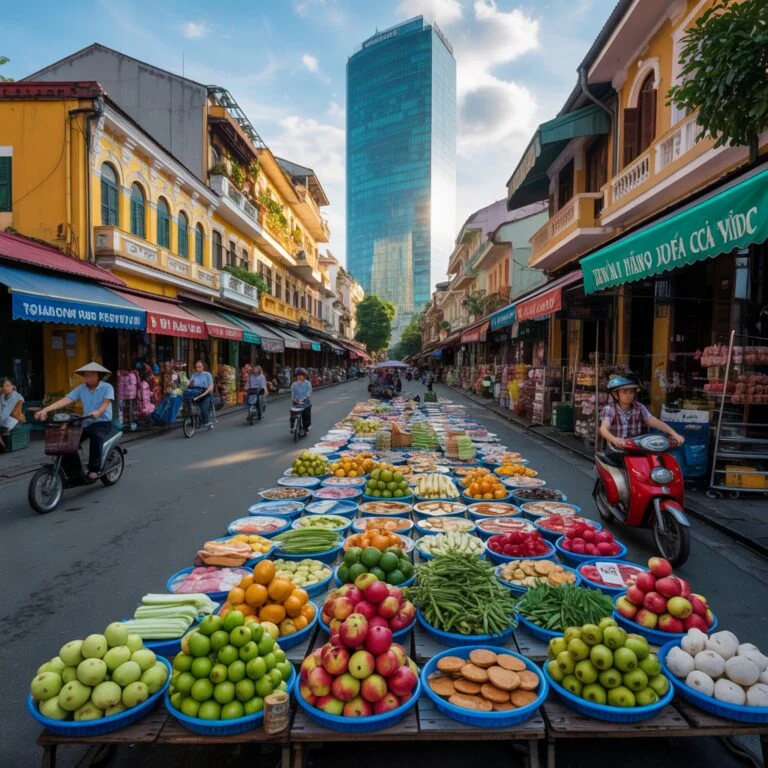
These rules hold on both sides of the North vs South Vietnamese food divide, from Hanoi’s quiet alley counters to Ho Chi Minh City’s market rows.
Frequently Asked Questions (FAQ)
What is the main difference between North vs South Vietnamese food?
The core difference in North vs South Vietnamese food: the North serves clean, mild, salt-forward dishes with modest herbs and pure fish sauce, while the South runs bolder and noticeably sweeter, mixing fish sauce liberally with sugar and garlic alongside abundant fresh herb platters.
Is North vs South Vietnamese food spicier, or is Central Vietnam the spiciest?
In the North vs South Vietnamese food comparison, neither region claims the heat title: Central Vietnam produces the country’s boldest, spiciest food, shaped by Huế’s imperial court, with bún bò Huế built on lemongrass, mắm tôm (fermented shrimp paste), and chili.
How does Pho in Hanoi differ from Pho in Saigon when comparing North vs South Vietnamese food?
The North vs South Vietnamese food split shows clearly in phở: northern bowls are clear, savory, and unsweetened, served with quẩy (fried dough sticks) and minimal garnish, while southern bowls are sweeter, with hoisin, sriracha, bean sprouts, and a mountain of fresh herbs.
How is North vs South Vietnamese food different from Thai food?
North vs South Vietnamese food, in both regions, rests on fish sauce, clear broths, fresh herb platters, and ngũ vị balance. Thai cuisine layers fish sauce with shrimp paste, palm sugar, bird’s eye chili, and chili-coconut richness, creating a much heavier flavor profile.
How can I avoid a stomach bug when eating North vs South Vietnamese food?
To enjoy North vs South Vietnamese food safely: drink bottled water only, accept ice only if it is a machine-made cube with a hole punched in it, choose busy stalls where long lines signal fresh turnover, and say không cay when you cannot handle heat.
What are the 2026 street food prices for North vs South Vietnamese food?
North vs South Vietnamese food prices in 2026: an average street meal costs 30,000-60,000 VND ($1.25-$2.50), a bowl of phở in Hanoi runs 50,000-70,000 VND (~$2-$3), a Ho Chi Minh City bánh mì is 20,000-30,000 VND (~$1), and bánh xèo is 60,000-100,000 VND ($3-$5).
Are there vegetarian or vegan options in North vs South Vietnamese food?
Yes. North vs South Vietnamese food includes plant-based options: gỏi cuốn (fresh spring rolls) can be filled with tofu instead of shrimp or pork, wrapped in thin rice paper with vermicelli, lettuce, and herbs, and dipped in peanut-hoisin sauce or nước chấm.
Why does North vs South Vietnamese food taste different from Vietnamese restaurants in the US?
North vs South Vietnamese food surprises US diners because American restaurants predominantly serve Southern-style dishes: customizable phở with hoisin, sriracha, and massive herb plates, as in California’s Little Saigon. Northern-style phở is very rare in the US diaspora.
What should be my first meal when exploring North vs South Vietnamese food in Hanoi?
Start with bún chả, the northern signature of North vs South Vietnamese food: grilled pork patties, pork belly, warm dipping broth, rice vermicelli, and fresh herbs, made famous globally by Barack Obama and Anthony Bourdain’s 2016 visit.
Which region uses more coconut milk in North vs South Vietnamese food?
In North vs South Vietnamese food, the South uses far more coconut milk: Khmer and Cham influences drive sweeter, bolder southern dishes, from curries to the turmeric-coconut batter behind sizzling bánh xèo crepes.