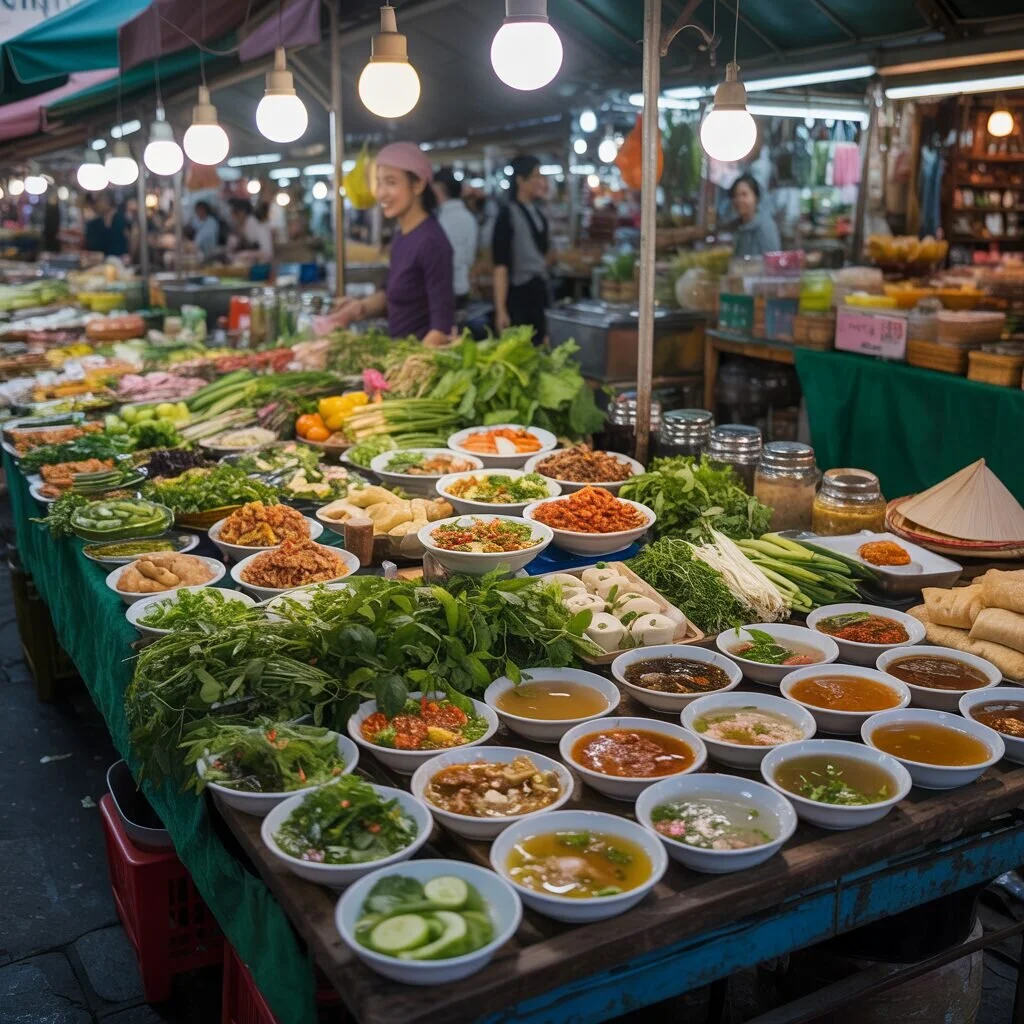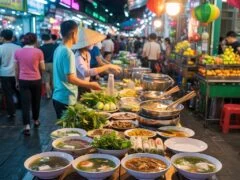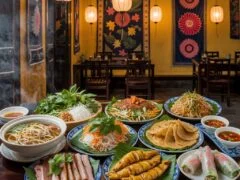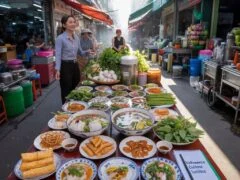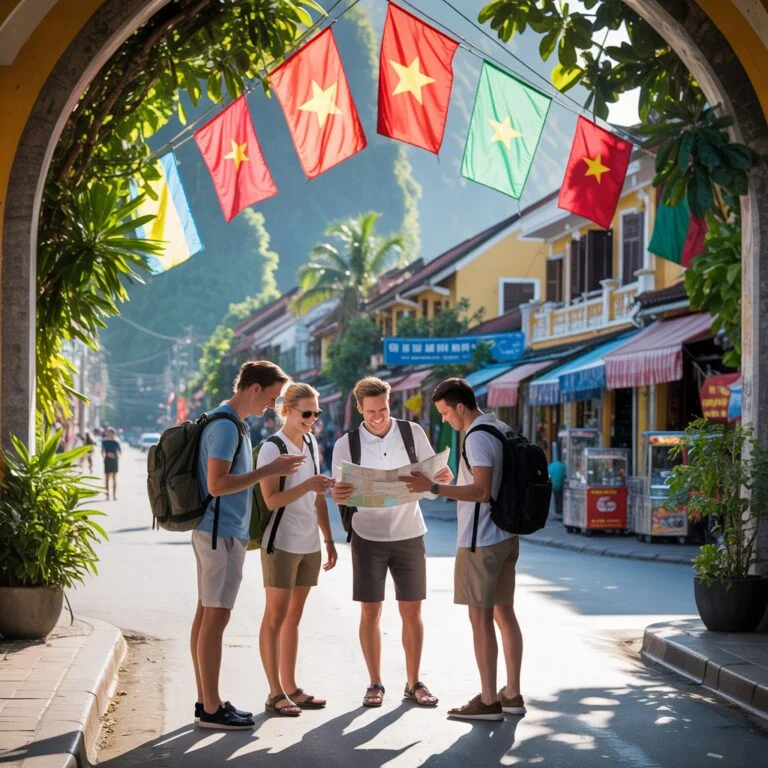


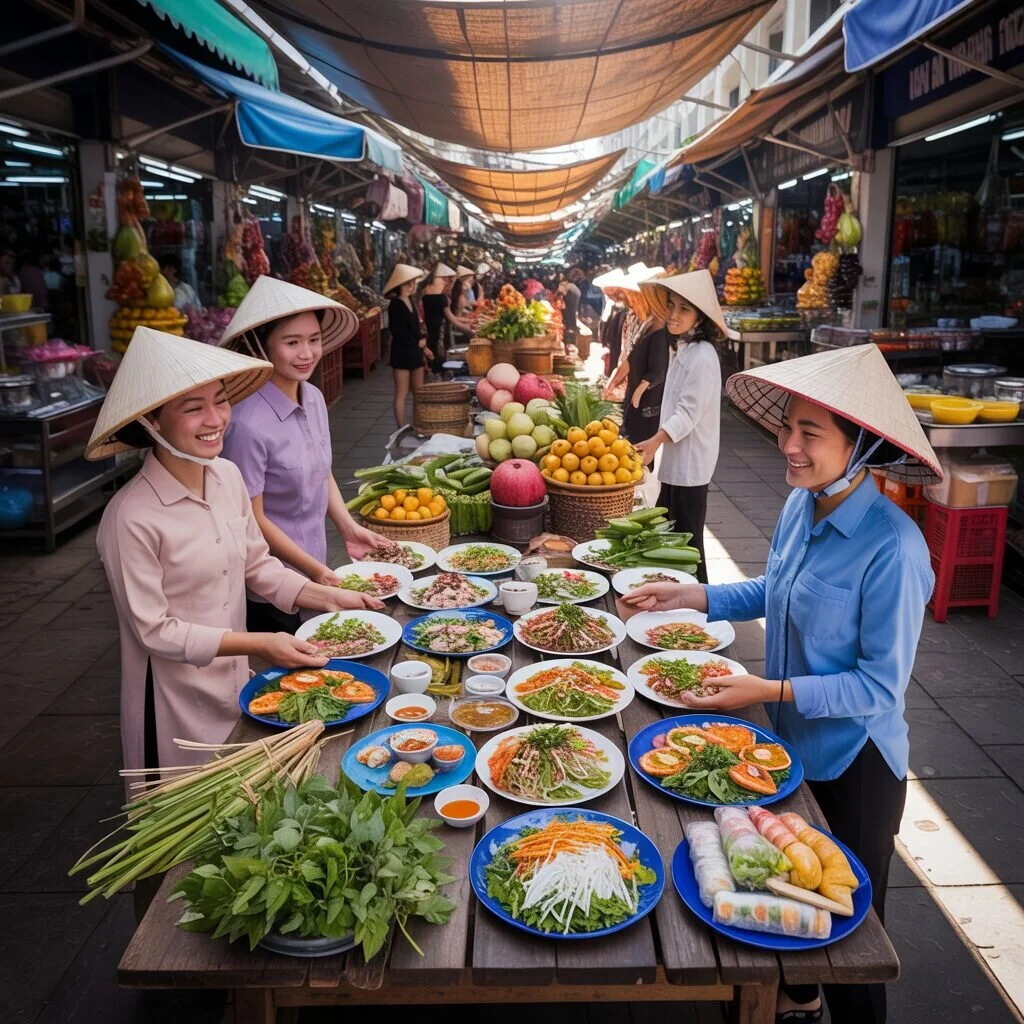
Vietnamese food for Americans starts with entry dishes like phở, bánh mì, gỏi cuốn, and bún chả. In 2026, street meals cost $1 to $3 USD across Vietnam. Ordering “không cay” keeps any dish mild for spice-sensitive palates.
What is Vietnamese food for Americans like? The best entry dishes are phở (Vietnam’s answer to chicken noodle soup), bánh mì (a grilled-pork hoagie in a French baguette), gỏi cuốn (fresh spring rolls) and bún chả (grilled pork with noodles). Expect fresh herbs, rice noodles, mild-to-medium heat and savory fish-sauce-based dipping sauces, and ask for “không cay” to keep it mild.
Why Vietnamese Food Feels More Familiar to Americans Than You Think
Vietnamese food culture adapted for American tourists is not a blank slate: Americans already eat it weekly. Vietnam’s versions are simply spicier, more herbaceous, and less sweet than what US restaurants serve.
- Sriracha sauce was popularized by a Vietnamese-American family in California.
- Chains like Lee’s Sandwiches and Phở Hòa made bánh mì and phở mainstream across the US.
- Viet-Cajun crawfish, a Louisiana fusion mixing lemongrass and ginger with cayenne pepper, is now a Southern staple.
Because Vietnamese-American cuisine is predominantly Southern-influenced and slightly sweeter, Vietnamese food for Americans tastes familiar yet bolder in Vietnam itself.
Essential Vietnamese Dishes Every American Should Try
Six canonical Vietnamese dishes for US tourists cost $1 to $3 each and are available in every Vietnamese city. Key condiments to know: nuoc mam (fish sauce), nuoc cham (the sweet-sour dipping sauce made from it), lemongrass, and banh trang (rice paper).
| Dish | What it is | Spice level | Best city |
|---|---|---|---|
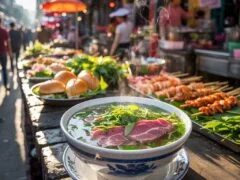
| Phở | Beef or chicken noodle soup; Hanoi style has wider noodles and darker broth, Saigon style comes with mint, bean sprouts, and hoisin | 1 | Hanoi |
| Bánh mì | French-style mini-baguette with pâté, pickled carrot and daikon, cilantro, mayonnaise, and cold cuts or grilled meats | 1-2 | Everywhere |
| Bún chả | Grilled pork belly and patties with cold rice vermicelli in a sweet-sour-salty fish sauce broth | 1 | Hanoi |
| Gỏi cuốn | Cold spring rolls in translucent rice paper (banh trang) with shrimp, pork, herbs, and vermicelli | 0 | Everywhere |
| Cơm tấm | Broken rice with grilled lemongrass pork chop, pickled veggies, and fried egg | 1 | Ho Chi Minh City |
| Bánh xèo | Crispy turmeric rice flour pancake filled with pork, shrimp, and bean sprouts, eaten wrapped in lettuce | 1 | Central Vietnam |
How to Eat Street Food Safely in Vietnam
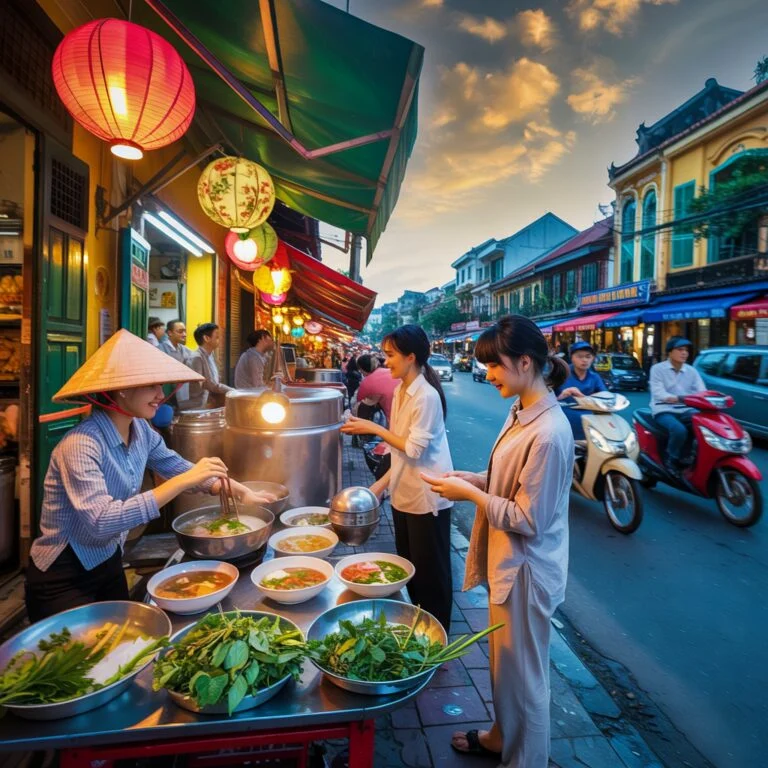
Busy stalls with visible cooking, high customer turnover, and ice from sealed bags are the safest street-food bets for international visitors in 2026. Use this checklist to evaluate any stall before sitting down:
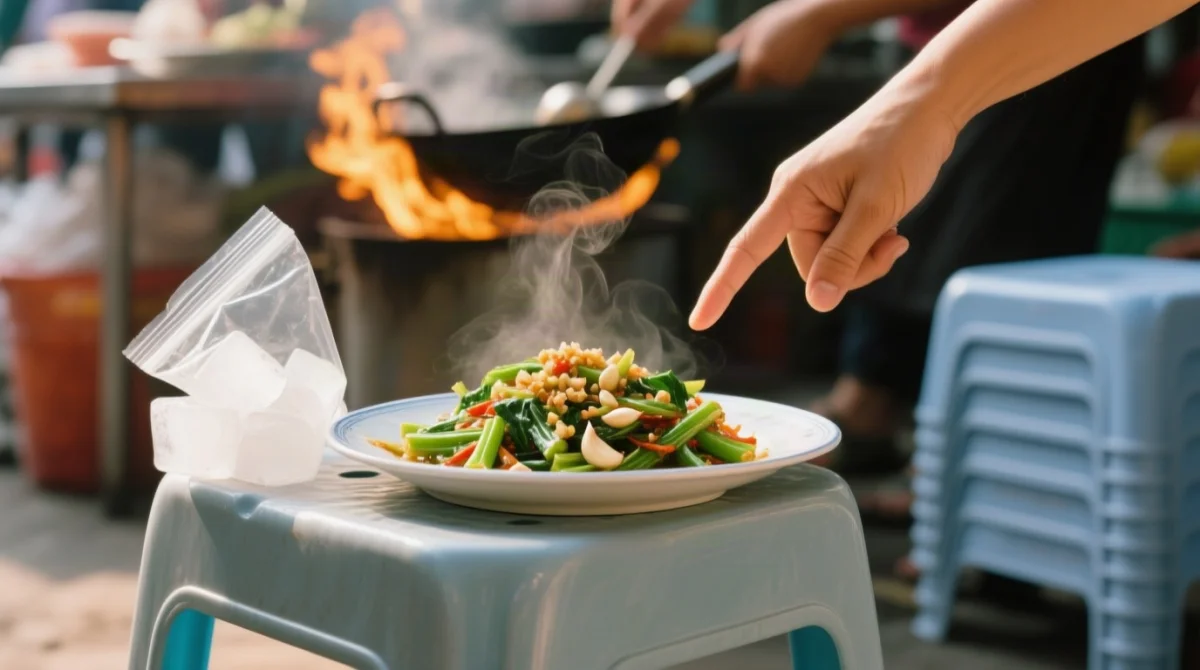
Check customer turnover
High customer turnover guarantees ingredient freshness.
Look for visible cooking
Cooking happens visibly, directly in front of you.
Verify the ice source
Ice comes from sealed bags, not a block cut on the ground.
Order fully cooked sides
Order fully cooked sides like Morning Glory (Rau Muong), water spinach stir-fried with minced garlic.
Point to order
Point at a neighbor’s plate to order if no menu exists.
Following this street food safety checklist lets American tourists eat like locals without the stomach bug.
What to Order If You Already Love… (Flavor Mapping)
Vietnamese food for Americans translates directly into US comfort-food formats, with fresher herbs and fish-sauce dips. This mapping table helps visitors choose street meals confidently:
| You love this in the US | Try this in Vietnam |
|---|---|
| Chicken or beef noodle soup | Phở (40,000-70,000 VND, $2-3 USD) |
| Hoagie or sub sandwich | Bánh mì (20,000-30,000 VND, $1 USD) |
| Salad wrap | Gỏi cuốn, cold rolls in briefly soaked rice paper |
| Savory crepe or quesadilla | Bánh xèo, crispy turmeric pancake |
| Grilled pork plate | Cơm tấm, broken rice with lemongrass pork chop |
How Vietnamese Flavors Change by Region
Vietnamese food culture adapted for American tourists spans three distinct flavor profiles in one country: savory-umami in the north, intense heat in the center, and sweetness in the south.
| Region | Flavor profile | Signature dishes | Where to try |
|---|---|---|---|
| North (Hanoi) | Savory, umami, heat-level 1 | Phở, bún chả | Hanoi Old Quarter |
| Central (Huế, Hoi An) | Spiciest, up to heat-level 5 | Bún bò Huế (thicker noodles, pork knuckles, crab cakes), Mì Quảng (thick rice noodles, minimal broth, toasted sesame rice crackers, peanuts, from Quang Nam/Da Nang), Cao Lầu (chewy yellow noodles, pork, crispy croutons, from Hoi An) | Huế and Hoi An |
| South (HCMC) | Sweetest, herb-heavy | Southern phở with hoisin, cơm tấm | Ho Chi Minh City |
Legend says Cao Lầu must use water from the Bá Lễ well in Hoi An; modern production uses an alkaline solution instead.
How Spicy Is Vietnamese Food, and How to Order (and Pronounce) Dishes
Vietnamese food for Americans ranges from heat-level 1 (Hanoi phở) to 5 (Huế bún bò Huế), and any dish can be dialed down by saying “không cay” (not spicy). Cooks typically serve chilies on the side, keeping base dishes mild.
Pronunciation and ordering phrases:
- Phở = “fuh”; bún chả = “boon chah”
- “Không cay” = not spicy
- “Không đường” = no sugar
- “Cho tôi một phần” = give me one portion
- “Không nước mắm” = no fish sauce
Vegetarian, Vegan & Dietary Needs in Vietnam
Look for the word “chay” on signs for vegetarian Vietnamese food, and always request “không nước mắm” because fish sauce hides in nearly every non-vegan dish. This mini-allergen matrix covers the most common dietary needs of American tourists:
| Allergen | Dishes to check | Phrase to ask |
|---|---|---|
| Fish sauce | Nuoc cham, bún chả broth, most stir-fries | “Không nước mắm” |
| Peanuts | Mì Quảng, bánh xèo dipping sauces | “Không đậu phộng” |
| Gluten | Bánh mì (wheat baguette), hoisin sauce | Stick to rice noodles and rice paper dishes like phở and gỏi cuốn |
| Fully vegetarian | Any restaurant marked “chay” | “Tôi ăn chay” |
What Does Vietnamese Street Food Cost in USD?
A bánh mì costs about $1 USD, phở runs $2 to $3 USD, and a full day of Vietnamese street food totals $8 to $15 USD per person in 2026. Mixed street-and-restaurant dining runs $20 to $35 USD.
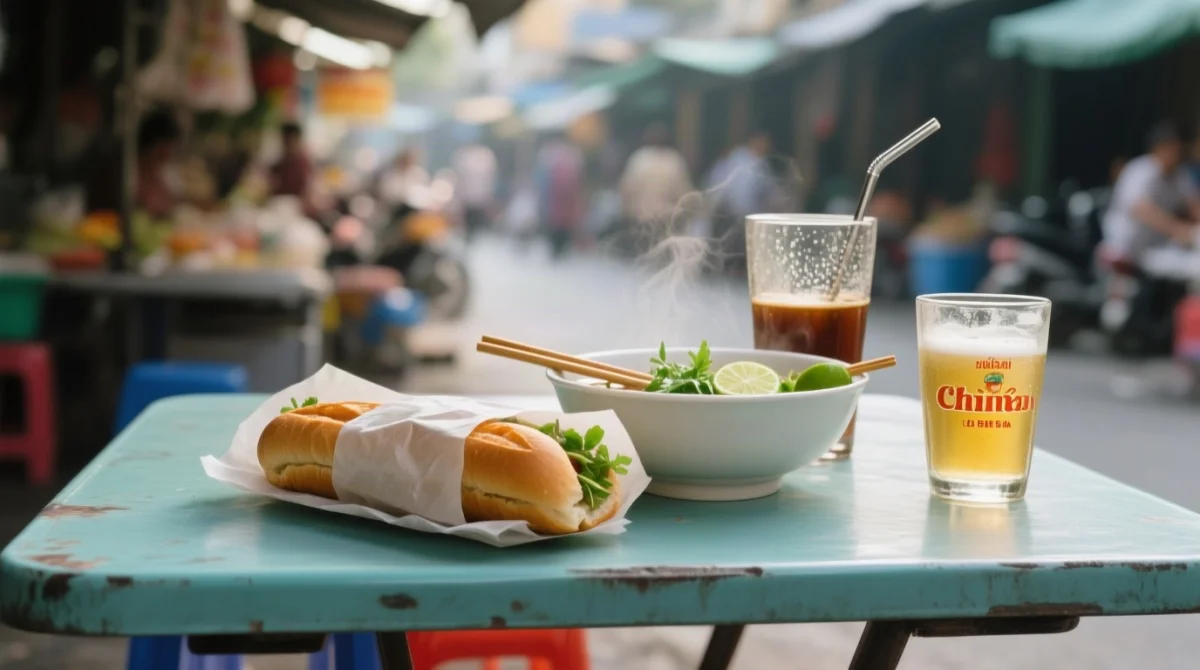
| Dish | Street stall (VND) | Street stall (USD) |
|---|---|---|
| Bánh mì | 20,000-30,000 | $1 |
| Phở | 40,000-70,000 | $2-3 |
| Cà phê sữa đá | 20,000-30,000 | ~$1 |
| Combo Obama | 120,000 | ~$5 |
These 2026 price ranges reflect typical street-stall costs across Hanoi, Huế, and HCMC; restaurant prices run higher.
Coffee, Drinks & Desserts Worth Trying
Vietnamese food culture adapted for American tourists extends to drinks: cà phê sữa đá (iced milk coffee) costs 20,000-30,000 VND (~$1) and is available on every block.
- Cà phê sữa đá: coarsely ground dark roast brewed in a metal French drip filter, poured over ice with sweetened condensed milk.
- Egg Coffee: a 1950s Hanoi invention born of a milk shortage, topped with cream made of egg yolk and sweetened condensed milk.
- Salt Coffee: a Huế specialty with a layer of salted cream creating a salty-sweet effect.
- Bia Hoi: fresh beer brewed each morning, served with ice on plastic stools, cheaper than water.
Dining Etiquette & Small Tips That Make You Look Like a Local
Vietnamese food for Americans is casual: sit on any open plastic stool, point at a neighbor’s plate if there is no menu, and skip tipping at street stalls. Five quick etiquette rules:
- Sit wherever a plastic stool is free.
- Point to order when menus are unavailable.
- No tipping at street stalls.
- Leave 5-10% at sit-down restaurants.
- Sharing dishes and slurping noodles are both normal.
FAQ: Understanding Vietnamese Food for Americans
What is the best Vietnamese food for Americans to try first?
Phở, bánh mì, gỏi cuốn, and bún chả. Each costs $1 to $3 USD at street stalls in 2026.
How do I order food in Vietnam without speaking Vietnamese?
Point at a neighbor’s plate. Say “không cay” (not spicy), “không đường” (no sugar), or “cho tôi một phần” (one portion).
How to avoid a stomach bug in Vietnam?
Choose stalls with high customer turnover, visible cooking, and ice from sealed bags.
Is Vietnamese food very spicy?
It ranges from heat-level 1 (Hanoi phở) to 5 (Huế bún bò Huế). Order “không cay” to keep any dish mild.
What are the best vegetarian and vegan Vietnamese food options?
Look for “chay” signs and request “không nước mắm”, since fish sauce hides in most non-vegan dishes. Bánh xèo and gỏi cuốn can be adapted.
What is the difference between authentic Vietnamese food and Viet-Cajun?
Authentic dishes rely on fresh herbs, complex broths, and mild-to-medium heat. Viet-Cajun is a Louisiana fusion mixing lemongrass and ginger with cayenne pepper. Vietnamese-American cuisine is Southern-influenced and sweeter.
Are there gluten-free Vietnamese food options for travelers?
Yes. Rice is the staple, so phở (rice noodles) and gỏi cuốn (rice paper) are naturally gluten-free. Avoid bánh mì and check hoisin sauce.
What is the Combo Obama and where can I eat it?
Bún chả, a fried seafood roll, and a Hanoi beer for 120,000 VND (about $5 USD) at Bun Cha Huong Lien in Hanoi, where it was eaten in 2016.