

Understanding how to travel between Vietnam islands requires comparing domestic flights, ferries, and speedboats across mainland hubs like Ho Chi Minh City and Rach Gia. This 2026 guide covers booking workflows, operator names, current pricing, and seasonal constraints for reaching Phu Quoc, Con Dao, and Cat Ba.
Inter-island travel across Vietnam involves navigating complex maritime and air networks. Travelers must coordinate transfers through gateway cities and evaluate direct vs indirect routing options to reach their destinations efficiently.
We provide actionable routing data, fare benchmarks, and procedural checklists for US-based travelers preparing for Southeast Asian itineraries. This includes verified steps for using online reservation portals and avoiding same-day port scams at departure piers and terminals.
Mainland Departure Hubs & Port Terminals
Ho Chi Minh City, Rach Gia, Da Nang, and Hai Phong serve as primary gateway cities for Vietnam island hopping, with ferry ports like Sa Ky and Rach Gia Port located 15 to 30 minutes from city centers. Inter-Island Travel Logistics in Southern Vietnam anchors on these mainland hubs to coordinate sea and air departures across the archipelago.

Travelers researching how to travel between Vietnam islands must account for the 4 to 6 hours of overland transit required from Ho Chi Minh City to Rach Gia Port, the primary maritime gateway for Phu Quoc ferries. For Ly Son Island, departures originate at Sa Ky Port, where a fast boat crossing takes approximately 30 minutes.
Inter-Island Travel Logistics in Southern Vietnam also routes Con Dao-bound passengers through Vung Tau for daily fast boats, with Can Tho and Soc Trang serving as secondary departure points. On the northeast coast, Hai Phong Province functions as the transit hub for Cat Ba Island, situated at the western edge of Halong Bay. Understanding how to travel between Vietnam islands begins with identifying the correct mainland terminal, as each port serves a distinct regional cluster and misalignment adds hours of unnecessary transit.
Transport Options: Flights, Ferries & Speedboats
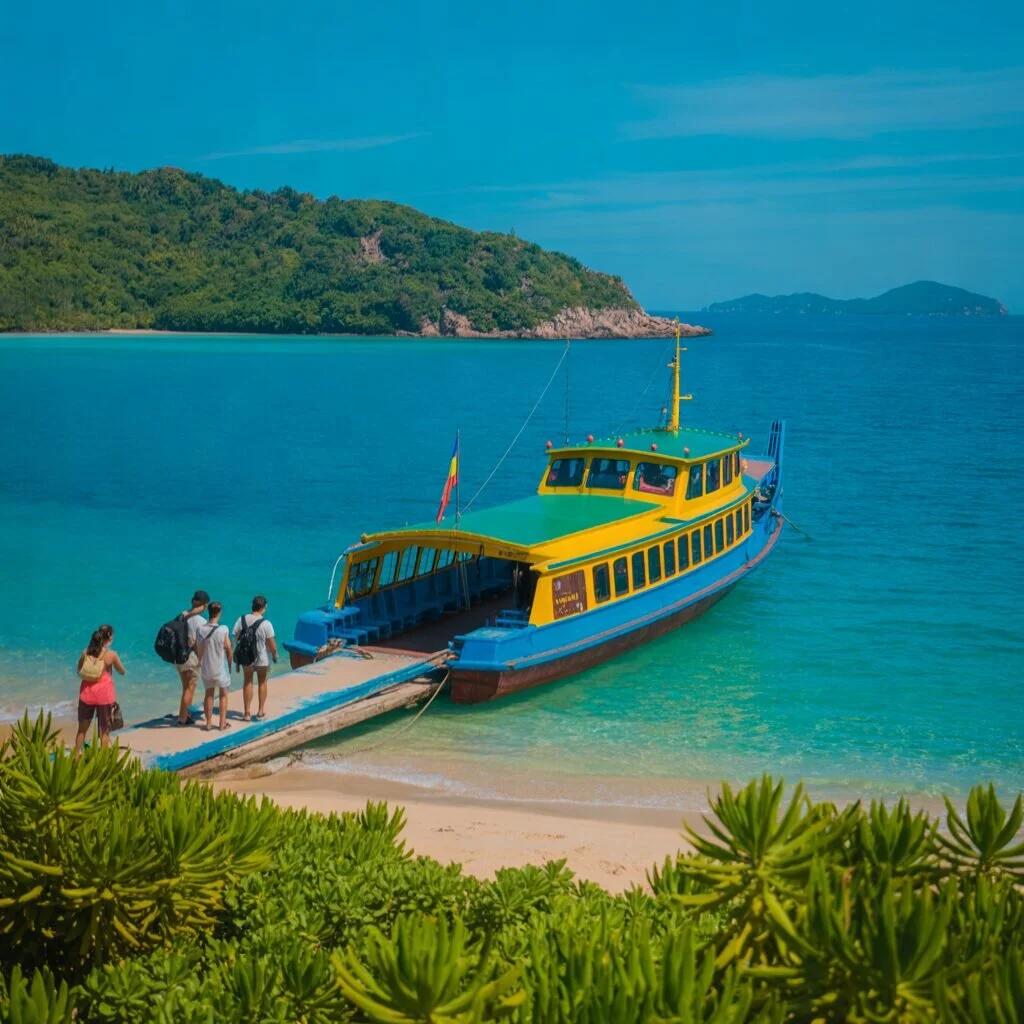
Inter-Island Travel Logistics in Southern Vietnam connects major archipelagic destinations through two primary modes: inter-island domestic flights taking 1 to 2 hours and high-speed catamaran crossings lasting 1
Direct Inter-Island Connections & Route Matrix
Direct inter-island travel across Vietnam is limited; multi-destination itineraries between Phu Quoc and Con Dao require indirect routing via mainland hubs, increasing total travel time significantly. Con Dao, an archipelago of 16 individual islands, offers daily flights from Saigon, Da Nang, Vinh, and Hanoi, plus daily fast boats from Vung Tau, Can Tho, and Soc Trang, yet no direct link to Phu Quoc exists.
| Route | Direct Option | Duration | Indirect Alternative | Transfer Point |
|---|---|---|---|---|
| Phu Quoc ↔ Con Dao | None | 6-8 hrs | Flight/ferry via HCMC | Ho Chi Minh City |
| HCMC → Phu Quoc | Flight ~1 hr | 1 hr | Ferry from Rach Gia 2.5-3 hrs | Rach Gia |
| HCMC → Con Dao | Flight 45 min | 45 min | Fast boat from Vung Tau ~3 hrs | Vung Tau |
| HCMC → Cat Ba | None | ~4 hrs | Fly to Hai Phong + ferry | Hai Phong |
Inter-Island Travel Logistics in Southern Vietnam funnels most multi-destination trips through Ho Chi Minh City, which is why anyone researching how to travel between Vietnam islands must plan a mainland pitstop. Phu Quoc, the largest of all Vietnamese islands, sits in the Gulf of Thailand, geographically removed from Con Dao’s position off Ba Ria-Vung Tau Province. Inter-Island Travel Logistics in Southern Vietnam thus makes a second question, how to travel between Vietnam islands without doubling back, nearly impossible to resolve for this route pair.
How to Book: Step-by-Step Guide & 2026 Pricing
Inter-Island Travel Logistics in Southern Vietnam streamlines reservations through verified online reservation portals. US-based travelers researching how to travel between Vietnam islands should complete bookings pre-departure to avoid same-day port scams and cash-only ticket counters.
- Visit or
- Select departure and arrival ports
- Choose date and operator (Superdong, Phu Quoc Express)
- Pay via card (VND/USD)
- Receive electronic boarding passes
| Transport Mode | 2026 Fare Range |
|---|---|
| Ferry | $15-25 |
| Speedboat | $20-35 |
| Domestic Flight | $50-100 |
Historical baselines from 2014/2015 ($10 ferry, $50 VietJet flight) are outdated. Inter-Island Travel Logistics in Southern Vietnam now requires travelers comparing how to travel between Vietnam islands to purchase advance tickets for peak season due to dynamic pricing algorithms.
Travel Policies, Weather & Seasonal Schedules
Island travelers must verify luggage restrictions for watercraft, understand cancellation windows for weather delays, and validate visa requirements for island hops near Cambodian border zones, while monsoon patterns heavily affect maritime schedules in 2026.
Inter-Island Travel Logistics in Southern Vietnam requires travelers to align trips with optimal weather windows: Phu Quoc from November to March, Con Dao from March to September, and Cat Ba during September-October and March-April. Anyone researching how to travel between Vietnam islands must monitor typhoon alerts that trigger route closures along southern maritime corridors during monsoon transitions.
Speedboat operators enforce a luggage allowance of 15-20 kg per passenger, and weather-related cancellations typically offer rescheduling rather than refunds. Phu Quoc maintains a 30-day visa-free policy for foreign visitors. For visa questions, travelers may contact Vietnam Tourism at
contact@vietnamtourism.gov.vnas an external reference source. Inter-Island Travel Logistics in Southern Vietnam ultimately depends on real-time conditions to determine whether sea routes remain operational, making flexible planning essential when learning how to travel between Vietnam islands.
Arrival Logistics & Cross-Border Island Hopping
Upon arrival at Phu Quoc International Airport or Con Dao terminal, port and airport transfers include hotel shuttles, taxis, and motorbike rentals. Inter-Island Travel Logistics in Southern Vietnam extends beyond ferry booking to cover on-island ground mobility, ensuring travelers reach accommodations without delay.
For cross-border island hopping from Cambodia, combined sea-and-air itineraries offer two primary paths. Travelers can take a bus to Ha Tien, then catch the ferry to Phu Quoc. Historical schedules from 2014/2015 list departures at 1:00pm or 1:30pm, though 2026 seasonal changes likely shift these times. Alternatively, flying via Phnom Penh to HCMC to Phu Quoc avoids sea crossings entirely. Knowing how to travel between Vietnam islands through these multi-leg routes lets itinerary planners weigh cost against transit time.
Inter-Island Travel Logistics in Southern Vietnam also supports multi-stop trips using combined sea-and-air itineraries, coordinating ferry legs and domestic flights within a single sequence rather than relying on direct island-to-island connections. This framework directly answers how to travel between Vietnam islands when no single operator covers the full route.
FAQ: Vietnam Island Transit
Can you travel directly from Phu Quoc to Con Dao?
Direct travel between Phu Quoc and Con Dao is limited. Multi-destination island itineraries require indirect routing via mainland hubs, which increases total travel time. Travelers must connect through gateway cities like Ho Chi Minh City when moving between these archipelagic destinations.
What is the best platform to book Vietnam island ferries online?
Use verified online reservation portals like or . These platforms allow you to book inter-island ferries online using VND or USD payments. You will receive electronic boarding passes, which helps you avoid same-day port scams at the terminal.
How much does a ferry to Phu Quoc cost in 2026?
2026 island transport pricing ranges from $10 for standard ferry tickets to higher amounts depending on the operator and season. Historical data from 2014 quoted a $10 baseline, but 2026 fares vary by dynamic pricing and require checking current rates on booking platforms like.
Are domestic flights to Con Dao reliable during the monsoon season?
Con Dao has daily flights from Saigon, Da Nang, Vinh, and Hanoi. However, monsoon season heavily affects maritime schedules and sea conditions in 2026. Travelers must monitor typhoon alerts for potential route closures, which can impact flight reliability during severe weather events.
Do US citizens need a visa to travel to Vietnamese islands from Cambodia?
Phu Quoc has a 30-day visa-free policy for foreign visitors. However, when planning cross-border island hopping from Cambodia to Phu Quoc via Ha Tien, US citizens must validate visa requirements for island hops near Cambodian border zones before departure.
What happens if my ferry is canceled due to bad weather?
If your ferry is canceled due to bad weather, you must understand the cancellation windows for weather delays specified by your operator. Travelers should review the cancellation and refund policies of ferry providers like Superdong or Phu Quoc Express before finalizing their booking to ensure risk mitigation.
What are the luggage limits on Vietnamese speedboats and high-speed catamarans?
Island travelers must verify luggage restrictions for watercraft before departure, as luggage allowance and weight restrictions apply on Vietnamese speedboats and high-speed catamarans. Additionally, note that motorbikes and bicycles cannot travel aboard ferries to certain destinations like Dao Be Island.
How do I get from Ho Chi Minh City to the ferry ports for island hopping?
Ho Chi Minh City serves as a primary transit hub for island hopping. To reach ferry ports like Rach Gia, travelers must plan for a 4-6 hours transit time from HCMC. Coordinate airport-to-pier transfers in advance to ensure you arrive at the departure piers and terminals on time.