
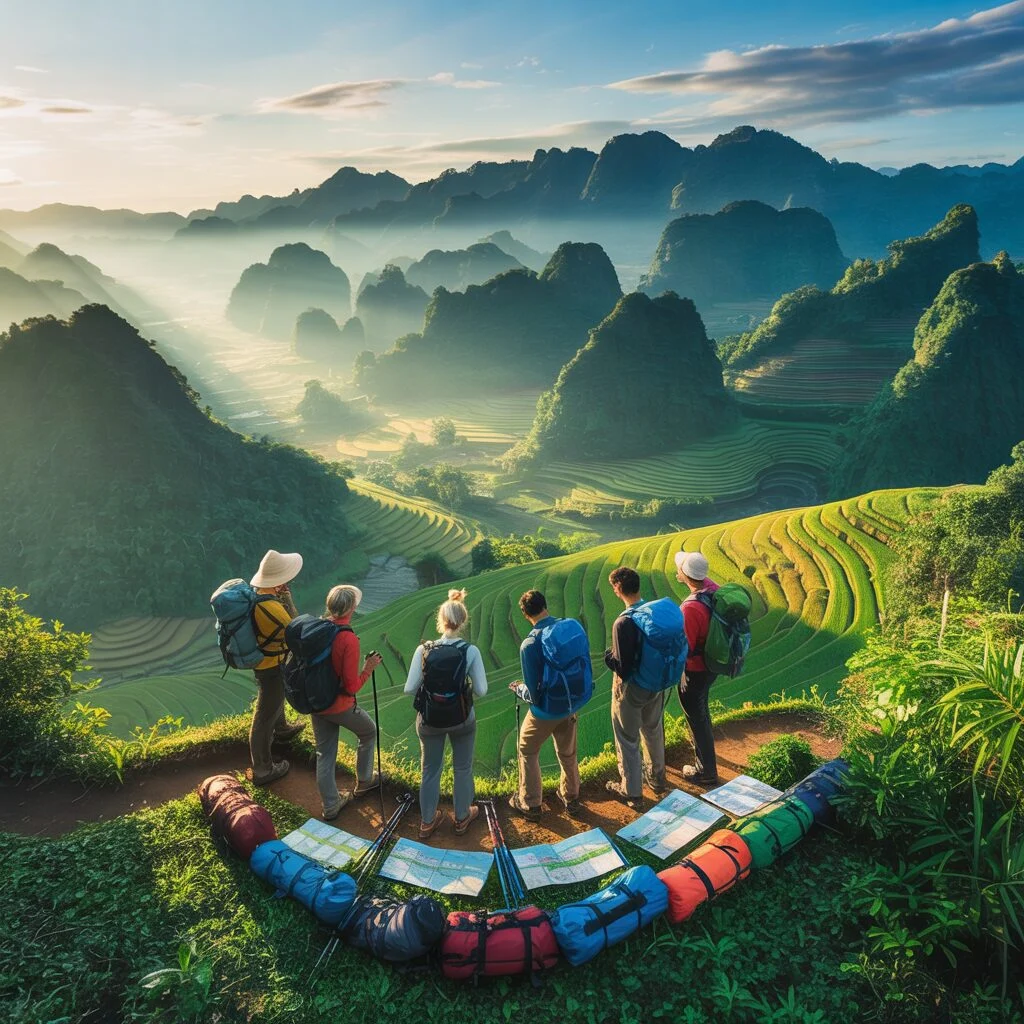
Pack moisture-wicking base layers, a lightweight waterproof shell, and ankle-supporting boots for your Vietnam trek. Add DEET repellent, leech socks, and a silk liner for Sapa homestays. Rent bulky gear locally in Sapa or Lao Cai to save on airline baggage fees.
Vietnam’s diverse microclimates demand a highly adaptable approach to gear selection. From the humid, dense jungles of the central and southern regions to the cold, high-altitude plateaus of Sapa and Ha Giang, your packing list must account for sudden weather shifts, monsoon downpours, and rugged terrain.
This comprehensive guide covers exactly what to pack for a Vietnam trek in 2026, including technical hardware, water purification methods, and local gear rental strategies to optimize your luggage for internal flights and remote homestays.
Clothing Layers & Rain Gear for Vietnam Trek Climates
The Vietnam Trek Packing Guide mandates moisture-wicking base layers with DWR coatings for jungle heat, a breathable waterproof shell for monsoon downpours from May through October, and thermal mid-layers for Sapa winter nights dropping to 5°C with daytime highs near 11°C in January.
- Base layers: Synthetic or merino tops with a DWR coating and verified breathability rating; quick-dry hiking pants to handle stream crossings and dense vegetation.
- Rain shell: Lightweight waterproof rain jacket paired with dry bags to protect electronics during sudden monsoon downpours.
- Insulation: Fleece or insulated mid-layer for altitude acclimatization layering in northern highlands where diurnal temperature swings are sharp.
- Sun protection: Broad-brim hat, UPF-rated UV shirt, and sunscreen rated SPF 50+ for exposed ridge lines.
- Organization: Compression packing cubes to optimize luggage volume, especially since laundry is cheap and widely available with a 48-hour turnaround.
The Vietnam Trek Packing Guide prioritizes these modular layers so trekkers can adapt to rapid microclimate transitions without carrying redundant bulk.
Footwear, Trekking Hardware & Sleep Systems for Vietnam Trek
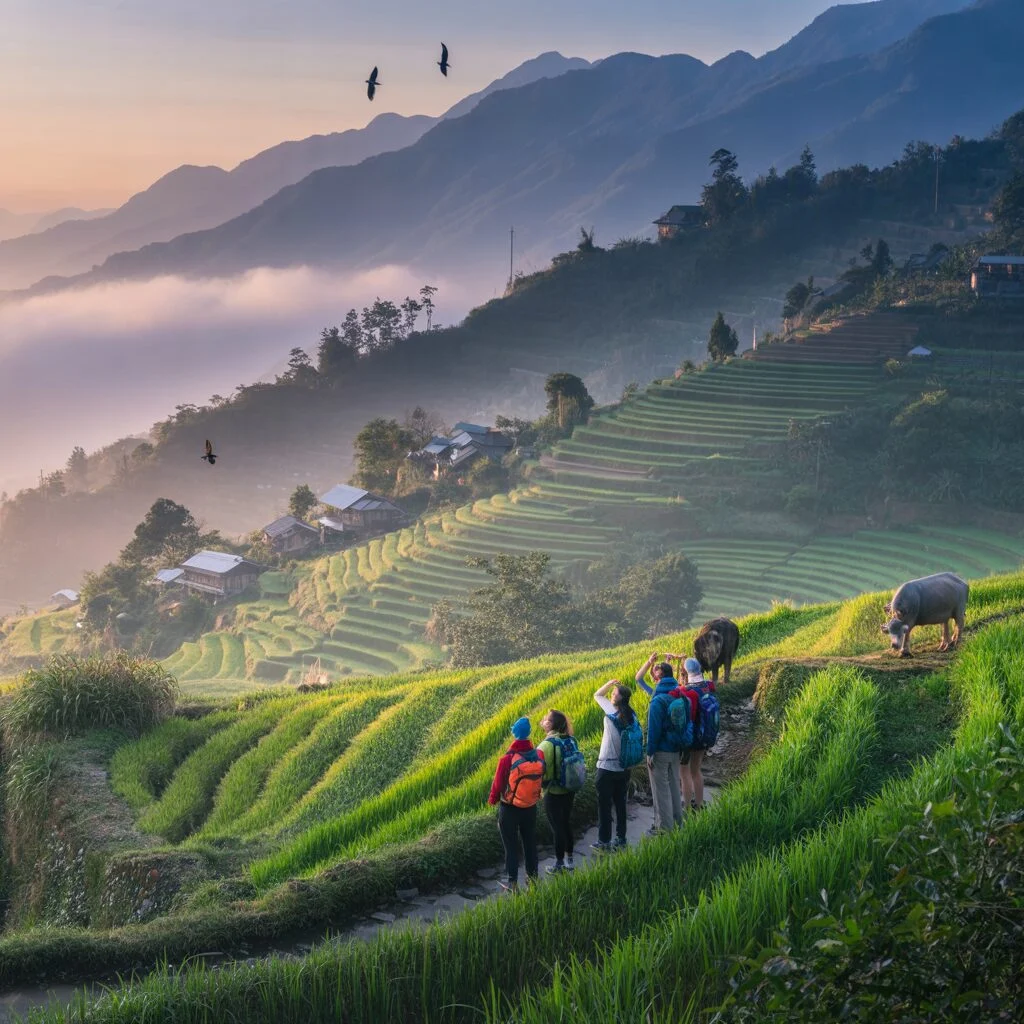
Bring broken-in ankle-supporting boots, collapsible trekking poles for steep muddy trails, and a fleece or silk sleeping bag liner for unheated mountain homestays in Sapa and Ha Giang.
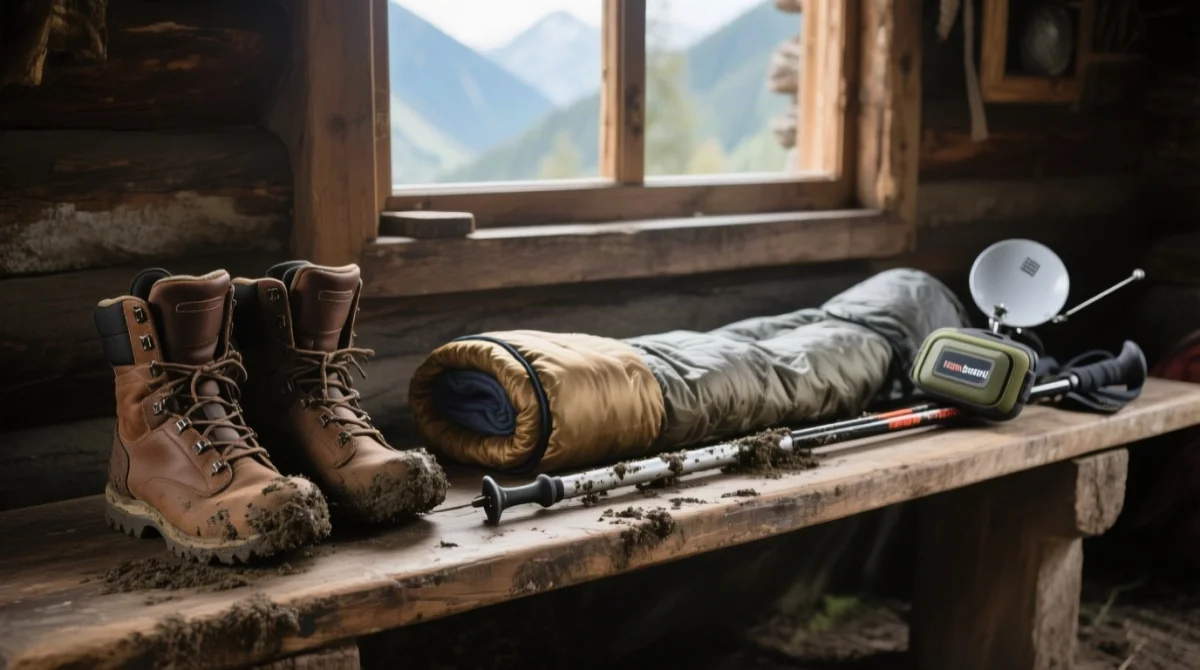
The Vietnam Trek Packing Guide mandates broken-in, ankle-supporting boots to prevent injuries on any Vietnam trek across steep, uneven mountain paths. For a multi-day Vietnam trek through remote corridors lacking cell service, the Vietnam Trek Packing Guide recommends a satellite messenger like a Garmin inReach.
- Ankle-supporting trekking boots with adequate tread for steep, muddy trails.
- Collapsible trekking poles to reduce joint strain during sustained ascents and descents.
- Mud gaiters for leech protection in dense jungle corridors.
- Silk or fleece sleeping bag liners for unheated homestays, as Sapa sits at higher altitude where January temperatures drop to 5°C.
- A satellite messenger (e.g., Garmin inReach) for navigation and SOS in no-cell-service areas.
Health, Hydration & Jungle Protection for Your Vietnam Trek
Carry DEET insect repellent, anti-leech socks, and water purification tablets; build a first aid kit with specific medications for remote jungle trails where tap water is unsafe to drink.
The Vietnam Trek Packing Guide mandates strict health protocols for humid ecosystems. Because tap water is not safe to drink, hikers must carry UV pens, filter bottles, or chemical tablets. The Vietnam Trek Packing Guide also requires DEET-based mosquito repellent to mitigate malaria and dengue risks, alongside anti-leech socks and gaiters for dense undergrowth.
- First aid kit: Immodium, Ibuprofen, Acetaminophen, Benadryl, Band-Aids/bandages, sterilizing wipes, and gauze pads.
- Hygiene supplies: Baby wipes, hand sanitizer, and travel soap for trailside cleanliness.
- Medical prep: Schedule vaccinations eight weeks prior to travel and secure travel insurance covering medical emergencies.
- Cash reserves: Carry local currency for remote clinics, noting that 500,000 VND is around 25 USD.
Gear Rental, Documents & Electronics for Vietnam Trek 2026
Rent bulky trekking gear in Sapa or Lao Cai to save baggage fees; secure a 90-day single-entry e-visa for $25 USD and pack a travel adapter for plug types A, C, and F.
The Vietnam Trek Packing Guide recommends renting heavy equipment through local Sapa and Lao Cai outlets, where a Sapa gear hire deposit secures boots, packs, and sleeping bags without paying airline excess fees. Internal flights enforce strict limits: 20 kg checked and 5 kg hand luggage, while Vietnam Airlines permits 12 kg total across two carry-on bags.
For documents, the Vietnam Trek Packing Guide requires a passport valid six months beyond your stay and a printed $25 USD 90-day single-entry e-visa (90-day single-entry, processed in 3 business days). Tet Holiday 2026 begins February 17, 2026 – allow extra visa processing time around this window.
| Item | Specification |
|---|---|
| Travel adapter | Plug types A, C, and F |
| Portable charger | High-capacity battery bank for remote mountain areas |
| VPN | Enables access to restricted mapping and communication services |
| Cash | Vietnamese dong (VND) for gear rental deposits in areas lacking digital payment |
Frequently Asked Questions: What to Pack for Vietnam Trek
What is the best time of year for a Vietnam trek?
The best time depends on the region, but generally, you should avoid the monsoon season, which runs from May to October, and the rainy season from April to October. Winter months, from December through February, offer cooler temperatures for highland treks, though you should note that Tet Holiday begins on February 17, 2026, which may impact logistics.
Do I need vaccinations before trekking in Vietnam?
Yes, health risks in Vietnam include Malaria and dengue, making vaccinations an important consideration. It is recommended to consult a healthcare professional eight weeks prior to travel to ensure you have the appropriate immunizations and preventive medications for your Vietnam trek.
Can I rent trekking gear in Sapa or Lao Cai?
Yes, you can rent bulky trekking gear locally in Sapa or Lao Cai. Doing so helps you save on airline baggage fees, especially since internal flights often have strict limits, such as a 20-kilo checked luggage allowance. Always inspect rented equipment thoroughly before your Vietnam trek.
Is tap water safe to drink on Vietnam treks?
No, tap water in Vietnam is not safe to drink. When preparing for your Vietnam trek, pack portable water purification systems like UV pens, filter bottles, or chemical tablets. This ensures you have access to safe hydration throughout your journey in remote mountain and jungle areas.
What should I pack for Sapa winter treks?
For Sapa winter treks from December to February, pack thermal layers and a fleece or silk sleeping bag liner. Temperatures can drop significantly, with January minimums reaching 5°C and maximums around 11°C. Proper altitude acclimatization layering is essential for a comfortable Vietnam trek.
How much does a Vietnam e-visa cost in 2026?
A Vietnam e-visa costs $25 USD per person in 2026. It is a single-entry visa valid for 90 days, with a processing time of about 3 business days. Remember that you must print the visa before arriving, and allow extra time for processing if traveling near the Tet Holiday starting February 17, 2026.
Do I need leech protection for jungle treks in Vietnam?
Yes, leech protection is necessary for jungle treks in Vietnam. Pack anti-leech socks, gaiters, and DEET-based insect repellent to mitigate health risks associated with dense jungle ecosystems. These items are critical components of your Vietnam trek packing list.
What plug type does Vietnam use for charging devices?
Vietnam uses plug types A, C, and F. When packing electronics for your Vietnam trek, include a compatible travel adapter to keep your phone, portable charger, and camera powered. A high-capacity battery bank is also recommended for remote mountain areas.