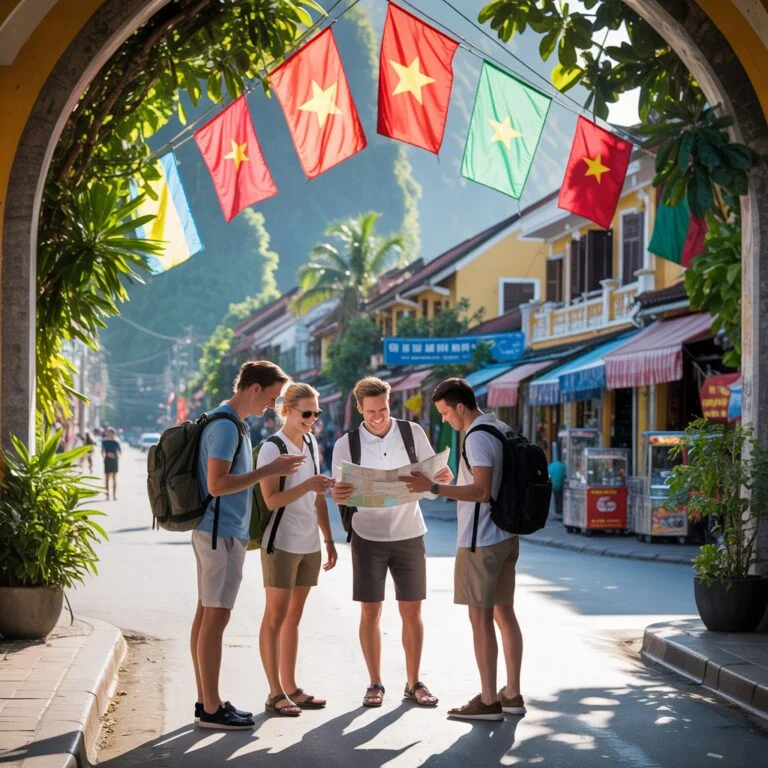

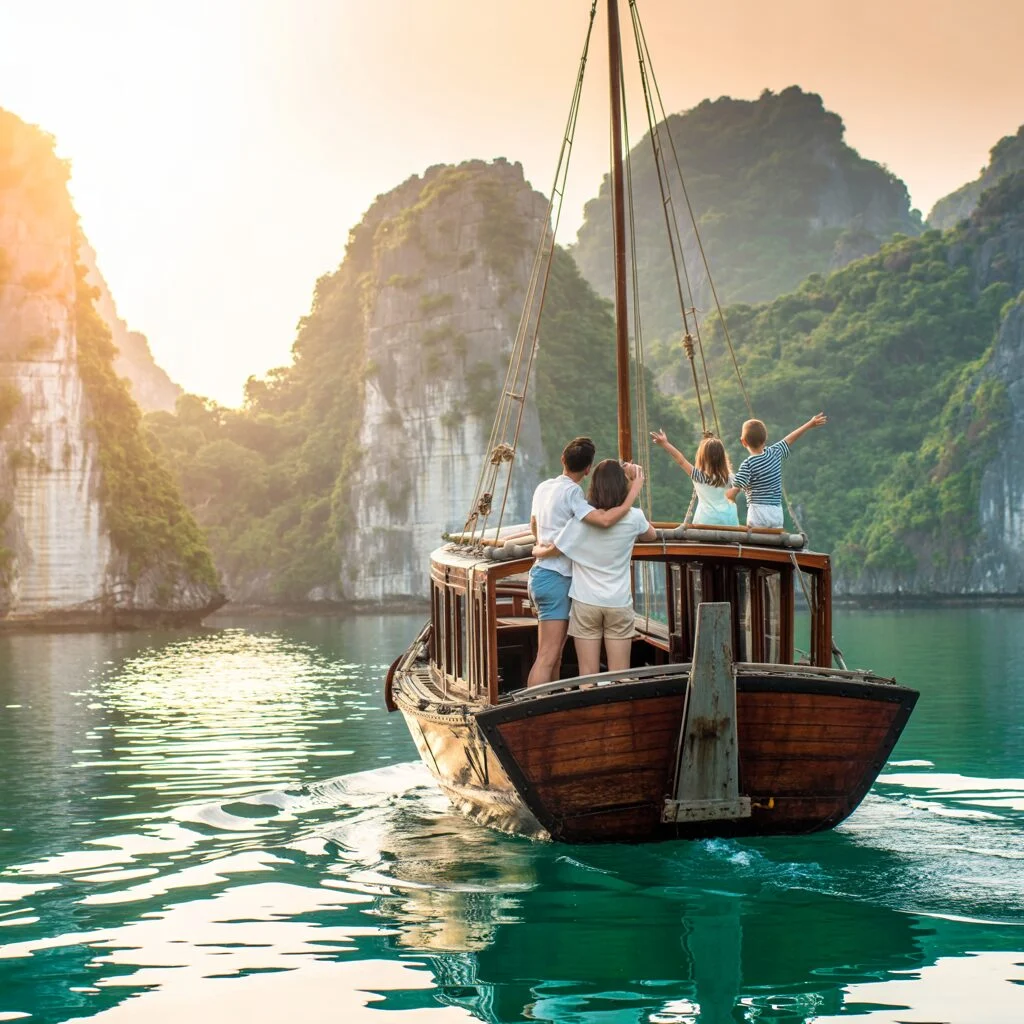
The best things to do and attractions in Vietnam include overnight Ha Long Bay cruises, Hoi An’s lantern-lit ancient town, and Cu Chi Tunnels tours. First-timers should plan 2 to 3 weeks across all three regions. A 2026 budget of $30 to $150 USD daily covers budget through luxury travel.
Vietnam spans over 1,000 miles from north to south, organized into three distinct regions: North, Central, and South Vietnam. Each region delivers unique travel destinations and sightseeing opportunities, from Hanoi’s Old Quarter with nearly 2,000 years of history and Sapa’s stepped rice terraces in the north, to Hoi An’s UNESCO World Heritage Ancient Town and Hue’s 19th-century Imperial Citadel in the center, to Ho Chi Minh City’s War Remnants Museum and the Mekong Delta’s floating markets in the south. The country remains very affordable compared to neighboring Thailand, and while popular, it does not feel oversaturated with tourists.
For US-based travelers, a recommended trip duration of 2 to 3 weeks allows sufficient time to experience flagship attractions and leisure activities across all three regions. Essential preparation includes obtaining a 2026 e-visa through the Vietnam Immigration government portal, packing for Type A/C electrical plugs at 220V/50Hz, and timing visits around the best climate windows of March to April and September to November. Whether you are planning as a couple seeking romantic experiences like The Vietage luxury train, a family exploring kid-friendly cooking classes, or a first-time visitor building an itinerary from scratch, this guide covers the top things to do and attractions in Vietnam alongside the practical logistics you need.
Introduction: Why Vietnam Should Be Your Next Destination
Things to Do and Attractions in Vietnam span a country stretching over 1,000 miles from north to south, organized into three distinct regions – North, Central, and South – each delivering different sightseeing opportunities for first-timers, couples, and families. The geography encompasses the Mekong River, bustling cities, beaches, caves, lakes, mountains, and temples, giving US-based planners a broad spectrum of leisure activities to prioritize within a single trip.
Things to Do and Attractions in Vietnam reward travelers with 2 to 3 weeks of recommended trip duration, as noted in 2026 travel research, allowing sufficient pacing across all three regions without itinerary overload. Vietnam remains very cheap compared to neighbouring Thailand, yet popular destinations still do not feel oversaturated with tourists. The country’s core draws – UNESCO heritage sites, authentic culture, and a controversial history – align with four primary travel motivations: food, adventure, scenery, and culture. Travelers navigate using domestic flights, trains, and sleeper buses, with the Vietnamese đồng (VND) as local currency. The best visiting windows fall in March to April and September to November, though regional monsoon patterns shift accessibility across the calendar year.
Iconic Natural Landscapes & Top Attractions
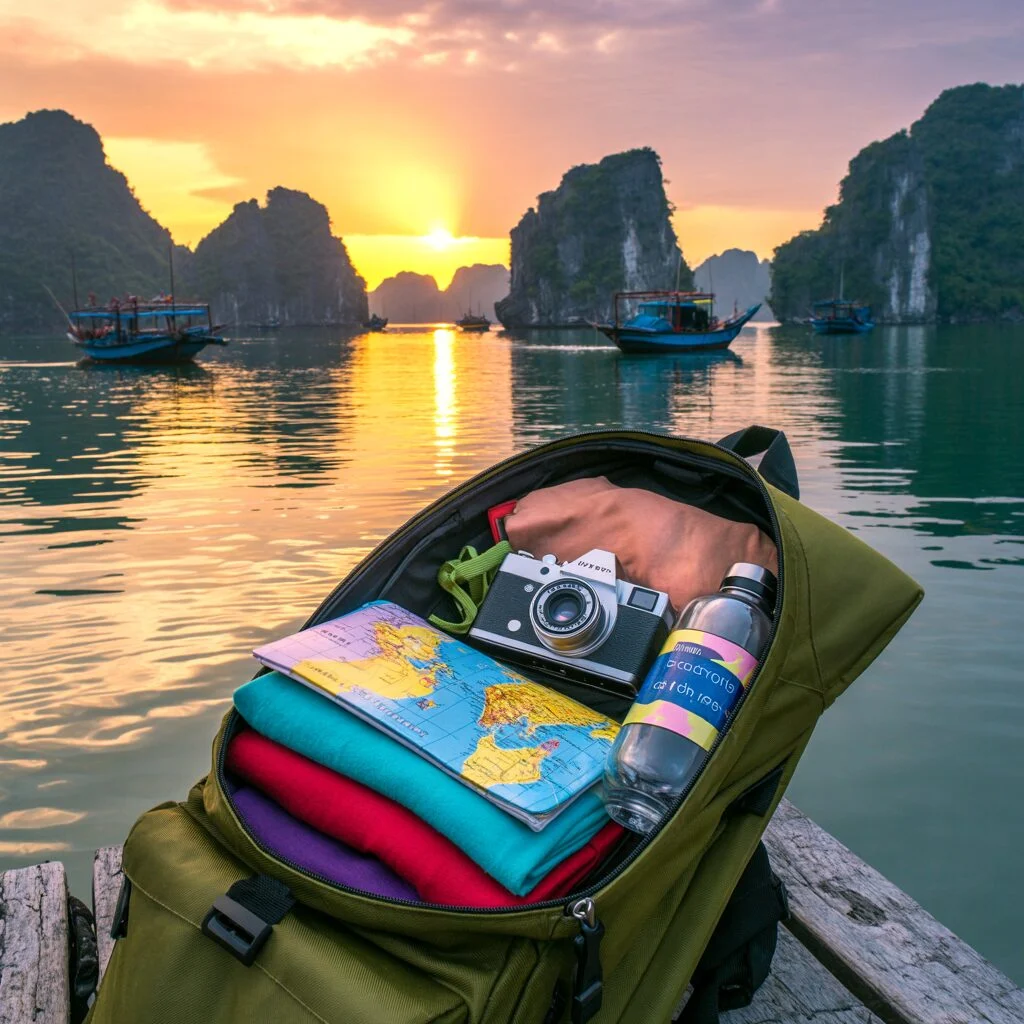
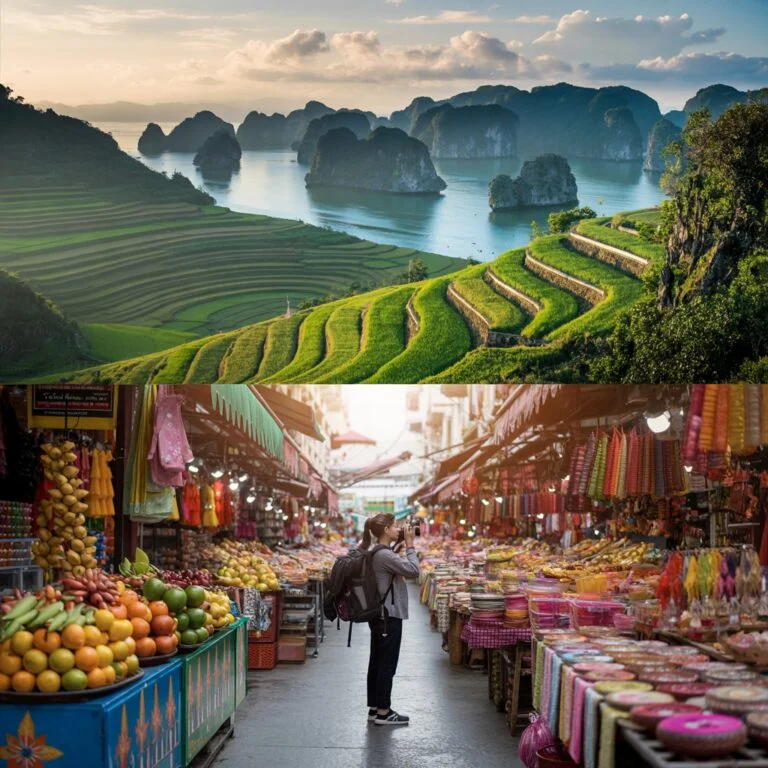
Things to Do and Attractions in Vietnam anchor the northern coastal itinerary around Ha Long Bay, a UNESCO World Heritage Site in the Gulf of Tonkin featuring over 1,600 limestone islands and islets formed over 500 million years. Over 300 boats operate on the bay, roughly a three-hour drive from Hanoi. Lan Ha Bay, bordering Cat Ba Island to the south, offers a quieter alternative with 64 boats and less pollution, though it lacks caves and has less infrastructure.
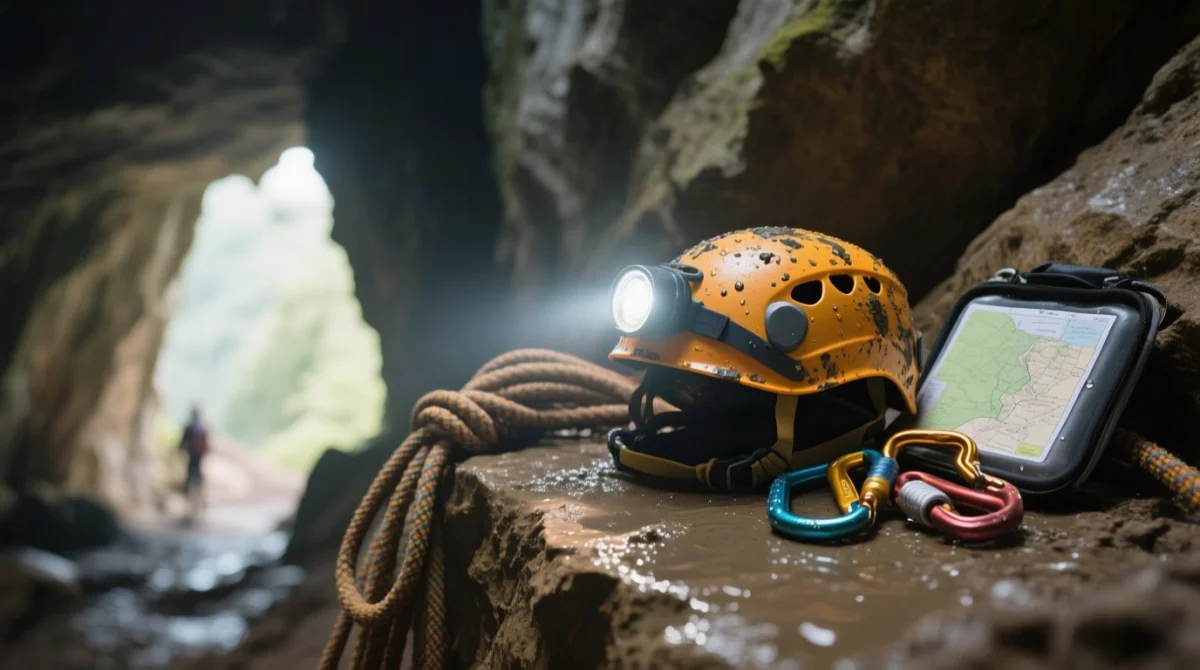
Phong Nha-Ke Bang delivers subterranean adventure with Son Doong, the world’s biggest cave, requiring a 5-day trip of jungle hikes and rope climbing. Paradise Cave is accessible by relaxed boat ride, while Hang Toi Cave adds zip-lining, swimming, and kayaking. The area sits only an hour from several train stations with overnight routes to and from Hanoi.
Things to Do and Attractions in Vietnam extend south to the Mekong Delta, a vast lowland of tributaries and floating markets just south of Ho Chi Minh City. A 2-3 day stay with a local homestay reveals Vietnamese and Khmer heritage. My Tho serves as a gateway, home to Vinh Trang Pagoda with its three huge Buddhas and tropical gardens. Cycling through small villages and visiting colourful floating markets round out the experience.
Cultural Heritage & Unforgettable Experiences
Things to Do and Attractions in Vietnam reach their cultural apex in Hoi An Ancient Town, a UNESCO World Heritage Site with over 2,000 years of history, and Hue, the ancient imperial capital of the Nguyen Dynasty (1802-1945). Both destinations anchor central Vietnam itineraries for first-time travelers, couples, and families.
Hoi An Ancient Town: Lanterns, Tailoring & Workshops
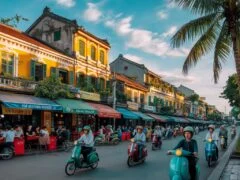
This 15th-century port city in Quang Nam Province features yellow colonial buildings, pedestrianized streets, and nightly lantern displays. Hoi An ranks among the world’s tailoring hubs – a custom summer linen suit costs $120 USD, while four custom-design shirts run $15 USD per shirt (reported as of 2026). The town is also considered the best place in the country for cooking classes, where visitors learn dishes like green mango salad, crispy pork, prawn spring rolls, and authentic bánh xèo. Notable landmarks include the ornate Japanese Bridge and Chuc Thanh Pagoda. Hoi An holds a 4.8 rating across 17,462 reviews on Viator.
Hue Imperial City & Royal Tombs
Hue sits along the Song Huong (Perfume River) and houses a 19th-century Imperial Citadel – a walled complex surrounded by a moat, containing palaces, shrines, and the Forbidden Purple City. Visitors should allocate at least three hours for the citadel alone. Royal tombs of emperors Minh Mang and Khai Dinh lie just outside the city, offering countryside views from their summits. The Thien Mu Pagoda, an octagonal structure standing 21 metres tall, overlooks the river. For adventurous travelers, an Abandoned Waterpark – a failed $30 million USD mega-attraction shaped like a giant dragon – sits a short motorbike ride from Hue city (reported as of 2022; technically not open to tourists). Things to Do and Attractions in Vietnam consistently position Hue as the essential historical counterpart to Hoi An’s commercial charm.
Culinary Experiences & Coffee Culture
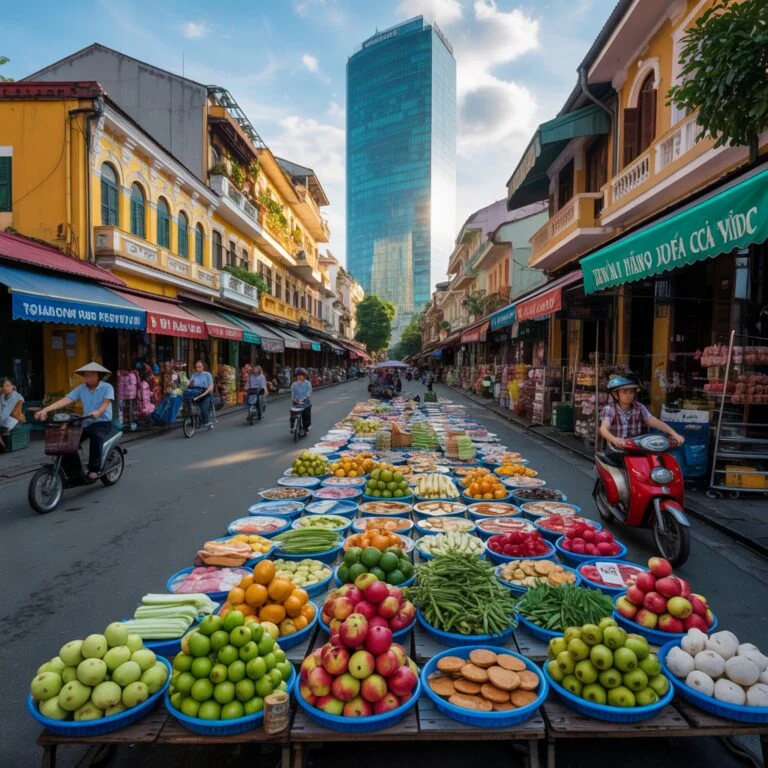
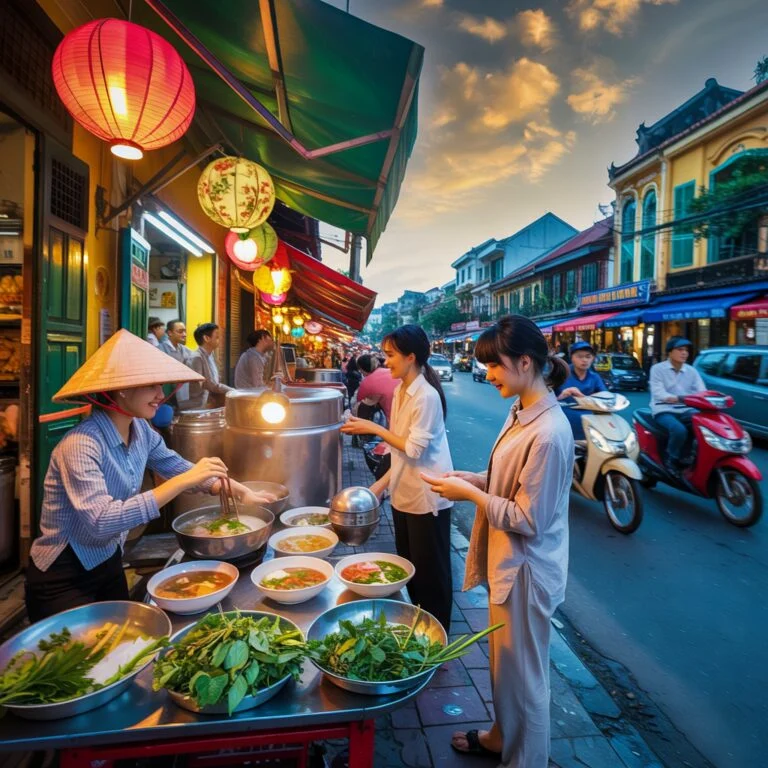
Things to do and attractions in Vietnam converge around food in ways few destinations match. Hanoi’s street food districts anchor the northern scene, where vendors serve pho, the national dish, from tiny red stool seating along narrow Old Quarter alleys. Northern pho is stripped back, focused on the broth, while South Vietnam versions add shiso leaves for an aniseedy taste. Bun cha, the grilled pork noodle dish famously eaten by President Obama, remains a Hanoi staple.
Things to do and attractions in Vietnam extend into hands-on culinary learning. Hoi An ranks as the best place in the country for cooking classes, where travelers prepare green mango salad, crispy pork, prawn spring rolls, and authentic bánh xèo. Central Vietnamese specialties available nowhere else include cao lau, whose noodles are soaked in lye-infused water from one specific well, mi quang with turmeric broth and quail egg, and bun bo Hue, a lemongrass beef noodle soup local to Hue.
Vietnam’s coffee culture is an obsession in itself. Egg coffee, a northern speciality, has become the latest trend in every café, offering a rich, dessert-like layer atop robusta espresso.
Regional Highlights & Adventure Travel
Things to do and attractions in Vietnam extend well beyond the coastal icons. Sapa, a former 1922 French hill station located 195 miles northwest of Hanoi, anchors the northern highlands as Vietnam’s trekking capital. Travelers reach it via a seven-hour sleeper train from Hanoi to Lao Cai plus a 50-minute transfer. Fansipan, at 3,143 meters (10,312 feet), is Vietnam’s highest peak, and ethnic groups including Hmong, Dzao, Red Dao, and Black Dao inhabit the surrounding terraced valleys.
Ninh Binh, nicknamed “Ha Long Bay on land,” sits roughly 1 hour 45 minutes southeast of Hanoi. Tam Coc’s 1.5-hour boat trip features guides who row with their feet through three limestone grottos. Mua Cave rewards a 500-stair climb with aerial views, and Bai Dinh Pagoda spans 4,200 acres as the country’s largest Buddhist complex.
The 21 km Hai Van Pass links Da Nang and Hue along a coastal mountain road with a visible shipwreck along the shore. In the south, the Cu Chi Tunnels stretch over 155 miles (250 kilometers), built by the Viet Cong in the 1940s, and hold a 4.9 rating across 109,853 reviews. Things to do and attractions in Vietnam thus span alpine trekking, karst river tours, and underground war history within a single multi-region itinerary.
Tailored Itineraries: Best Experiences by Traveler Type
Things to do and attractions in Vietnam segment cleanly by traveler profile: couples choose luxury rail journeys, families favor hands-on cultural activities, and first-timers need 2-3 weeks spanning North, Central, and South regions.
Romantic Getaways for Couples
Couples prioritize The Vietage, a luxury train running Da Nang to Quy Nhon in 6 hours with a 12-passenger capacity, cosy private booths, a separate bar carriage, massage room, 3-course lunch, and free-flow drinks at $225 USD (Da Nang→Quy Nhon) or $185 USD (Quy Nhon→Da Nang). Hoi An lantern dusk boats and Phu Quoc sunset cocktails round out couple-oriented experiences.
Family-Friendly Sightseeing & Accessibility
Families gravitate toward Hoi An cooking classes, Mekong Delta boat rides, and coconut basket boats (circular coracles). These activities are interactive and age-adaptive, though stroller accessibility varies across heritage sites and rural paths.
Essential Pacing for First-Time Travelers
North Vietnam
Ha Long Bay cruises
Central Vietnam
Hoi An cultural workshops
South Vietnam
Cu Chi Tunnels
2026 Budget Breakdown & Money Reality for US Travelers
US travelers should budget $30-$50 USD daily (budget), $50-$100 (mid-range), or $150+ (luxury). The local currency is the Vietnamese đồng (VND), and $100 USD equals roughly 2.5 million VND, covering several days of budget travel. Vietnam remains very cheap compared to neighboring Thailand. Is $1,000 enough for a week? Yes, comfortably at a mid-range tier.
| Category | Budget ($30-50/day) | Mid-Range ($50-100/day) | Luxury ($150+/day) |
|---|---|---|---|
| Accommodation | ~$30/night (e.g., Tam Coc hotel) | $40-70/night boutique | $100+ resort |
| Food | Street food stalls | Restaurant meals | Fine dining |
| Transport | Sleeper bus $11-16 (Sapa); minibus $12 | Grab rides, shared transfers | Private transfers |
| Activities | $32-38 day tours (Viator) | $83-86 guided tours | $149-159 cruises |
| Shopping | – | $120 custom suit (Hoi An) | $15/shirt tailored |
Things to Do and Attractions in Vietnam span every price tier, letting planners prioritize spending on experiences that matter most. Tipping is not mandatory but appreciated for good service.
Safety, Scams, and Health Precautions
Things to do and attractions in Vietnam remain accessible and safe for US tourists, provided travelers apply basic vigilance against common scams. Taxi meter tampering and counterfeit tour operations are the most frequent issues; verifying a licensed tour operator before booking eliminates most risk.
- New safety regulations adopted after 2011 boat sinking
- Ethical operators available; avoiding super-budget cruises reduces risk
- Some operators do not abide by safety rules (reported 2022)
- Rats commonly seen even on the best boats
- Plastic bags and garbage floating on the water
Things to do and attractions in Vietnam also require basic health preparation. Tap water is not safe to drink; use filtered water only. Recommended vaccinations include hepatitis A and B, typhoid, and malaria precautions in designated zones. At the Perfume Pagoda, terrible humidity makes the ground completely slippery, so sturdy footwear is essential.
Practical US-to-Vietnam Logistics & 2026 Entry Requirements
US citizens planning things to do and attractions in Vietnam must secure a 2026 e-visa through the Vietnam Immigration government portal, with processing typically taking 3-5 business days. Applicants should consult that external government source directly for current fees and validity terms before booking flights.
Intercity transport options include domestic flights, sleeper trains, and sleeper buses. The Hanoi-Lao Cai sleeper train runs approximately seven hours plus a 50-minute transfer to Sapa, while Hanoi’s Noi Bai International Airport ranks as the country’s second-largest airport, serving as a primary gateway for northern itineraries.
Electrical outlets in Vietnam use Type A/C plugs at 220V/50Hz. For connectivity, the Airalo mobile eSIM (discount code AIRALOESIM10 for 10% off) and SafetyWing travel medical insurance are practical pre-departure tools. Things to do and attractions in Vietnam span three regions over 1,000 miles north to south, so coordinating transport between north, central, and south segments is essential for limited vacation windows.
Regional Climate Windows & Best Time to Visit in 2026
Things to do and attractions in Vietnam align with two optimal visiting windows: March to April and September to November, when monsoon disruption is minimal across all three regions. For beach-focused itineraries, July to September offers the best coastal conditions, while travelers seeking cooler temperatures should target December to March.
Ha Long Bay, the country’s number one attraction, delivers blue skies most reliably from April to October. June through August brings intense heat but fewer crowds, whereas November to March cools into the 60s°F in January yet often sits under persistent gray skies. September and October draw the heaviest tourist saturation, making advance cruise reservations essential.
Things to do and attractions in Vietnam shift substantially by latitude: the north experiences a distinct winter with cold, drizzly periods (February to April typically offers low sun visibility at Ha Long Bay), central Vietnam faces typhoon season in late autumn, and the south follows a simpler wet-dry cycle. US travelers planning multi-region routes should cross-reference each destination’s monsoon pattern before locking dates, as a single two-to-three-week itinerary may pass through three different climate zones.
FAQ: Vietnam Travel Questions Answered
What are the top 5 things to do in Vietnam?
The top 5 things to do in Vietnam are: overnight Ha Long Bay cruises (UNESCO site, over 1,600 limestone islands), exploring Hoi An Ancient Town (UNESCO site with lanterns, tailoring, cooking classes), visiting Hue’s Imperial City and royal tombs (Nguyen Dynasty capital, 1802 to 1945), trekking Sapa’s rice terraces (trekking capital, Fansipan at 3,143 meters), and touring the Cu Chi Tunnels (over 155 miles of Viet Cong passages, 4.9 rating, 109,853 reviews).
What is the most famous attraction in Vietnam?
Ha Long Bay is the most famous attraction in Vietnam, often called the “poster boy of Vietnam” and ranked as the number one attraction in the country. Located in the Gulf of Tonkin in Quang Ninh Province, this UNESCO World Heritage Site features over 1,600 limestone islands and islets formed over 500 million years, emerald green waters, four floating villages, and Surprise Cave, the bay’s largest. It was also voted one of the New Seven Wonders of the World.
Is $1000 enough for a week in Vietnam?
Yes, $1000 USD is enough for a comfortable week in Vietnam at a mid-range travel style. Daily budgets range from $30 to $50 USD for budget travelers, $50 to $100 for mid-range, and $150 or more for luxury. At mid-range rates, $1000 covers a full week with room for activities. For context, a Hoi An custom suit costs approximately $120 USD and a sleeper bus to Sapa runs $11 to $16 USD.
Is $100 USD a lot in Vietnam?
Yes, $100 USD is a significant amount in Vietnam, equivalent to approximately 2.5 million Vietnamese đồng (VND). At a budget of $30 to $50 USD per day, $100 can cover several days of travel including accommodation, street food meals, and local transport. For comparison, a sleeper bus from Hanoi to Sapa costs $11 to $16 USD, a Hoi An to Hue minibus tour costs $12 USD, and custom shirts in Hoi An run $15 USD each.
Is Vietnam safe for US tourists right now?
Vietnam is generally safe for US tourists. Common precautions include watching for taxi meter scams, verifying that tour operators are properly licensed, and avoiding tap water in favor of filtered or bottled water. Recommended vaccinations include hepatitis A and B, typhoid, and awareness of malaria zones. For Ha Long Bay cruises, avoid super-budget operators, as safety regulations adopted after a 2011 boat sinking are not uniformly followed by all operators.
Do US citizens need a visa for Vietnam in 2026?
Yes, US citizens need an e-visa to enter Vietnam in 2026. Vietnam reopened to international tourism and reinstated e-visa availability as of March 2022. The e-visa application is completed online through the Vietnam Immigration government portal, which serves as the authoritative external source for current fees, processing times, and validity periods. Travelers should apply well in advance of their planned departure and consult the portal directly for the most up-to-date 2026 entry requirements.
What is the best month to go to Vietnam?
The best months to visit Vietnam are March to April and September to November, when weather conditions are most favorable across the country. For beach activities, July to September offers the best coastal conditions. Travelers preferring cooler temperatures should target December to March. For Ha Long Bay specifically, April to October brings the best blue skies, though June to August is hot and less crowded, while November to March is cooler but often has gray skies.
Is Vietnam family-friendly for kids?
Vietnam is family-friendly for kids, with several engaging activities across regions. Hoi An offers hands-on cooking classes where children can learn to make dishes like prawn spring rolls and crispy pork, plus coconut basket boat tours. The Mekong Delta provides boat rides through floating markets and cycling through small villages. Families should note that some attractions like Phong Nha cave exploration and Sapa trekking may have age and difficulty considerations for younger children.