
To plan a Vietnam itinerary, US travelers must secure a 90-day e-visa for $25, book domestic flights or trains, and arrange airport transfers. Upon arrival, activate a tourist SIM, exchange USD for VND, and install Grab. Reserve overnight Halong Bay cruises in advance via platforms like 12Go or Klook.
Structuring a Vietnam journey requires following a strict chronological sequence. Begin with the e-visa application through the National Immigration Portal before booking accommodations or flights. Then arrange intercity transport, airport pickup, currency exchange, SIM activation, and Halong Bay cruise reservations in that order. This integrated approach prevents bottlenecks such as sold-out cruise berths or visa processing delays that could disrupt your entire schedule.
Vietnam’s destination logistics present unique challenges for US travelers. US citizens are not on any visa exemption list and must obtain an e-visa. Distances between cities are longer than they appear on maps. Cash-only transactions dominate in markets and small towns. The Vietnamese Dong is nearly impossible to obtain before arrival, so plan to exchange or withdraw upon landing at your entry airport.
The Ultimate Vietnam Logistics Pipeline
US travelers planning a Vietnam itinerary should follow a six-step sequence: visa, flights, trains, airport transfer, currency exchange, SIM activation, and Halong Bay cruise booking. The Vietnam Itinerary Logistics Framework transforms raw intentions into an executable timeline, preventing bottlenecks that arise from fragmented planning.
Secure your e-visa
Apply for the $25 USD, 90-day multiple-entry e-visa through the National Immigration Portal before booking accommodations or flights.
Book domestic flights and trains
Reserve intercity connections early; Vietnam Airlines offers cheap, efficient routing between major hubs.
Arrange airport transfer
Download Grab before departure; a local SIM is required for ride-hailing activation.
Exchange cash
ATMs are recommended over airport counters; foreign cards typically allow 2-3 million VND per withdrawal.
Activate a tourist SIM
Purchase a data-only package (100,000-200,000 VND) from Viettel, Vinaphone, or Mobifone at major airports using your passport.
Book your Halong Bay cruise
Reserve an overnight cruise (~€190/night including all meals) in advance; shuttles depart Hanoi between 7:30 and 8:30 AM.
An integrated approach to your Vietnam itinerary eliminates last-minute reservation scrambles and keeps every logistical phase synchronized from departure to return.
Step-by-Step Pre-Travel Logistics & Visa Application
US citizens must apply for a 90-day multiple-entry Vietnam e-visa through the National Immigration Portal for $25 USD before booking flights or accommodations. The Vietnam Itinerary Logistics Framework secures your entry credentials by routing you through this external government portal well in advance of any reservation commitments.
Vietnam E-Visa Application & Processing Times
The e-visa is available to citizens of all countries and territories. Your passport must remain valid for a minimum of 6 months after your planned entry date. Apply before booking accommodations or flights; processing times vary, so submit your application early to avoid disrupting your Vietnam itinerary timeline.
Visa on Arrival vs. E-Visa Comparison
| Feature | E-Visa | Visa on Arrival |
|---|---|---|
| Fee | $25 USD | Varies by agency |
| Stay duration | 90 days | Up to 90 days (varies) |
| Entry type | Multiple entry | Single or multiple |
| Application | Online, pre-departure | Pre-approval letter + on-arrival processing |
| Processing | Submit via government portal | Agency intermediary required |
US travelers are not on any visa exemption list and must obtain an e-visa. The Vietnam Itinerary Logistics Framework prioritizes the e-visa route for its direct portal access and transparent fixed fee.
Travel Insurance and Health Preparation
Travel insurance is highly recommended before coming to Vietnam. Major cities offer excellent clinics with English-speaking doctors and staff, but coverage must be secured pre-departure to ensure medical evacuation support and uninterrupted care throughout your trip.
Navigating Vietnam: Domestic Flights, Trains, and Motorbikes
The Vietnam Itinerary Logistics Framework prioritizes budget domestic flights via Vietnam Airlines for fast intercity routing, with air travel confirmed as cheap and efficient – approximately €90 for 2 flights (, 2025). VietJet Air serves as a secondary carrier option. When structuring a Vietnam itinerary, travelers should verify baggage weight limits in advance, as budget airlines enforce strict fees.
Booking Domestic Flights in Vietnam
- Vietnam airports are well-organized; domestic flights are the fastest connection method shaping day-by-day routing.
- Da Nang airport provides access to Hoi An and handles some international arrivals (, 2026).
- Flights from the USA require a layover in Asia, typically Korea or Japan .
Navigating Vietnam’s Train System
- Distances in Vietnam are longer than they look; train or bus travel can take most of a day (, 2026).
- Overnight buses save on accommodation costs (, 2023).
- is a practical platform for booking train tickets (gap-proposal guidance – verify current schedules independently).
Legal Requirements for Renting a Motorbike
- Motorbike rental costs approximately €5 per day (, 2025).
- The Hai Van Pass, made famous by Top Gear, is considered the country’s most beautiful road – best experienced on a motorbike but too dangerous for beginners (, 2023). Hire a private driver as an alternative.
- US travelers must carry an International Driving Permit (IDP) and comply with local helmet laws before signing any motorbike rental agreement (gap-proposal guidance – confirm current legal requirements with Vietnamese authorities).
- Street crossing technique: wait for a small gap, be predictable, and keep walking (, 2025).
On-the-Ground Operations: SIM Cards, Money, and Grab
Upon arrival, US travelers should purchase a tourist SIM (100,000-200,000 VND for data-only), exchange USD at ATMs rather than airport counters, and install Grab for scam-free urban transit. The Vietnam Itinerary Logistics Framework integrates these on-ground operations to maintain uninterrupted connectivity and purchasing power.
Choosing the Right SIM Card Data Package
Locate a kiosk
Find a kiosk at a major airport or city shop selling prepaid SIMs from Viettel, Vinaphone, or Mobifone.
Present your passport
Your passport is required for mandatory SIM registration.
Select a data-only package
Choose a package priced 100,000-200,000 VND, depending on data volume.
Load credit
Add 20,000-100,000 VND increments for calls and texts.
Money Exchange and Cash Handling
- Avoid airport exchange counters; use ATMs, which are widely available and recommended.
- Expect a max withdrawal of 2-3 million VND per transaction at most banks; Citibank and Commonwealth allow 10 million VND.
- Carry USD as backup, but use VND for all transactions, as markets and small towns are cash-only.
- Activate the “world option” on your credit card before departing the US.
How to Pay for Grab Rides
- Download the Grab app before departure; a local SIM is required for operation.
- Choose car or motorbike transport in main cities; pricing is fixed with no negotiation needed.
- Pay cash directly to the driver or link a credit card in-app, depending on availability.
- Use Grab over street taxis, especially in Hanoi, where taxi scams are most common. If using a taxi, choose reputable Vinasun or Mai Linh and always request the meter.
How to Book Your Halong Bay Cruise
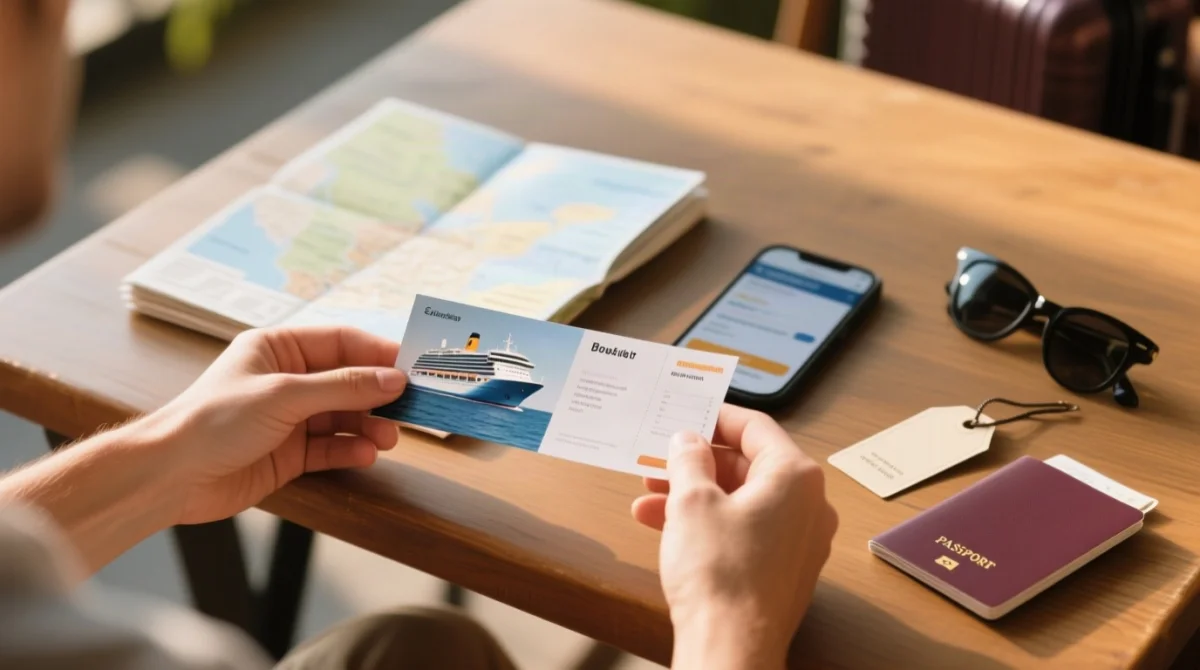
When the Vietnam Itinerary Logistics Framework schedules your Ha Long Bay overnight cruise, it prioritizes advance reservations to secure preferred vessel tiers and shuttle timing. Most operators include round-trip transport from Hanoi, with shuttles departing between 7:30 and 8:30 AM. The Hanoi to Ha Long drive takes approximately 3 hours. One-night cruises are most common, though two-night options exist.
- Budget: Halong Hideaway Cruise
- Mid-range: Ambassador Cruise Halong Bay
- Luxury: Elite of the Seas Cruise
Typical inclusions cover all meals, kayaking, cave exploration, and deck time. A reference cost from a 2025 traveler’s trip was approximately €190 per person per night, including all meals. Alternatively, the Vietnam Itinerary Logistics Framework can route you to Cat Ba Island, where you stay on the island and take a day cruise boat trip instead of an overnight vessel.
Best Platforms for Booking Trains, Flights, and Cruises
For practical booking execution, consider these platforms commonly used by independent travelers: for train tickets, and Klook or GetYourGuide for Ha Long Bay cruise reservations. These third-party aggregators consolidate operator options and simplify cross-referencing departure times, though availability and pricing should be verified directly with cruise operators before final commitment.
How to Structure Your Vietnam Itinerary
A 14-day Vietnam itinerary covering Hanoi, Sapa, Ninh Binh, Halong Bay, Hoi An, Hue, and Ho Chi Minh City requires at least two domestic flights to bridge northern, central, and southern regions without losing entire days to surface transit.
- 4-5 days: Base in Hanoi or Ho Chi Minh City; limit scope to one region.
- 7 days: Cover either the north (Hanoi, Ninh Binh, Halong Bay, linked by road) or the south (Ho Chi Minh City with Mekong Delta day trips).
- 10 days: Start in the north and work south; fly between regions to preserve time.
- 14 days: Hanoi → Sapa → Ninh Binh → Halong Bay → fly to central Vietnam → Hoi An, Hue, or Ho Chi Minh City; add a second flight if ending in HCMC.
- 3 weeks: Extends the 14-day route with Da Lat before reaching Ho Chi Minh City.
The Vietnam Itinerary Logistics Framework recommends a South-to-North direction (Saigon to Hanoi) for gradual cultural acclimation. US travelers should build in flextime: jet lag typically peaks on day 2 or 3, so schedule downtime at the start rather than packing arrival days with activities. For multi-region trips, traveling on the cusp of seasons (e.g., north in November before heading south) balances weather exposure across the Vietnam itinerary.
Seasonal Weather & Travel Timing
Adjust your Vietnam itinerary seasonally by targeting the north from October to April and the south between December and April, while avoiding Tet holiday disruptions.
The Vietnam Itinerary Logistics Framework schedules northern segments between October and April, when rain chances decrease and temperatures moderate; fall (September to October) delivers the most favorable conditions. Northern winters (December through February) bring wet, cold weather, with mountain areas like Sapa experiencing extreme cold in January and February. Summers turn very hot with heavy rains.
Southern Vietnam stays hot year-round, but the rainy season (May to October) brings afternoon thunderstorms to all-day downpours. The central coast follows an inverted monsoon with steady warmth but rain from October to February and occasional tropical storms. Central Highlands offer a somewhat dry window from January to May.
For multi-region routing, the Vietnam Itinerary Logistics Framework targets seasonal cusps, visiting the north in November before heading south. The Tet holiday (late January or early February) is Vietnam’s biggest celebration; most businesses shut down and transport hubs overflow. Book all transport well in advance during this window.
FAQ: Vietnam Itinerary Logistics
Is tipping expected in Vietnam?
Tipping is not traditionally expected in Vietnam the way it is in the United States. The research sources consulted for this guide do not include specific tipping data. Rounding up bills or leaving small amounts for good service is appreciated but not mandatory. Always check whether a service charge has already been added to your bill at upscale establishments.
Should I get an E-visa or Visa on Arrival?
The e-visa is the recommended option for US travelers. It costs $25, grants 90 days with multiple entry, and is available to all nationalities through the external National Immigration Portal. Visa on Arrival involves a different process that our research sources did not detail. Since the e-visa is completed entirely online before departure, it eliminates the need for arrival-day processing and is the more convenient path.
What are the baggage weight limits for domestic flights in Vietnam?
Specific baggage weight limits are not available in our research sources. Budget carriers operating in Vietnam are known to enforce weight restrictions strictly and charge additional fees for excess baggage. Before finalizing any domestic flight reservations for your Vietnam itinerary, verify the current baggage allowance directly on the airline website, as policies vary between carriers and fare classes.
Do I need an International Driving Permit (IDP) to ride a motorbike in Vietnam?
Specific IDP requirements are not available in our research sources, but an International Driving Permit is widely recommended for legal motorbike operation in Vietnam. Always verify current requirements with the relevant authorities before renting. Motorbike rental costs approximately 5 euros per day. The Hai Van Pass is too dangerous for beginners; a private driver is a safer alternative for that route.
Can I use USD in Vietnam, or do I need to exchange it for VND?
USD is generally accepted almost everywhere in Vietnam, but the Vietnamese Dong is always the better currency to use. USD is very difficult to purchase within Vietnam, so bring it from the US as a backup. VND is nearly impossible to obtain before your trip. For the best rates, use ATMs rather than airport currency exchange counters, which should be avoided.
How much cash should I carry for daily expenses in Vietnam?
One traveler’s documented 14-day trip brought 300 euros in cash per person as a reference point. Cash is required in markets, small towns, and some hotels. Documented meal costs include breakfast at 2 to 4 euros, quick lunch at 2 to 4 euros, and dinner at 6 to 10 euros. ATMs are widely available, with foreign card withdrawals usually capped at 2 to 3 million VND per transaction.
Is Grab cheaper than traditional taxis in Vietnam?
Grab eliminates the need to negotiate prices and helps avoid common taxi scams. Hanoi taxis are described as the worst, with Grab recommended instead. Saigon taxis are more organized and regulated. If you must use a traditional taxi, Vinasun and Mai Linh are reputable operators. Always ask the driver to use the meter. A local SIM card is required to use the Grab app.
What is the best time of year to plan a Vietnam itinerary considering monsoon season?
Northern Vietnam is best from October to April, with fall (September to October) being ideal. Southern Vietnam is always hot, with a rainy season from May to October. The central coast experiences rain from October to February. Avoid the Tet holiday in late January or early February, when most businesses shut down and transport hubs overflow. Book transport well in advance if traveling during Tet.