
In 2026, the average daily travel budget for Vietnam ranges from $25 to $50 for backpackers, $50 to $150 for mid-range travelers, and $150 to $400+ for luxury experiences. This per diem covers accommodation, dining, transport, and basic sightseeing.
Costs fluctuate significantly based on geographic location, with a regional price differential of up to 2.5x between major cities. Premium destinations like Phu Quoc and central Hoi An command 1.5 to 2 times the national midpoint, while value zones such as Hue and the Mekong Delta sit 30 to 40 percent below average.
Travelers should anticipate an inflation-adjusted benchmark using a 1.03x dynamic pricing multiplier for 2026. Beyond the daily baseline, budget forecasting must account for the e-visa processing fee, sleeper bus fare or soft-sleeper train berth for inter-city travel, and potential Ha Long Bay cruise tier expenses.
Average Daily Travel Budget for Vietnam by Tier
In 2026, the average daily travel budget for Vietnam spans $25-$50 for backpackers, $50-$150 for mid-range travelers, and $150-$400+ for luxury vacations. The Vietnam Daily Travel Budget establishes clear spending limits by aggregating verified 2026 prices across accommodation, food, and transport categories before departure.
Backpacker Daily Budget in Vietnam
- $25-$50/day total. Dorm beds: $5-$15/night (Old Quarter/District 1: $8-$15). Three street-food meals plus coffee: $10-$18/day. Local transit (Grab motorbike ride, bus, walking): $3-$8/day. Paid activity every other day: $5-$12 average. Style: dorm beds, street food, sleeper buses.
Mid-Range Traveler Per Diem in Vietnam
- $50-$150/day total. 3-star hotel with breakfast: $25-$70/night. One sit-down dinner plus two casual meals: $25-$45/day. Grab car plus motorbike taxi: $8-$15/day. Daily activity: $15-$35. Style: 3-star hotels, sit-down restaurants, soft-sleeper train berth.
Luxury Vacation Spending in Vietnam
- $150-$400+/day (tiered). 5-star resort: $200-$500+/night. Fine dining: $120-$200/day. Private driver hourly rate equivalent: $80-$150/day. Premium experiences: $100-$400/day. A comfort tier ($200-$350/day) bridges mid-range and luxury: boutique 4-star ($90-$180/night), private transfers, fine dining, one overnight Ha Long Bay cruise tier.
Accommodation Costs Across Major Vietnamese Cities
The average daily travel budget for Vietnam depends heavily on accommodation, which ranges from $5-$15 for hostel dorms to $25-$70 for mid-range hotels. Prices vary up to 2.5× between cities, with an inflation-adjusted benchmark applying a 1.03× CPI multiplier for 2026.
| City | Hostel/Dorm | 3-Star Hotel | Boutique/4-Star | 5-Star Resort |
|---|---|---|---|---|
| Hanoi (Old Quarter) | $8-15 | $35-70 | $50-90 | $100+ |
| HCMC (District 1) | $8-15 | $35-70 | $50-90 | $200+ |
| Da Nang (central) | $5-12 | $30-60 | $50-90 | $110-500+ |
| Hoi An (central) | $5-12 | $35-70 | $50-90 | $80-200+ |
| Phu Quoc | $10-15 | $50-90 | $90-180 | $200-500+ |
Price Differentials: Premium Zones vs. Value Zones
Walking 10 minutes outside tourist zones (Old Quarter to West Lake; District 1 to District 3) drops accommodation costs 20-30%. The old quarter premium zone effect is most pronounced in Phu Quoc and central Hoi An, where a regional price differential of 1.5-2× the national midpoint applies. Hue and Mekong Delta towns sit 30-40% below average.
Budgeting for Families and Digital Nomads
The average daily travel budget for Vietnam shifts fundamentally for extended stays: monthly apartment rentals in Da Nang and HCMC average ~$400/month versus $35/night at daily rates. Many hotels allow children under 6-12 to stay free with parents, reducing family per-night costs. Boutique heritage property options in Hue offer comparable experiences at lower rates than Phu Quoc, where luxury tiers grow 10-20% annually (baseline 2024).
Food Costs: Street Food vs. Restaurant Dining
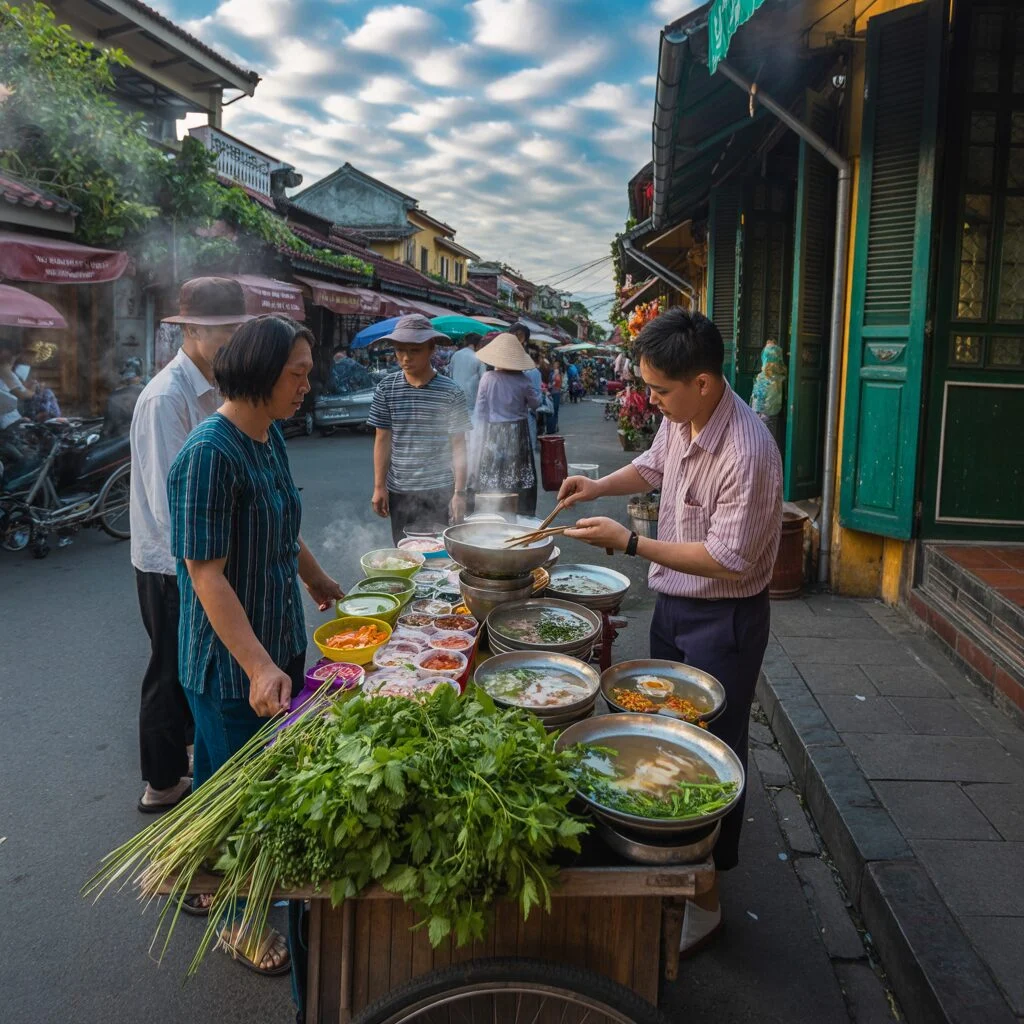
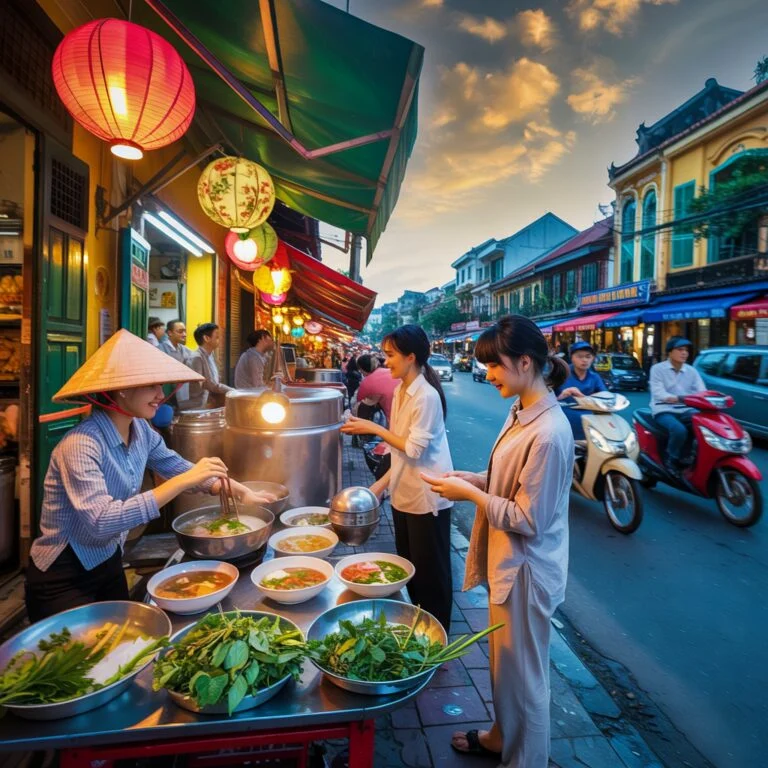
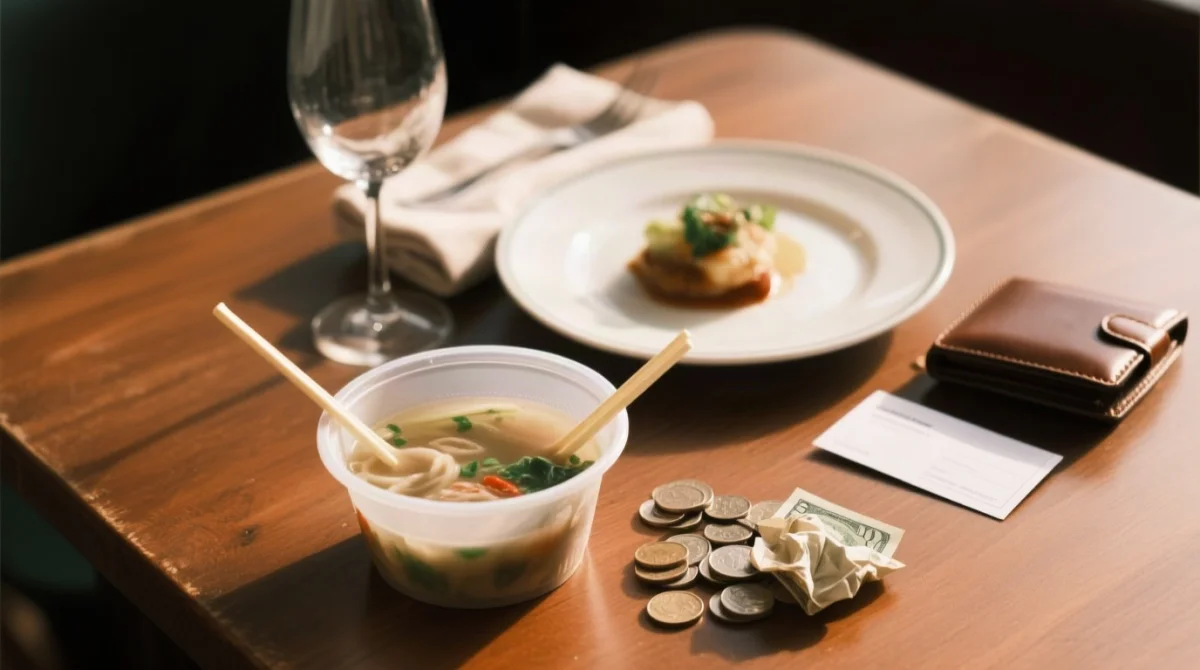
In 2026, Vietnam food costs average $2 for street food meals like pho, while sit-down restaurant dining costs $10-$20 per meal, and cooking classes add $25-$45. The average daily travel budget for Vietnam allocates $8-15 per day for street food or $15-30 for restaurant dining.
| Item | Street Food | Local Restaurant | Tourist Restaurant |
|---|---|---|---|
| Pho (breakfast) | $1.00-2.50 | $5-10 | $8-15 |
| Banh mi | $0.80-1.50 | – | – |
| Com tam (lunch) | $2-3.50 | $4-8 | $10-18 |
| Bun cha (lunch) | $2-3 | $4-8 | $10-18 |
| Cao lau (dinner) | $2-3.50 | $8-15 | $15-25 |
| Grilled seafood | $3-6 | $8-15 | $15-25 |
| Vietnamese coffee | $0.80-2.00 | – | – |
| Bia hoi (draft beer) | $0.30-0.60 | – | – |
| Craft beer pint | – | – | $2.80-4.80 |
An IJRISS regression study (n=306) found food quality (β=0.343) and price (β=0.325) are the two strongest predictors of street food satisfaction. Vietnam ranks as the world’s second-largest coffee producer (source: VICOFA). The average daily travel budget for Vietnam drops significantly when travelers shift from tourist restaurants to neighborhood street stalls in Hanoi or Hoi An.
Cooking Class Prices in Hoi An and Hanoi
Half-day cooking classes with a market tour included are estimated at $25-$45 in Hoi An and Hanoi. No source in the research pool provides verified 2026 pricing for this activity; the range reflects editorial gap-analysis estimates based on comparable guided tour rates.
Getting Around: Local and Inter-City Transport Costs
Vietnam transport costs in 2026 include $0.30-$2 local Grab rides, $15-$45 inter-city trains, and $35-$150 domestic flights, with motorbike rentals averaging $5-$10 daily. The Vietnam Daily Travel Budget adjusts transport allocations significantly depending on whether travelers move within cities or between them.
Local Transportation Costs in Major Vietnamese Cities
- Grab motorbike ride (1-3 km): $0.80-$2.00 (20,000-50,000 VND); operators include Grab, Be, Xanh SM
- City bus (Hanoi/HCMC): $0.30-$0.40 (7,000-10,000 VND); metered taxi: $4-$8
- Private driver hourly rate equivalents: full-day private guide with car runs $50-$80 in most regions, $100-$150 in Hanoi/HCMC upscale zones
- Within-city daily transport: $2-$8
Inter-City Travel Expenses: Flights, Trains, and Buses
- Domestic flights: $35-$150 – booking 3-4 weeks ahead yields $40-$80; same-week booking pushes costs to $80-$150 (Vietnam Airlines, VietJet, Bamboo Airways)
- Soft-sleeper train berth Hanoi-Hue: $25-$45 (source: Vietnam Railways); general train range $8-$45
- Sleeper bus fare: $10-$40 (Hanoi-Sapa: $15-$25; Hue-Hoi An: $15-$25) – saves one night of accommodation
- Motorbike rental: $5-$10/day; purchase for resale: $200-$400 (break-even ~20-40 days; international driver’s permit required)
The Vietnam Daily Travel Budget covers these transit outflows most efficiently when travelers combine overnight sleeper buses with advance-booked domestic flights.
Hidden Costs and Tourist Premiums to Anticipate
Travelers calculating the average daily travel budget for Vietnam should anticipate attraction fees, cruise tiers, and seasonal surcharges that sit outside core lodging and meal estimates. Key 2026 premiums include Ba Na Hills (Da Nang) at 950,000 VND ($38), the priciest single attraction in Vietnam, the Hoi An Old Town pass at 120,000 VND ($4.80) for five entries, and the Hue 4-monument combo at 530,000 VND ($21). Ha Long Bay cruises range from $119-180 per person for a budget 1-night trip to $500+ for a 2-night luxury package. A full-day private guide with car costs $50-80 in most regions and $100-150 in upscale Hanoi or HCMC. Standard massages run $10-25, while 5-star spa treatments reach $60-120. Custom suits from reputable Hoi An tailors cost $150-400.
- Ba Na Hills: $38 (950,000 VND)
- Hoi An Old Town pass: $4.80 (120,000 VND, 5 entries)
- Hue 4-monument combo: $21 (530,000 VND)
- Museum entries: $1-5 (e.g., War Remnants Museum, Hoa Lo Prison)
- Ha Long Bay cruises: budget 1-night $119-180; mid-range 4-star 1-night $140-280; 2-night mid-range $330-500; 2-night luxury $500+
- Full-day private guide with car: $50-80 most regions; $100-150 Hanoi/HCMC upscale
- Standard 60-minute massage: $10-25; upscale 5-star spa: $60-120
- Custom suit (Hoi An tailor): $150-400; silk dress: $50-150
- Imported wine glass: $8-15; bottle retail: $30+
Adventure Activity Pricing: Trekking, Caves, and Diving
No competitor source provides specific adventure-activity pricing, so the following are editorial estimates for 2026 planning. A 2-day Sapa homestay trek runs approximately $50. Phong Nha cave entry costs roughly $45. A 2-dive scuba package in Nha Trang averages $120. These figures help travelers adjust the average daily travel budget for Vietnam when multi-day excursions are part of the itinerary.
How Tet Impacts Daily Budgets: Exact Surcharges
During Tet (Lunar New Year), accommodation surcharges are estimated at 20-50% above normal rates, and Grab rides can surge up to 3× standard fares. No source quantifies these markups with verified data; the figures above are industry estimates. Travelers should either avoid Tet dates or forecast a substantially higher per diem to absorb the regional price differential during peak demand.
Financial Logistics and Total Trip Cost Estimates
Total Vietnam trip costs in 2026 range from $700-$1,400 for a 14-day backpacker trip to $1,400-$2,800 for mid-range, while US travelers face a $25 e-visa processing fee and $3-5 ATM withdrawal surcharges. The Vietnam Daily Travel Budget framework incorporates these financial logistics so American tourists can forecast total trip costs before booking flights.
| Duration | Backpacker ($25-50/day) | Mid-Range ($50-150/day) | Comfort ($200-350/day) | Luxury ($400+/day) |
|---|---|---|---|---|
| 7 days | $175-350 | $350-1,050 | $1,400-2,450 | $2,800+ |
| 14 days | $700-1,400 | $1,400-2,800 | $3,000-5,500 | $7,000+ |
| 30 days | $750-1,500 | $1,500-4,500 | $6,000-10,500 | $12,000+ |
All-in examples from US coasts: 14-day backpacker from West Coast totals $1,242 ($35×14 + $650 flights + $40 insurance + $50 misc); 14-day mid-range from East Coast totals $2,155 ($75×14 + $900 flights + $70 insurance + $120 misc). Vietnam’s cash-dominant economy means Vietnamese dong liquidity is essential for daily micro-transactions. Budget travelers should maintain a $50-100/day buffer. SIM cards cost $8-18; travel insurance for two weeks runs $30-80. The Vietnam Daily Travel Budget adjusts upward during peak periods, so travelers should verify current USD/VND conversion rates before departure.
FAQ
What is the average daily travel budget for Vietnam in 2026?
The average daily travel budget for Vietnam in 2026 spans $25 to $50 for backpackers, $50 to $150 for mid-range travelers, and $150 to $400+ for luxury vacations. This covers accommodation, food, local transport, and basic sightseeing. An additional daily buffer of $50 to $100 is recommended for unexpected expenses.
How much does accommodation cost per night in Hanoi and Ho Chi Minh City?
In Hanoi’s Old Quarter and Ho Chi Minh City’s District 1, hostel dorm beds cost $8 to $15 per night. Mid-range 3-star hotels with breakfast included range from $35 to $70 per night. Luxury 5-star properties start at $100 to $200 or more per night, depending on the specific property and amenities.
Is street food safe and cheap for tourists in Vietnam?
Street food is highly affordable, with meals averaging around $2. A bowl of pho costs $1.00 to $2.50, and a banh mi is $0.80 to $1.50. An IJRISS regression study found food quality and price are the strongest satisfaction predictors. The daily street food budget typically ranges from $8 to $15.
How much does a SIM card cost in Vietnam?
A standard tourist SIM card with internet access costs between $8 and $18. For budget and mid-range travelers, this breaks down to approximately $1 to $2 per day for connectivity. Long-stay SIM and data packages offer better value for travelers remaining in the country for extended periods.
Should I use cash or card when traveling in Vietnam?
Cash is the dominant payment method. Card acceptance is limited outside major hotels and restaurants. Travelers will face an ATM withdrawal surcharge of $3 to $5 per transaction. It is advised to carry Vietnamese dong for daily micro-transactions to ensure smooth payments at street vendors and local transit.
How much do domestic flights cost in Vietnam?
Domestic flights cost between $35 and $150. Booking 3 to 4 weeks ahead yields fares of $40 to $80. Same-week booking pushes costs to $80 to $150. Major airlines include Vietnam Airlines, VietJet, and Bamboo Airways. A common route is between Hanoi and Ho Chi Minh City.
Does Vietnam have a tourist tax?
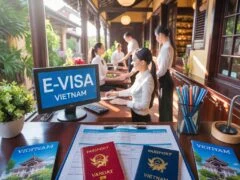
Vietnam does not levy a specific tourist tax. However, a 90-day e-visa processing fee costs $25. Some nationalities qualify for a 45-day visa-free exemption, resulting in a $0 visa fee. Travelers should factor these entry costs into their overall trip financing rather than the daily per diem.
How much extra should I budget for the Tet holiday?
During the Tet holiday, accommodation surcharges are estimated at a 20 to 50 percent increase. Grab rides can surge up to 3 times the normal fare. Exact markups are not publicly quantified, so travelers should either avoid Tet dates or budget significantly higher to accommodate the dynamic pricing multiplier.