

Updated: 1 October 2026. All rules, fees and dates verified against the Vietnam Immigration Department portals evisa.gov.vn and prearrival.immigration.gov.vn.
To meet the vietnam entry requirements 2026, US passport holders must obtain a visa before arrival. The standard and most popular option is the 90-day e-visa. Your passport must be valid for at least six months beyond your arrival date with two blank pages.
Travelers planning to visit only Phu Quoc Island can qualify for a 30-day visa-free exemption, provided they have a return ticket. For all other mainland destinations, you must secure an e-visa, a visa on arrival with a pre-approval letter, or a sticker visa from an embassy. Recent updates for 2026 also encourage using the new Digital Arrival Card at major international airports. Check your nationality tier, designated border gates, and entry documents to avoid boarding denials.
Do US Citizens Need a Visa for Vietnam in 2026?
Vietnam entry requirements 2026 give US citizens no visa-free route to the mainland: the United States is not on the visa exemption list, so a valid visa is mandatory before departure. US citizens entering the mainland can choose an e-visa, a visa on arrival, or a sticker visa issued by an embassy.
| Traveler Profile | Do You Need a Visa for Mainland Vietnam? |
|---|---|
| US passport holder | Yes, e-visa, visa on arrival or sticker visa |
| Exempt nationality | No, visa-free stay of 14 to 45 days |
| Any nationality visiting Phu Quoc only | No, 30 days visa-free with a return ticket |
Vietnam Visa Exemption Policy 2026: Which Nationalities Enter Visa-Free
Citizens of more than 25 countries enter Vietnam visa-free in 2026, with stays of 14, 21, 30, or 45 days depending on nationality. The 2025 expansions extended 45-day access to twelve more European countries.
Visa-Free Stay by Nationality Tier
The current exemption tiers under Vietnam entry requirements 2026 are:
| Exemption Tier | Eligible Nationalities |
|---|---|
| 45 days | UK, most EU (including 2025 additions), Japan, South Korea, Russia, Chile, Panama |
| 30 days | ASEAN states, Belarus, Kazakhstan, Kyrgyzstan, Mongolia |
| 21 days | Philippines |
| 14 days | Brunei, Indonesia |
Travelers holding an APEC Business Travel Card with a VNM endorsement enter without a standard visa.
Vietnam Visa Types and Fees 2026 Compared
Travelers choose between an e-visa, a visa on arrival (VOA), or a sticker visa based on itinerary, number of entries and processing time. The Vietnam visa requirements 2026 for each route are compared below.
| Visa Type | Entries & Stay | Processing Time | Fee |
|---|---|---|---|
| E-visa (Single) | Single entry, 90 days | ~3 working days | US$25 |
| E-visa (Multiple) | Multiple entry, 90 days | ~3 working days | US$50 |
| Visa on Arrival (VOA) | Varies | Requires pre-approval letter | Varies |
| Sticker Visa | Varies | Up to 3 weeks | Varies by mission |
Vietnam Visa on Arrival and Sticker Visa 2026: Airport and Embassy Routes
Travelers needing stays beyond 90 days, multiple entries not covered by an e-visa, or applying from countries without e-visa access can use a visa on arrival, which requires a pre-approval letter, or a sticker visa via the embassy route, which takes up to 3 weeks.
Visa on Arrival: How the Pre-Approval Letter Route Works
Visa on Arrival requires a pre-approval letter arranged by a Vietnamese travel agent before departure; the visa is stamped at the airport on arrival.
Sticker Visa: When the Embassy Route Is the Better Option
A sticker visa requires applying directly at a Vietnamese embassy or consulate. Processing takes up to 3 weeks and fees vary by mission, so file the application well before your departure date.
Vietnam E-Visa 2026: Application, Cost and Stay Limit
All non-Vietnamese nationals can apply for an e-visa with a maximum stay of 90 days, with no restrictions on travel purpose. The fee is US$25 for a single entry and US$50 for multiple entries.
Where to Apply and Processing Time
Applications are submitted directly through the immigration portal. Processing takes ~3 working days. Follow these steps:
Access the application
Submit your request at evisa.gov.vn
Complete the form
Fill in your details and select your designated entry port
Pay the fee
Pay the required fee and save your registration code
Applicants can reach e-visa support at foreigners@xuatnhapcanh.gov.vn for service questions or technical_support@immigration.gov.vn for technical issues.
E-visa Photo, Document Requirements and Common Mistakes
Applicants must upload a passport bio-page scan and a portrait photo. The most common mistakes that delay or reject an application are:
- Selecting the wrong designated border gate, because the e-visa is valid only at the port chosen in the application.
- Uploading an unclear bio-page scan or a non-compliant portrait photo.
- Applying with a passport that has less than six months validity or fewer than two blank pages.
Passport Validity Rules and Required Documents 2026
Vietnam entry requirements 2026 mandate that every visitor hold a passport valid for at least six months after the date of arrival, with a minimum of 2 blank pages. Border officials will deny entry if the passport shows damage, has fewer than 2 blank pages, or has been reported lost or stolen.
Carry these documents when entering Vietnam:
- The same passport used for the visa, in undamaged condition.
- A printed copy of the approved e-visa or pre-approval letter.
- Proof of onward travel or a return flight.
No COVID-19 vaccination card or PCR test is required in 2026. At customs, cash amounts over 15 million VND or US$5,000 must be declared.
Entry and Exit Stamps
Immigration officers will stamp your passport on arrival. Your authorized stay is calculated from this entry and exit stamp, not printed on it. Use the same passport for entry and exit.
Phu Quoc Visa-Free Entry 2026: Rules and Duration
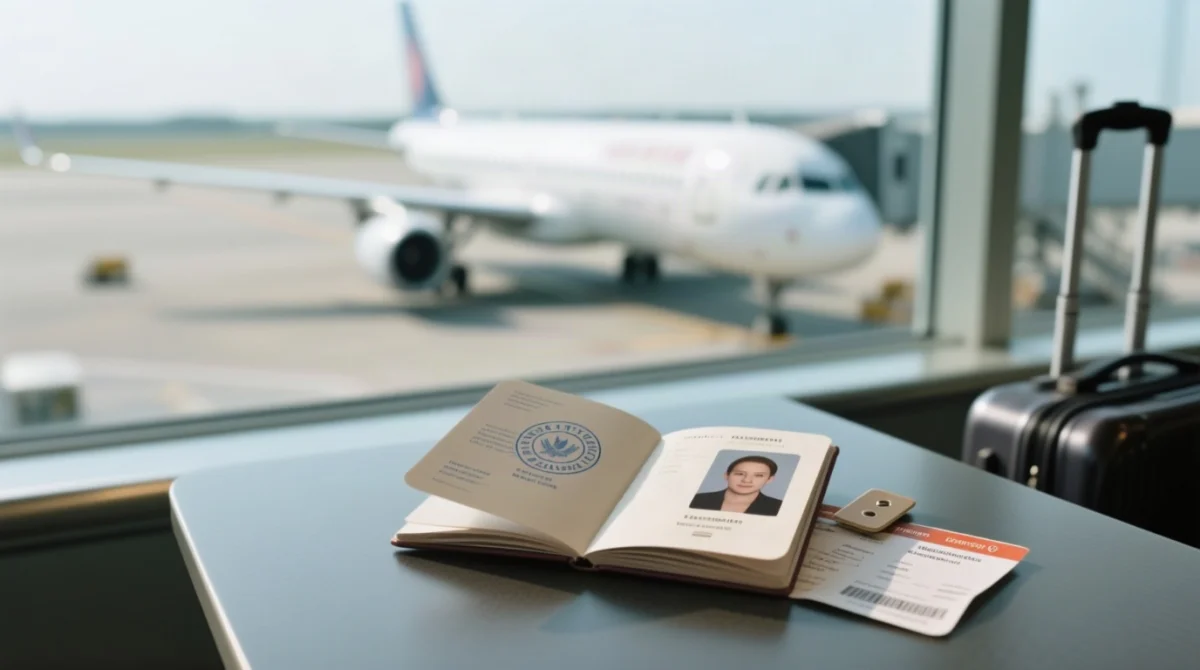
All nationalities, including US citizens, can enter Phu Quoc island visa-free for up to 30 days, provided they have a confirmed return ticket. This Phu Quoc visa-free policy applies exclusively to the island; mainland Vietnam entry requirements 2026 still mandate a valid visa.
How to Use the Phu Quoc Visa-Free Entry
Qualifying requires a direct international flight to Phu Quoc. Passengers transiting via Hanoi or Ho Chi Minh City must stay airside, because clearing immigration for a domestic connection invalidates the visa-free exemption and requires a standard visa.
Vietnam Entry Rules 2026: Digital Arrival Card and Updates
| Effective Date | Policy Update |
|---|---|
| 1 Mar 2025 | Switzerland, Czechia and Poland added to the visa-free list. |
| 15 Aug 2025 | Belgium, Bulgaria, Croatia, Hungary, Luxembourg, Netherlands, Romania, Slovakia and Slovenia added to the visa-free list. |
| 15 Apr 2026 | Digital arrival card encouraged at designated international airports. |
Do I Need a Digital Arrival Card for Vietnam in 2026?
Vietnam entry requirements 2026 encourage travelers to complete the digital arrival card starting 15 Apr 2026. Airlines require this document for passengers landing at Noi Bai, Da Nang, Cam Ranh and Tan Son Nhat airports. Completing the entry declaration via the prearrival.immigration.gov.vn portal grants priority lane access upon arrival.
Transit Through Vietnam and 42 Designated Entry Points
Under Vietnam entry requirements 2026, airside international transit does not require a visa, but domestic transfers mandate full immigration clearance. E-visas are valid at exactly 42 designated international border gates.
Do You Need a Visa to Transit Through Vietnam?
Passengers connecting through Hanoi or Ho Chi Minh City without leaving the airside transit area do not need a transit visa. However, any itinerary containing a domestic flight segment requires a valid e-visa to clear customs and immigration before boarding the onward flight.
Which Airports Accept the Vietnamese E-visa?
The approved network covers 42 designated border gates, including major international airports, land crossings, and seaports. An e-visa is valid only at the exact entry port selected during the application process.
Overstays, Visa Extensions and Penalties
The standard overstay penalty is a fine paid in VND or USD. Vietnam entry requirements 2026 mandate that border officials deny exit until the fine is paid, and serious cases lead to immediate deportation and a future entry ban.
How to Extend a Vietnam Visa
Extensions must be filed with the provincial Immigration Department at least 7 days before the visa expires; embassies will not process in-country extensions. Apply directly at the office in your province of residence.
Special Cases: Children, Dual Nationals and Lost Passports
Every traveler, including children, needs an individual e-visa linked to a personal passport. Dual nationals must enter and exit Vietnam on the same passport used for the visa. Passports reported lost or stolen are denied entry. US citizens needing emergency assistance can call +1-202-501-4444 from abroad or +1-888-407-4747 from the US or Canada.
Frequently Asked Questions (FAQ)
What are the Vietnam entry requirements for 2026?
All visitors must have a passport valid for at least six months beyond the date of arrival with a minimum of two blank pages. Depending on your nationality, you must either obtain a visa, such as the 90-day e-visa, or qualify for a visa exemption ranging from 14 to 45 days.
How long does it take to get a Vietnam e-visa in 2026?
The processing time for a Vietnam e-visa is approximately 3 working days. You should submit your application and passport bio-page scan well in advance of your departure date.
What is the cost of a Vietnam visa in 2026?
The Vietnam e-visa fee is US$25 for a single entry and US$50 for multiple entries. Fees for a visa on arrival or an embassy-issued sticker visa vary depending on the specific mission or travel agent arranging the pre-approval letter.
Do I need a visa for Vietnam in 2026 as a US citizen?
Yes, US passport holders are required to have a valid visa for mainland Vietnam in 2026 because the United States is not on the visa-free nationality list. The most common route is applying for the 90-day e-visa online before your trip.
What is the correct website for the Vietnam e-visa?
The correct portal for submitting your application is evisa.gov.vn, operated by the Vietnam Immigration Department, where you pay the US$25 or US$50 fee and receive your valid entry document.
Do we need to fill an arrival card for Vietnam?
Yes, starting from 15 April 2026, the Digital Arrival Card is highly encouraged and required by airlines at Noi Bai, Da Nang, Cam Ranh, and Tan Son Nhat airports. You can complete this entry declaration online at prearrival.immigration.gov.vn to gain priority lane access.
Can I enter Vietnam with less than 6 months passport validity?
No, you cannot. Your passport must have at least six months of validity remaining after your date of arrival. If you fail to meet this passport validity rule, or lack the required minimum of two blank pages, you will be denied entry.
How does the Phu Quoc visa-free exemption work?
All international arrivals, including US citizens, can enter Phu Quoc Island visa-free for up to 30 days. To qualify, you must arrive on a direct international flight and hold a valid return ticket proving you will leave the island within the allowed timeframe.
What happens if I overstay my visa in Vietnam?
Overstaying your visa results in strict penalties. You will be denied exit until you pay a fine, which is levied in VND or USD. Severe overstay cases can also lead to deportation and a future entry ban. Extensions must be processed through the provincial Immigration Department.
Do I need a transit visa for Vietnam?
You do not need a transit visa if you are making an international-to-international connection and staying airside at Hanoi or Ho Chi Minh City airports. However, if your itinerary includes a domestic segment, you must clear immigration and hold a valid visa.
What are the new entry requirements for Vietnam in 2026?
The main 2026 change is the Digital Arrival Card, encouraged from 15 April 2026 and required by airlines at Noi Bai, Da Nang, Cam Ranh and Tan Son Nhat airports. Vietnam also added twelve European nationalities to its visa-free list during 2025. No COVID-19 vaccination card or PCR test is required in 2026.
This guide is for general information only and is not legal advice. Entry rules can change, so always cross-check your case on the Vietnam Immigration portals evisa.gov.vn and prearrival.immigration.gov.vn before booking flights.