


Understanding vietnam trekking visa requirements is essential for US citizens planning mountain expeditions. You need a valid 90-day e-visa, a passport with at least six months validity, and compliance with specific customs regulations for hiking gear.
The application process requires submitting a digital passport photograph and paying either a $25 fee for single-entry or $50 for multiple-entry access through the Vietnam Immigration Department portal. Processing takes 3 to 5 business days, making early preparation critical for aligning your trekking itinerary with border clearance.
Beyond standard immigration protocols, trekkers must navigate strict customs rules for outdoor equipment. Camping fuel canisters face total prohibition, while specific trekking gear like poles and tents must be checked. Additional local permits are also mandatory for protected border zones like Ha Giang.
Vietnam E-Visa Requirements for US Trekkers
US trekkers need a 90-day Vietnam e-visa available as single or multiple entry, requiring a digital passport photo for the online application. Vietnam trekking visa requirements mandate that applicants submit their package through the online immigration portal, with processing taking 3 to 5 business days. Single-entry e-visas cost $25; multiple-entry e-visas cost $50, payable by bank transfer. All fees are non-refundable even if the application is refused. The e-visa grants stays up to 90 days and does not authorize work.
Step-by-Step E-Visa Application Guide
- Access the Vietnam Immigration Department portal and create an application profile.
- Upload passport biographical data and a digital photograph (2×2 inches, all-white background, taken within the last 3 months, no eyeglasses).
- Pay the fee via bank transfer and submit the package for automated review.
- Receive confirmation by email and track status using the application reference code.
E-Visa Processing Times and Fee Breakdown
| Visa Type | Processing Time | Fee |
|---|---|---|
| Single-entry | 3-5 business days | $25 |
| Multiple-entry | 3-5 business days | $50 |
Digital Arrival Cards & 2026 Health Declaration Rules
Vietnam trekking visa requirements now intersect with two pre-arrival documents. Complete the digital Arrival Card 72 hours prior to arrival. Starting July 1, 2026, a Health Declaration Card is mandatory, submitted online or on paper within 7 days before travel. For technical support, contact
technical_support@immigration.gov.vnor
foreigners@xuatnhapcanh.gov.vn.
Passport Rules and Entry Registration for Vietnam
Vietnam trekking visa requirements enforce strict passport validity thresholds: U.S. passports must be valid for at least six months beyond the planned stay and contain at least one blank visa page for entry stamping. Amendment and endorsement pages do not qualify. Vietnam trekking visa requirements also mandate that passports arrive in sound physical condition, as frayed, torn, separating, or altered documents face automatic rejection at border control.
Physical Passport Conditions
Border officers verify passport integrity using biometric scanners at designated international airports and land crossings. Water-damaged pages, detached covers, or tampered data chips invalidate the document regardless of remaining validity. Travelers carrying worn passports must renew before departure, as Vietnamese consulates in Washington D.C., San Francisco, Houston, and New York cannot replace U.S. passports abroad.
Registering Your Stay in Trekking Hubs
Foreign visitors must register temporary residence at every accommodation, including remote homestays in Sapa or Ha Giang. Hotels and guesthouses submit immigration temporary residence registration on behalf of guests, but solo trekkers staying in informal lodgings must ensure the host completes this process. Non-compliance triggers fines and complications during future Vietnam entries.
Customs Regulations for Hiking Gear
Trekkers must declare brand-new, high-value hiking gear at Vietnamese customs, while keeping camping fuel canisters strictly out of carry-on and checked bags.
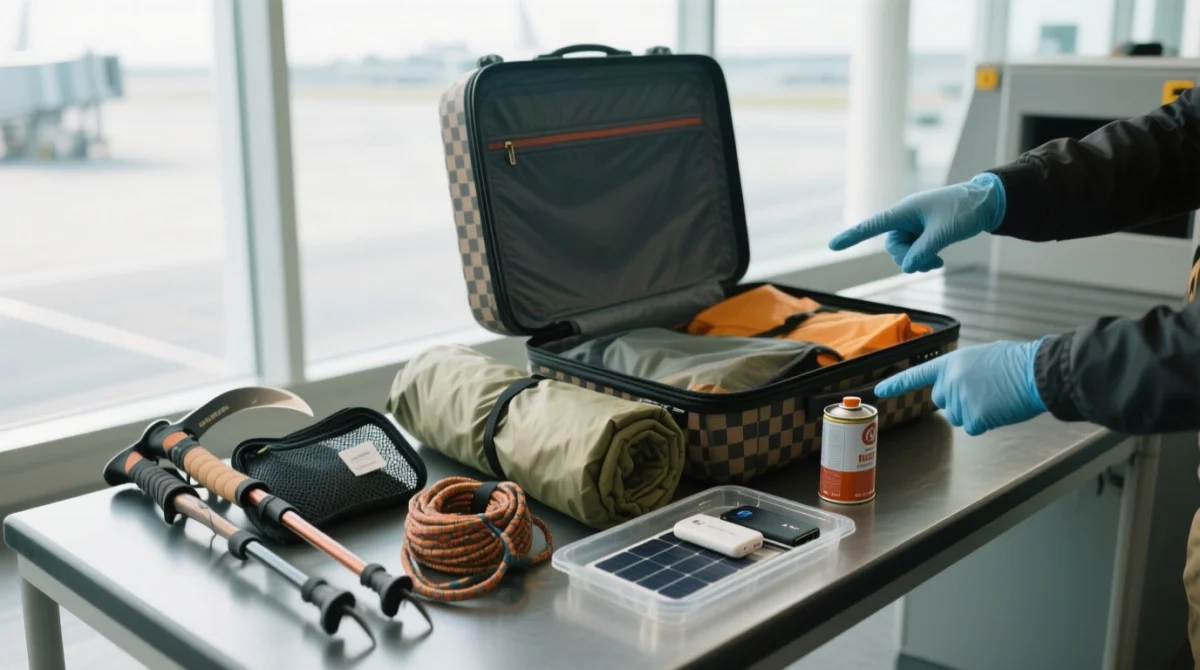
Vietnam trekking visa requirements classify specialized trekking poles, ice axes, and tents as checked-baggage items that cannot enter the aircraft cabin. Backpackers carrying technical climbing hardware or heavy loads must complete a standardized customs declaration form at the primary baggage inspection area upon landing.
Packing Fuel and Restricted Camping Items
- Allowed (checked baggage only): Trekking poles, ice axes, tents
- Prohibited in both carry-on and checked baggage: Camping fuel canisters
Electronics, Power Banks, and Solar Chargers
Vietnam trekking visa requirements subject power banks to Watt-hour capacity limits for lithium batteries. Solar chargers and GPS devices pass through customs without special declaration when they fall within standard personal-use thresholds. Travelers importing satellite phones or GPS messengers for remote treks should verify current legality with Vietnamese customs authorities before departure, as regulations governing satellite communications equipment remain restricted.
Additional Trekking Permits and Visa Compliance
Vietnam trekking visa requirements separate standard tourism entries from expedition categories by mandating additional local permits for protected border zones like Ha Giang and Sapa. A standard e-visa is insufficient for these regions; trekkers must secure local permits and hire licensed guides upon arrival at provincial ranger stations.
Border Crossings & Approved Entry Points
Vietnam trekking visa requirements designate 83 international airports, land borders, and seaports as approved entry and exit points. Backpackers carrying camping equipment should expect physical inspection at primary baggage checkpoints, where officers verify that declared items match the submitted inventory.
Visa Extension Process for Multi-Week Mountain Expeditions
Overstaying a Vietnam e-visa triggers fines, exit delays, deportation, and future entry restrictions. Trekkers planning multi-week routes must apply for extensions before the original validity expires. Standard travel insurance policies cover hiking only under 9,842 feet, making supplemental adventure coverage necessary for high-altitude expeditions.
Frequently Asked Questions
How much does it cost to get a fast track visa for Vietnam in 2026?
The brief does not specify the exact cost for expedited fast-track processing. Standard e-visa processing takes 3 to 5 business days and costs $25 for single-entry or $50 for multiple-entry. For urgent departures, consult the e-visa portal for current fast-track pricing and timelines.
Is $1000 enough for 2 weeks of trekking in Vietnam?
The brief does not provide a specific budget breakdown to confirm if $1000 is sufficient. However, careful budgeting is essential for multi-week mountain expeditions. Travelers should account for visa fees, local permits for protected areas, licensed guide requirements, and travel insurance to determine total costs.
Do US trekkers need separate route permits for protected national parks in Vietnam?
Yes, a standard e-visa is insufficient for protected border zones like Ha Giang and Sapa. Trekkers must secure additional local permits and hire licensed guides for restricted national parks. These specific trekking permits can be obtained upon arrival at the local checkpoints to ensure compliance with regional regulations.
What is the minimum passport validity required to enter Vietnam for trekking?
US citizens must have a passport valid for at least six months beyond their planned stay. Additionally, the passport must contain at least one blank visa page for the entry stamp. Amendments and endorsement pages cannot be used for visa purposes.
Can I bring camping fuel canisters into Vietnam?
No, camping fuel canisters are strictly prohibited in both carry-on and checked baggage when traveling to Vietnam. Trekkers must source fuel locally upon arrival. Attempting to bring fuel canisters will result in confiscation and potential delays at border control checkpoints.
Are satellite phones and GPS messengers legal to bring through Vietnamese customs?
The brief does not explicitly state the legality of importing satellite phones or GPS messengers. It mentions customs limits on Watt-hour capacities for power banks and rules for solar chargers. Travelers bringing satellite communication devices should verify current import regulations with Vietnamese customs authorities prior to departure.
What is the new 2026 Health Declaration Card requirement for Vietnam?
Starting July 1, 2026, foreign visitors must complete a Vietnam Health Declaration Card. Travelers must submit this card either online or on paper within 7 days before their travel date. This requirement works alongside the digital arrival card recommended to be filled out 72 hours prior to arrival.
Can I extend my Vietnam e-visa for a longer mountain expedition?
The brief indicates that visa extension and conversion options exist for multi-week or multi-region expedition planning. Trekkers needing more time for their mountain expeditions can apply for an extension after arrival. It is crucial to apply before the current e-visa expires to avoid overstay penalties, fines, and deportation.