

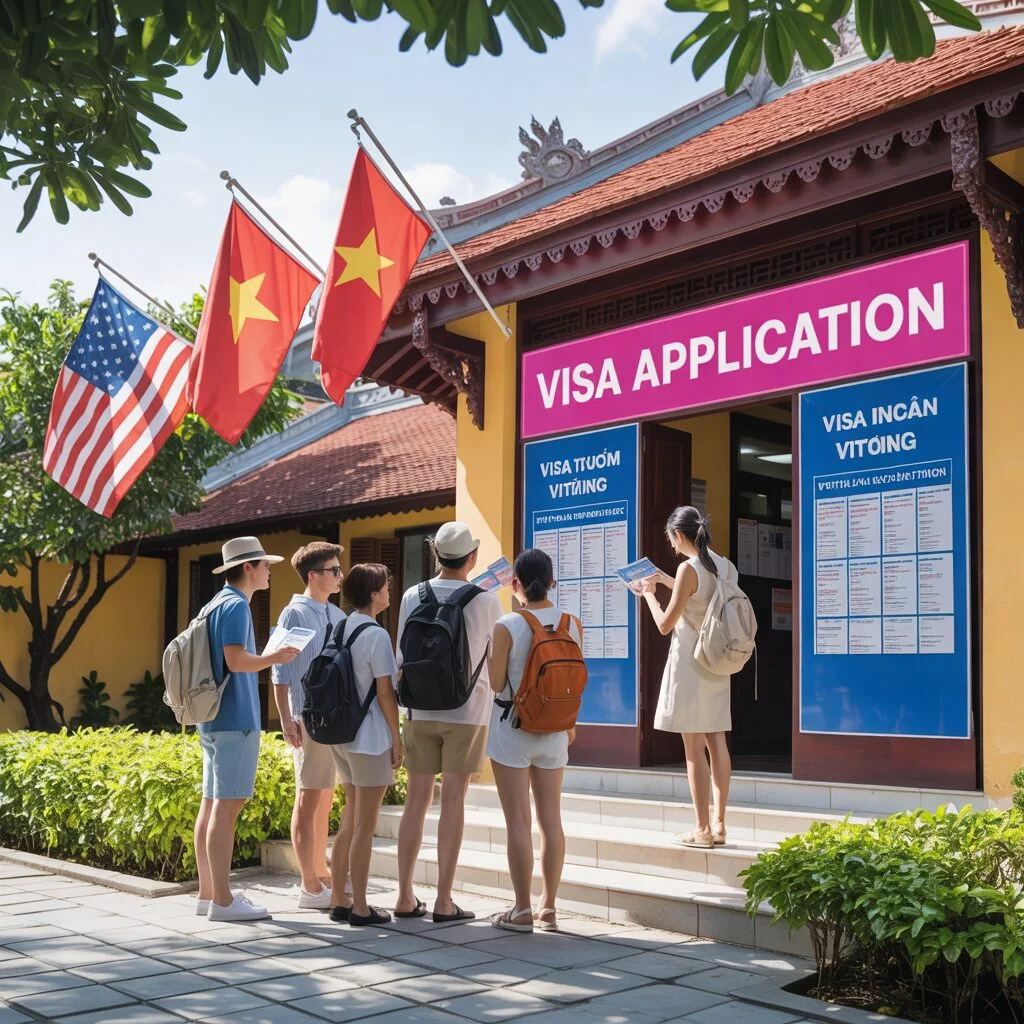
Yes, US citizens must obtain a visa to enter Vietnam in 2026. The primary legal pathway is the Vietnam e-Visa, allowing stays up to 90 days with single or multiple entries.
This guide covers the complete US citizen visa requirement for Vietnam travel, including passport validity rules, e-Visa application steps, and government fees. American passport holders must prepare their documents carefully to avoid processing delays or boarding denial.
Travelers will also find details on the 42 designated international border gates, pre-arrival digital forms, and overstay penalties. Review these entry requirements for Americans in 2026 before planning your trip.
Do I Need a Visa to Visit Vietnam as a US Citizen?
US citizens must obtain a visa before entering Vietnam; the 90-day e-Visa is the standard legal pathway. The US Traveler Visa Framework for Vietnam mandates advance authorization for all American passport holders, with no visa-free entry available outside the Phu Quoc exemption. Travelers can secure a single or multiple-entry electronic visa (e-Visa) valid for up to 90 days.
In 2025, Vietnam received 848,727 US travelers, with 90% utilizing the e-Visa system. The US Traveler Visa Framework for Vietnam channels eligible applicants through this digital pathway, establishing the specific regulatory and procedural landscape governing American passport holders entering Vietnam in 2026. Those asking “Do I need a visa to visit Vietnam as a US citizen?” must understand that Vietnam entry requirements for Americans in 2026 strictly prohibit arrival without prior authorization, except for direct transit to Phu Quoc Island under specific conditions.
Passport Requirements for US Travelers
The US Traveler Visa Framework for Vietnam establishes a strict baseline for travel documentation. US passports must maintain a passport validity period of at least 6 months beyond the exit date from Vietnam. Failure to meet this threshold triggers boarding denial at the departure hub.
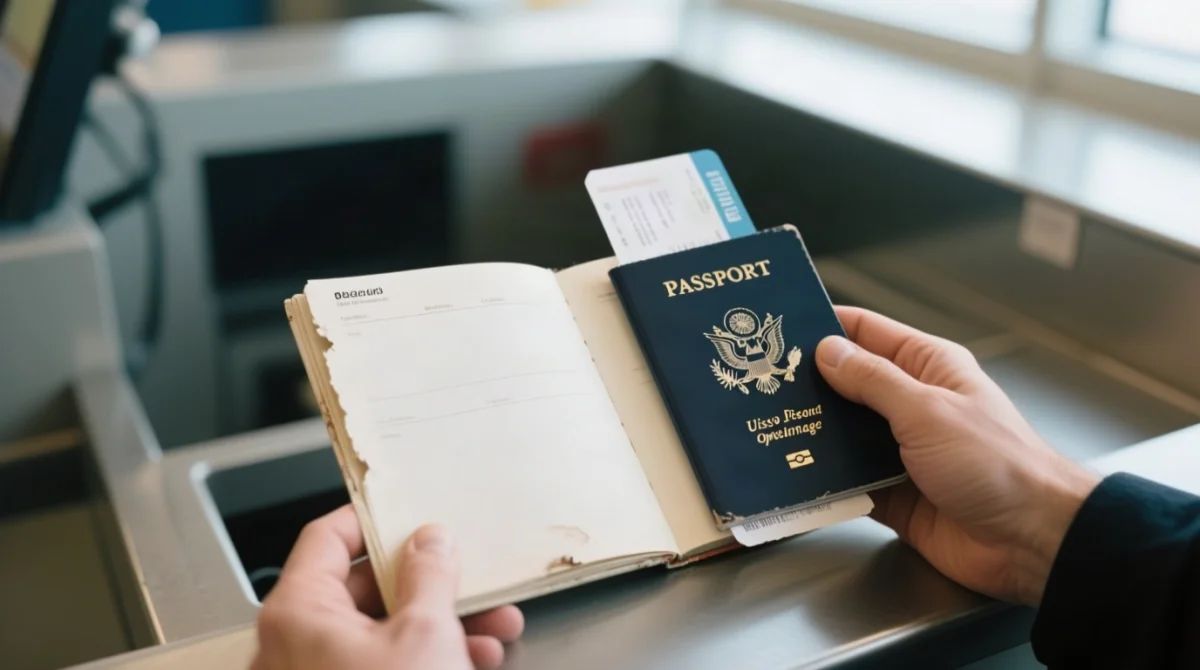
Near-expiry documents require immediate renewal through standard channels before initiating any visa application. The US Traveler Visa Framework for Vietnam rejects applications linked to passports lacking sufficient remaining validity.
Passport Condition and Blank Pages
Beyond the validity threshold, the physical passport booklet must contain a minimum of 2 blank visa pages. Immigration officials require this space for arrival and departure stamps. Damaged passports with torn pages, water damage, or detached covers may be rejected during manual inspection at the border. Travelers must verify the structural integrity of their booklets during the pre-departure window to avoid entry refusal.
Vietnam E-Visa Application Guide for US Citizens
The US Traveler Visa Framework for Vietnam channels all eligible applicants through the evisa.gov.vn portal, where the electronic visa (e-Visa) is issued for stays up to 90 days. US citizens pay a non-refundable application fee of $25 (single entry) or $50 (multiple entry), with standard processing taking 3-7 business days.
Step-by-Step E-Visa Application
- Access evisa.gov.vn and submit passport data, entry dates, and port of arrival.
- Upload a compliant biometric photograph.
- Pay the fee via Visa or Mastercard.
- Download the e-Visa PDF by email and carry it digitally or printed for border control.
Photo and Payment Specifications
Photographs require a plain white background with no glasses or headwear. Only Visa and Mastercard are accepted on the portal. The fee is non-refundable regardless of approval outcome.
Checking Application Status
Applicants track progress using the registration code issued at submission. The US Traveler Visa Framework for Vietnam permits an optional fast-track service delivering approval within 4-8 hours.
E-Visa vs. Visa on Arrival (VOA) for Americans
The US Traveler Visa Framework for Vietnam channels applicants toward the e-Visa, which permits up to 90 days of stay across 42 designated international border gates. Visa on arrival (VOA) remains an alternative, but it requires a pre-approved visa approval letter before boarding and is restricted to airport entry points only, with a maximum stay of 30 days.
| Feature | E-Visa | Visa on Arrival (VOA) |
|---|---|---|
| Government fee | $25 (single) / $50 (multiple) | Stamping fee paid at airport |
| Max stay | 90 days | 30 days |
| Entry points | 42 gates (airports, seaports, land borders) | Airports only |
| Pre-approved visa letter | Not required | Required before boarding |
| Processing time | 3-7 working days | Letter: variable; stamping: ~30 min at airport |
Which Option Is Better for Americans?
The US Traveler Visa Framework for Vietnam positions the e-Visa as the superior pathway. It offers longer stays, broader entry-point coverage, and eliminates the airport queuing inherent to VOA stamping. Travelers needing multiple entries pay a $50 non-refundable application fee and receive a digital visa valid across all designated checkpoints, whereas the visa approval letter required for VOA adds a intermediary dependency and limits arrivals to airport terminals.
Entering Vietnam: Border Gates, Phu Quoc Exemption, and Pre-Arrival Forms
The US Traveler Visa Framework for Vietnam restricts e-Visa holders to 42 designated international border gates, encompassing all international airports, major seaports, and selected land crossings. Travelers must present an endorsed e-Visa at these checkpoints to secure legal admission.
Visa Exemptions: Phu Quoc Island Rules
The Phu Quoc exemption grants US citizens a 30-day visa-free stay when arriving and departing the island directly by air or sea. Travelers must present proof of an onward ticket. This exemption applies exclusively to Phu Quoc Island and does not extend to mainland Vietnam entry.
Pre-Arrival Digital Form (NAII)
Before landing, US travelers must complete the mandatory digital pre-arrival form available at prearrival.immigration.gov.vn. The US Traveler Visa Framework for Vietnam requires this electronic submission to streamline biometric screening at every international border gate. Travelers should carry a digital or printed confirmation alongside their approved visa documentation.
Extending Your Stay, Overstay Penalties, and E-Visa Corrections
Overstaying a Vietnam visa triggers financial fines and deportation. The US Traveler Visa Framework for Vietnam mandates temporary residence declaration with local police and provides administrative channels for correcting e-Visa errors.
Registering Your Stay in Vietnam
The US Traveler Visa Framework for Vietnam requires a temporary residence declaration for all foreign visitors. Your accommodation provider registers your stay with local police during check-in, fulfilling this legal obligation automatically.
Overstay Penalties and Fines
An overstay penalty under this framework includes fines and deportation for travelers who exceed their authorized duration without a formal extension. Re-entry bans may also apply, restricting future visits to Vietnam.
Correcting E-Visa Errors
Contact the Vietnam Immigration Department to amend mistakes on an issued e-Visa. Call 02438257941 or email foreigners@xuatnhapcanh.gov.vn. The department operates two offices:
| Office | Address |
|---|---|
| Hanoi | 69 Mac Thai To, Yen Hoa Ward, Hanoi City |
| Ho Chi Minh City | 333-335-337 Nguyen Trai, Cau Ong Lanh Ward, Ho Chi Minh City |
Frequently Asked Questions (FAQ)
Can US citizens get a visa on arrival for Vietnam?
Yes, Visa on Arrival (VOA) is available but requires a pre-approved visa letter before boarding. It is valid for up to 30 days and only eligible at airports. The e-Visa generally offers faster airport processing than VOA.
How long does it take for a US citizen to get a Vietnam e-Visa?
Standard processing time for the Vietnam e-Visa is 3 to 7 working days. Travelers needing faster approval can use fast-track services, which deliver the visa within 4 to 8 hours.
How long can a US citizen stay in Vietnam with an e-Visa?
US citizens can stay in Vietnam for up to 90 days with an e-Visa. This electronic visa is available for both single and multiple entries, depending on the selected option during application.
What are the photo requirements for a Vietnam e-Visa?
Applicants must provide a biometric photograph meeting exact specifications set by the immigration portal. Rejections frequently occur due to bad photo formatting, so follow the official guidelines carefully before submitting your application.
Can I extend my Vietnam visa as a US citizen?
Yes, travelers can extend their authorized stay duration beyond the initial grant. Specific extension procedures are not detailed in this overview, so contact the Vietnam Immigration Department directly for administrative assistance.
Do US children need a visa for Vietnam?
The brief does not specify separate visa requirements for US children. All US citizens generally require a visa. For specific document requirements regarding minors, consult the Vietnamese Embassy in Washington D.C. or relevant consulates.
What happens if I overstay my Vietnam visa?
Overstaying your visa results in financial fines and deportation. Travelers face severe legal and financial repercussions for violating the authorized stay duration. Always adhere to the exit date stamped on your visa.
Can dual US-Vietnam citizens enter without a visa?
The brief does not provide specific rules for dual US-Vietnam citizens. Travelers with dual citizenship should contact the Vietnamese Embassy in Washington D.C. or local consulates for official entry requirements and passport protocols.
Is the Vietnam e-Visa fee refundable if rejected?
No, the Vietnam e-Visa application fee is non-refundable. The government fee is $25 for single entry and $50 for multiple entry. Applicants must ensure all photo and payment specifications are correct to avoid rejection.
Which border gates accept the Vietnam e-Visa?
The Vietnam e-Visa is accepted at 42 designated international border gates. These include all international airports, seaports, and specific land borders. Travelers must enter and exit through these approved checkpoints.