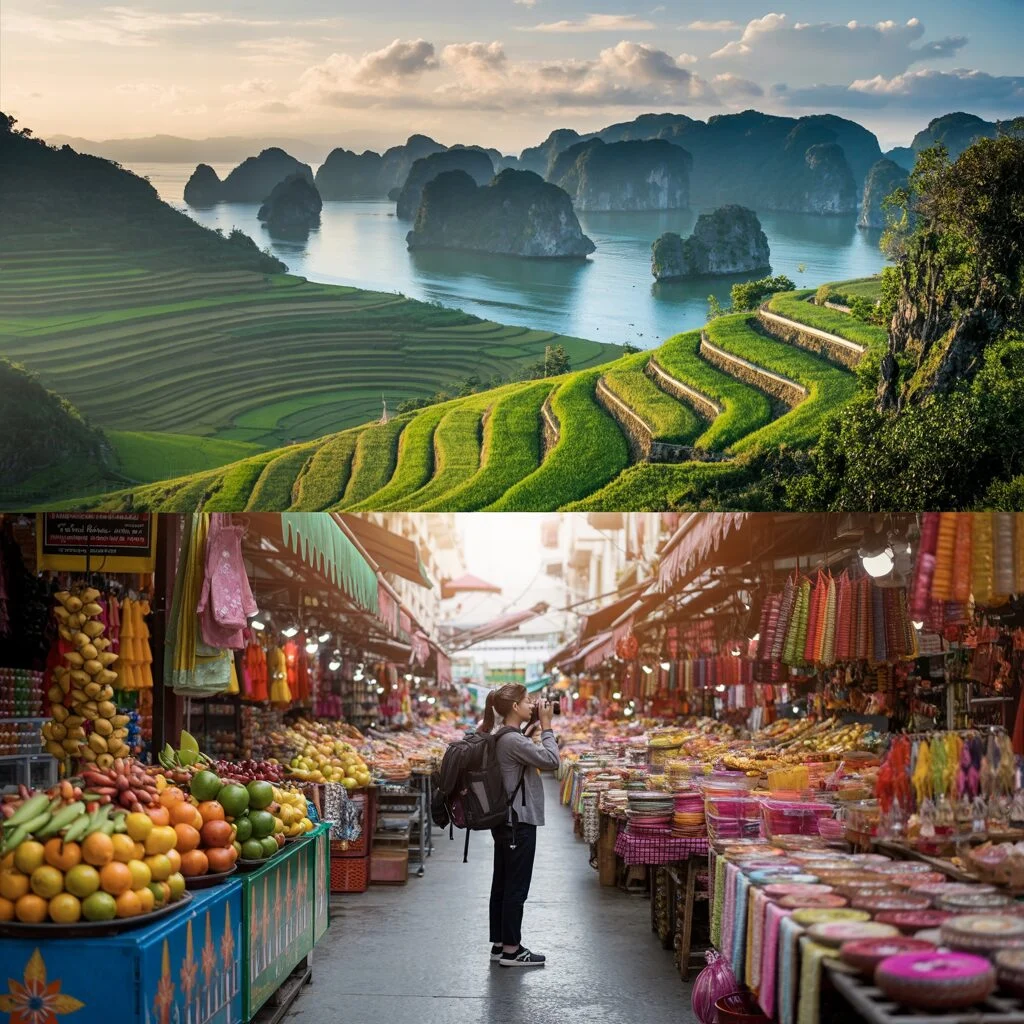


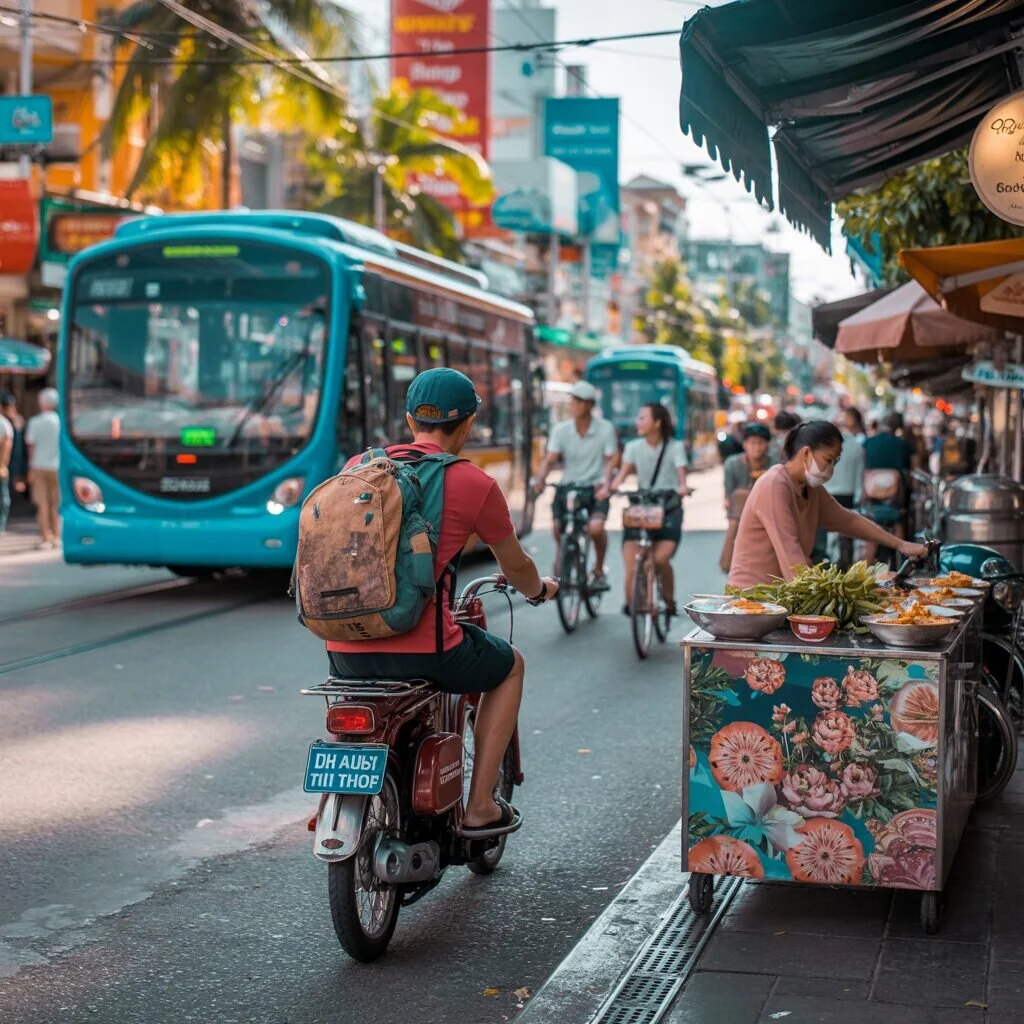
In 2026, domestic flights, trains, and buses are the primary ways to get around in Vietnam. Flights cover the 1,621 km between Hanoi and Ho Chi Minh City in 2 hours, while the Reunification Express train takes 30 to 40 hours. Budget travelers rely on open-tour sleeper buses and ride-hailing apps for affordable, flexible itineraries.
Vietnam Airlines operates as the national carrier with the most flights daily, offering reasonably cheap and efficient service, while VietJet Air, Bamboo Airways, and Pacific Airlines provide affordable deals on domestic routes lasting 1 to 2 hours. For overland travel, the 2,600 km Vietnam Railways corridor connects Ho Chi Minh City to the Chinese border at an average speed of 40 km/h, and open-tour sleeper buses cover the main tourist trail from Hanoi through Hue, Hoi An, Nha Trang, Da Lat, Mui Ne, and Ho Chi Minh City at maximum $15 to 20 AUD per segment (variable: AUD/USD exchange rate).
Before any domestic routing begins, travelers landing at Noi Bai or Tan Son Nhat airports must complete e-visa stamp collection, document verification, and baggage claim, then proceed to designated ride-hailing pickup zones to avoid unofficial taxi scams. Downloading Grab and setting it up with WhatsApp verification before arrival is strongly recommended, as Grab drivers undergo background checks and driving history reviews, making the app safer than random taxis for navigating domestic travel in Vietnam.
Airport Arrival Processes and Transfers
Domestic travel in Vietnam begins the moment travelers clear immigration at Noi Bai (Hanoi) or Tan Son Nhat (Ho Chi Minh City). Understanding how to get around in Vietnam starts with a structured airport arrival sequence that avoids common transfer pitfalls.
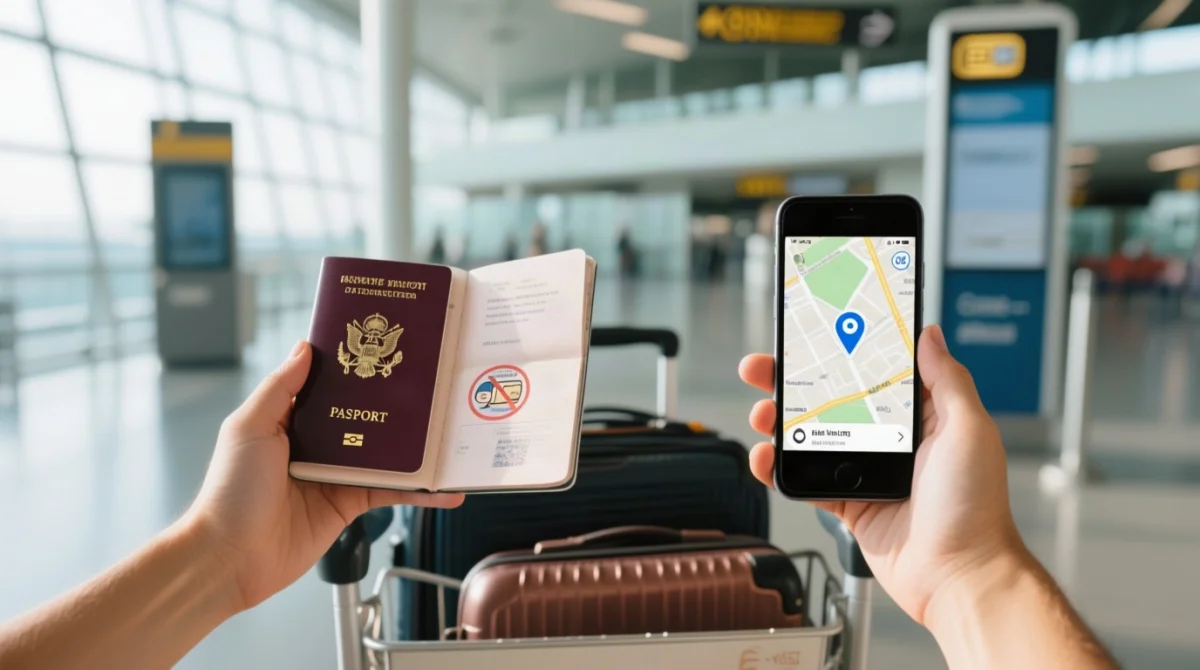
Evisas & border clearance sync
Present your e-visa printout alongside your passport at the immigration counter. Confirm the entry stamp date aligns with your planned domestic routing.
Baggage claim and customs
Proceed to baggage handling zones, collect checked luggage, and clear customs before exiting into the arrivals hall.
SIM card acquisition
Purchase a local SIM card at airport kiosks to turn on 3G for location tracking and ride-hailing app functionality.
Transfer selection
Head to designated ride-hailing pickup zones or government-licensed taxi counters. Decline unsolicited offers from unlicensed drivers to avoid unofficial taxi scams.
Alternative Ride-Hailing Apps in 2026
Grab remains the dominant ride-hailing application, equivalent to Uber or Lyft in America, with drivers vetted through background checks and driving history reviews. Download and configure Grab before departure; verification requires WhatsApp, which also offers a built-in Vietnamese-to-English translator. Local alternatives Be and Xanh SM provide competitive pricing and expanding availability across Vietnamese cities in 2026. Domestic travel in Vietnam increasingly integrates these platforms for metered, traceable transfers from airport terminals to city accommodations.
Domestic Flights and Train Travel in Vietnam
Domestic travel in Vietnam relies on two primary long-distance modes: commercial aviation and the Vietnam Railways corridor. Vietnam Airlines operates as the national carrier with the most flights daily, maintaining booking offices in all towns and cities with an airport. VietJet Air, Bamboo Airways, and Pacific Airlines function as affordable deals carriers. Domestic flights take 1 to 2 hours – the Hanoi to Ho Chi Minh City route covers the 1,621 km distance in 2 hours – connecting Hanoi and HCMC to Hue, Da Nang, Nha Trang, and Phu Quoc Island. A passport is required for internal flights; travelers must verify carrier-specific luggage allowances at booking.
Domestic travel in Vietnam also centers on the Reunification Express, a line (not a single train) connecting Hanoi and HCMC, completed by the French in 1936. The 2,600 km single-track network is managed by Vietnam Railways, with an average speed of 40 km/h and ongoing renovations. Five daily services depart at 7:30 PM, 10 PM, 6 AM, 9 AM, and 1:10 PM, arriving between 3 AM and 5 AM. The full journey takes 30 to 40 hours; key segments include Da Nang to Hue (2 to 3 hours, picturesque), Hue to Hanoi (11 to 16 hours, overnight), and Hanoi to Lao Cai (7 to 9 hours). Fares are priced in dong (VND) – variable: VND/USD exchange rate – and change regularly based on class and speed. Through tickets are not possible; each journey requires a separate ticket. Theft risk is common, so ensure luggage is safely stowed.
120 Lê Duẩn, Cửa Nam, Hoàn Kiếm, Hà Nội, VietnamUnderstanding Train Classes and Berths
Train classes include hard seat (cheapest, bearable for shorter journeys), soft seat (air-conditioned in new carriages), hard sleeper (6 bunks, top bunk cheapest, bottom bunk priciest), and soft sleeper (a 4-berth compartment, always comfortable). A 2-berth room typically costs twice the price but allows sole occupancy. Simple bedding is provided in soft-sleeper cabins. Book ahead – the further ahead the better – especially for soft-sleeper berths on the Hanoi to Hue and Hanoi to Lao Cai routes.
Bus Travel and Motorbike Rentals for Getting Around
Open-tour sleeper buses target budget travelers along the main tourist trail, connecting Hanoi, Hue, Hoi An, Nha Trang, Da Lat, Mui Ne, and Ho Chi Minh City. Vehicles feature air-conditioned sleeper berths or deep reclining chairs. Book 1-2 days ahead; during holidays, reserve at least 2 weeks in advance. Bus transfers carry around 40 small seats, run 6+ hours per segment, and include a luggage-inclusive fare policy with no toilets on board. Bathroom breaks occur at rest areas. Cost reaches max $15-20 AUD per trip (variable: AUD/USD exchange rate). Smaller limousine coaches cost slightly more but are more comfortable, less bouncy, and generally safer. The Highway 1 transit route runs Hanoi to HCMC via Hue, Da Nang, and Nha Trang; it is narrow and busy. The Hai Van Pass coastal route spans 165 km, connecting Da Nang and Hue. Road surfaces are largely decent, yet accidents are common and horn usage is liberal.
Motorbikes remain the quintessential mode for short distances, and understanding how to get around in Vietnam by scooter starts with rental costs of 150,000-300,000 VND/day (variable: VND/USD exchange rate). Rentals over 1 week require a deposit or passport. Always wear a helmet; travel insurance will not cover accidents without correct gear. Bicycle rental costs 20,000-30,000 VND/day (about 1 USD). Domestic travel in Vietnam by motorbike demands strict legal compliance.
Legal Requirements for Driving in Vietnam
An International Driving Permit is not valid in Vietnam, and a U.S. Drivers’ License is not valid either. A Temporary Vietnam Driver’s License is required to legally drive. Apply at the Provincial Public Transportation Service of the Vietnamese Department of Communications and Transport office, and bring a Vietnamese translator to assist with the application process.
Booking Platforms, Cost Comparison, and 2026 Travel Planning
Domestic travel in Vietnam relies on the 12GoAsia booking engine for train reservations and the Grab app (equivalent to Uber/Lyft) for urban rides. Set up Grab before traveling using WhatsApp for verification; WhatsApp includes a built-in Vietnamese-to-English translator and is nearly essential. A local SIM card enables 3G location tracking.
| Mode | Duration (1,621 km) | Cost | Advantage |
|---|---|---|---|
| Domestic Flight | 2 hours | Surprisingly reasonable (varies by carrier/season) | Fastest |
| Train | 30 to 40 hours | Fares in VND (varies by class/speed) | Scenic coastal route |
| Open-Tour Bus | 6+ hours per segment | Max $15-20 AUD (variable: AUD/USD exchange rate) | Luggage-inclusive fare policy |
| Car Drive | 32 hours | N/A | Not popular among tourists |
Traveling During 2026 Festival Seasons
Domestic travel in Vietnam demands booking sleeper trains at least 2 weeks ahead for September to October 2026, when three festivals overlap: Hue Culinary Capital 2026 Festival (01 Sep 2026 – 30 Sep 2026), Hanoi Autumn Festival 2026 (01 Sep 2026 – 30 Sep 2026), and Central Highlands Gong Culture International Festival (01 Oct 2026 – 31 Oct 2026). On holidays, lower sleeper berths are often sold as six seats.
Accessibility and Wheelchair Access
Soft sleeper carriages have proper sit-down toilets (comparatively clean); squat toilets in hard-seat carriages are more likely dirty. Limousine vans are more accessible than standard sleeper buses, which have small seats and no toilets. Verify station wheelchair access directly with Vietnam Railways; inquiries can be sent to contact@vietnamtourism.gov.vn.
Frequently Asked Questions About Domestic Travel in Vietnam
What is the best way to get around in Vietnam for independent travelers?
The best method depends on distance and budget. Domestic flights save days of travel, covering routes like Hanoi to Ho Chi Minh City in 2 hours with surprisingly reasonable ticket prices. The Reunification Express train is more pleasant than road travel and offers scenic coastal access, though it takes 30 to 40 hours end to end. Open-tour sleeper buses are the cheapest option, with intercity transfers costing a maximum of $15 to 20 AUD per trip (variable: AUD/USD exchange rate), and luggage is included in the price.
How do I book Reunification Express train tickets online?
Travelers can use the 12GoAsia booking engine to reserve train transportation online. Tickets are also available at station counters, through hotels and travel agencies for a fee, or via online train ticketing websites. Book as far ahead as possible, since same-day travel means faster trains and the best seats are likely taken. Fares are priced in dong (VND), change regularly, and are determined by class of travel and train speed. Through tickets are not available; each journey requires a separate ticket.
Are domestic flights in Vietnam safe and reliable in 2026?
Vietnam Airlines functions as the national carrier with the most flights daily, described as reasonably cheap, efficient, and comprehensive. VietJet Air, Bamboo Airways, and Pacific Airlines operate as affordable deals carriers. The Vietnam domestic flight network is continuing to evolve, with daily flights to all top destinations including Hue, Da Nang, Nha Trang, and Phu Quoc Island. Flight durations range from 1 to 2 hours, and a passport is required for internal flights. Travelers should track real-time schedule updates, as seasonal weather patterns can cause disruptions.
What is the luggage allowance for VietJet Air?
Specific weight limits for VietJet Air are not available in current source data. Travelers should verify carrier-specific baggage allowance policies directly at the time of booking, as budget carriers typically enforce stricter weight thresholds than legacy carriers. Carry-on dimension restrictions and excess baggage fee structures vary by fare type. For reference, domestic flights in Vietnam require a passport as the primary travel document, and boarding checkpoint procedures should be confirmed before departure.
How do I avoid taxi scams at Vietnamese airports?
After clearing e-visa stamp collection, document verification, and baggage claim, proceed to designated ride-hailing pickup zones rather than accepting rides from unofficial taxi operators. Grab is preferred over random taxis because its drivers go through background checks and driving history reviews. Travelers can plug in the exact destination address within the app. Official taxi counters at transfer terminals are another option. Setting up Grab with WhatsApp verification before arriving in Vietnam ensures immediate access to safe airport transfers.
Grab can function over Wi-Fi, but a local SIM card is recommended so travelers can turn on 3G to track location and navigate domestic routes efficiently. Grab requires WhatsApp for verification during setup, so downloading and configuring the app before traveling to Vietnam is strongly advised. WhatsApp also includes a built-in translator for Vietnamese to English, making it a nearly essential communication tool. Grab can deliver food in addition to providing ride-hailing services equivalent to Uber or Lyft in America.
Is it safe to travel by sleeper bus in Vietnam?
Open-tour sleeper buses offer amazing prices and regular services along the main tourist trail, with luggage included in the fare. However, seats are small, there are no toilets on board, and bathroom breaks occur at rest areas. Travelers should never leave belongings unattended. Smaller buses and limousine vans are generally safer than larger buses, more comfortable, and less bouncy, though they usually cost a little more. Bus transfers typically carry around 40 passengers over journeys of 6 or more hours.
What should I do if my domestic flight or train is delayed due to weather?
Train delays are rarely too severe, and departures usually leave on schedule from departure points. For domestic flights, the network is continuing to evolve, so travelers should track real-time schedule updates. Allocate 1 to 2 buffer days around festival periods in September and October 2026, including the Hanoi Autumn Festival 2026 (01 Sep 2026 to 30 Sep 2026) and the Central Highlands Gong Culture International Festival (01 Oct 2026 to 31 Oct 2026). Note that Reunification Express arrivals between 3am and 5am require planning accommodation accordingly.