

Last updated: October 2026. All prices in this guide are updated for 2026.
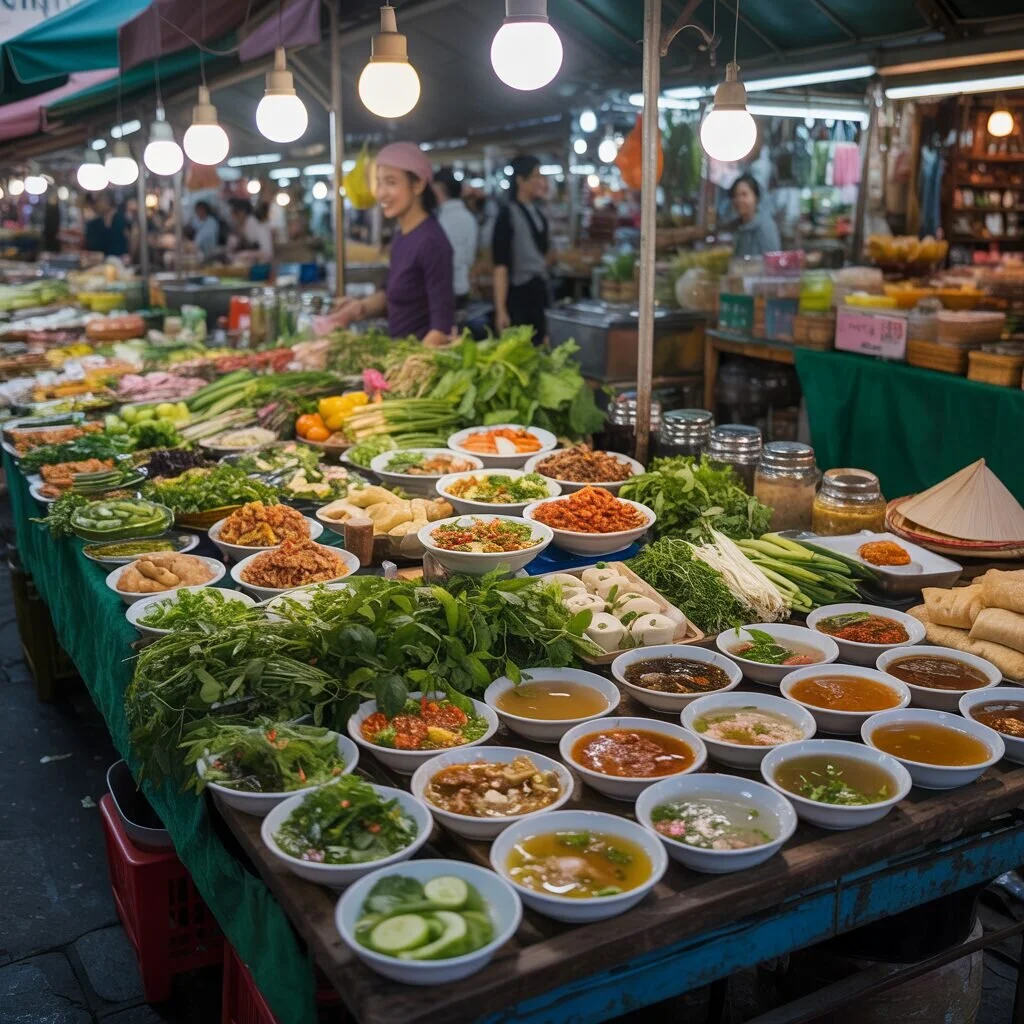
Discover the best food in Vietnam, from iconic phở and bánh mì to bún chả, gỏi cuốn spring rolls, and regional street food specialties. Authentic food in Vietnam balances five fundamental tastes using fresh herbs, rice noodles, and fish sauce. Expect to pay under $2 for most meals on a backpacker budget.
Know what to order and how to eat safely: Hanoi’s bún chả alleys and the South’s sizzling bánh xèo are essential stops, and mastering street stall mechanics, breakfast hours, ice safety, and the vegetarian keyword “chay” will transform your trip.
What Is Vietnamese Food Like? A Cuisine Built on Balance
Food in Vietnam balances five fundamental tastes (sweet, sour, salty, bitter, and spicy) through rice, noodles, fish sauce, and fresh herbs, remaining herb-forward rather than overtly spicy.
The Five Fundamental Tastes (Ngũ Vị)
| Element | Characteristics and Ingredients |
|---|---|
| Ngũ vị (Five Tastes) | Sweet, sour, salty, bitter, and spicy flavor profiles. |
| Staple Base | Rice-based (rice noodles, rice paper, rice flour) and naturally gluten-free. |
| Key Ingredients | Nước mắm (fish sauce), lemongrass, ginger, and rau thơm (fresh herbs): mint, cilantro, and Thai basil. |
French Colonial Influences
Food in Vietnam features distinct French colonial influences adapted to local palates. First-time visitors will immediately notice crusty baguettes paired with savory pâté, alongside strong robusta coffee served with sweetened condensed milk.
Must-Try Dishes in Vietnam: Phở, Bánh Mì, Bún Chả & Gỏi Cuốn
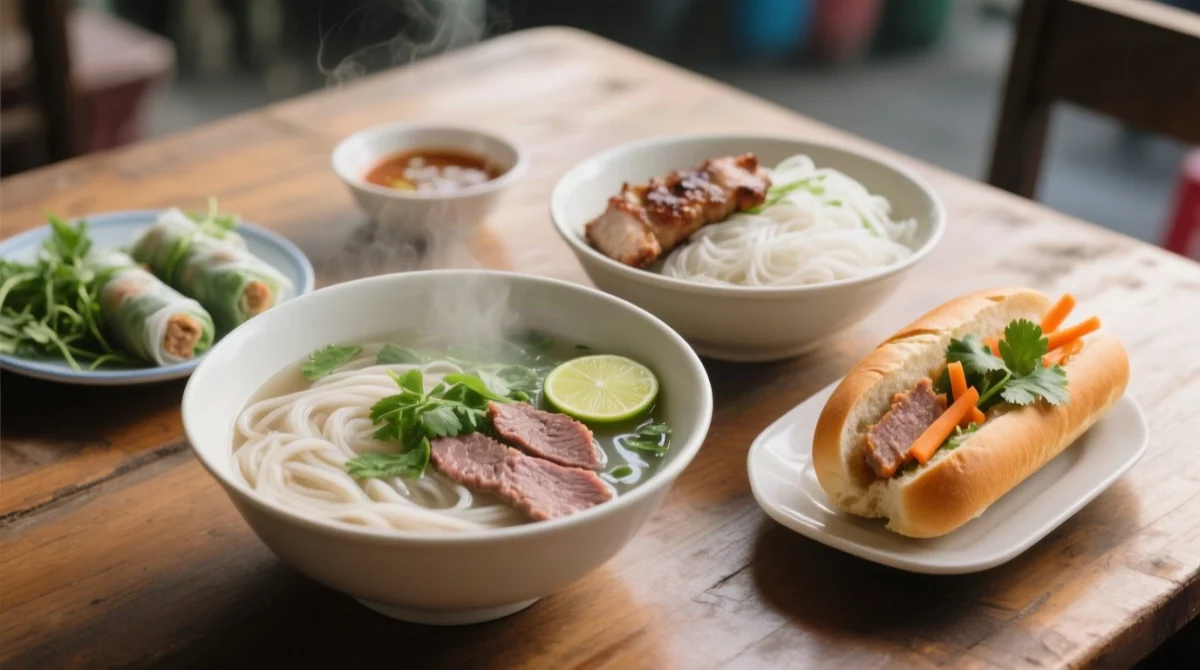
Food in Vietnam is built around four consensus must-try dishes: phở (~30,000 VND), bánh mì (15,000-30,000 VND), bún chả (~120,000 VND combo), and gỏi cuốn. Prices are updated for 2026.
Phở: Vietnam’s National Dish
- Pronounced “fuh” (/fəː/).
- Features an aromatic bone broth simmered for hours, flat rice noodles, beef or chicken, and fresh herbs.
Bánh Mì: Vietnam’s Iconic Sandwich
- This French-style mini-baguette contains savory fillings like pâté, pork, pickled carrots, daikon, jalapeños, and cilantro.
- Street stands charge 15,000-30,000 VND, while tourist spots cost up to 80,000 VND.
Bún Chả & Spring Rolls
- Originating in Hanoi, bún chả consists of grilled pork, cold rice vermicelli, herbs, and a sweet-sour-salty fish sauce dip. The “Combo Obama” at Bun Cha Huong Lien costs 120,000 VND.
- Fresh spring rolls are called gỏi cuốn, while fried versions are nem rán in the North or chả giò in the South, proving that food in Vietnam varies dramatically by region.
Regional Dishes & Differences: Northern, Central & Southern Vietnam
Food in Vietnam varies dramatically by region: Northern Vietnamese broth is clearer with less sugar, Central Vietnam is the spiciest with dishes like bún bò Huế, and Southern Vietnam is the sweetest, featuring the most fresh herbs.
| Region | Flavor Profile | Iconic Dishes |
|---|---|---|
| North | Clearer broths, fewer garnishes, less sugar | Bánh cuốn |
| Central | Spiciest, bold flavors | Bún bò Huế, Mì Quảng, Cao lầu |
| South | Sweeter, rich broths, abundant herbs | Bánh xèo |
Bánh Mì by Region: North, Central & South
The bánh mì is the easiest way to taste regional food in Vietnam: the North stuffs crispier baguettes with more meat, the Central coast adds spicier pâté, and the South prefers softer bread piled with more vegetables and pickles.
Central Vietnam Noodles: Bún Bò Huế, Mì Quảng & Cao Lầu
Bún bò Huế, a spicy lemongrass beef noodle soup, is the Central coast’s boldest bowl. Mì Quảng features turmeric noodles with minimal broth, peanuts, and rice crackers. Cao lầu originates exclusively from Hoi An, combining chewy rice noodles soaked in lye water (legend says from the ancient Bá Lễ well), pork, fresh greens, and crispy croutons, typically costing ~50,000 VND.
Bánh Xèo, Bánh Cuốn & Bò Lá Lốt
Southern bánh xèo is a sizzling turmeric rice pancake filled with shrimp and pork, eaten in lettuce wraps for ~25,000 VND. Northern bánh cuốn consists of steamed rice rolls with minced pork and wood ear mushrooms, costing around ~$2 (2€) per plate at street stalls. Grilled bò lá lốt, beef wrapped in betel leaf, appears at street grills in regional variants.
Breakfast in Vietnam: What Locals Eat in the Morning
Phở is a genuine breakfast dish in Vietnam, as locals eat it between 5:00 and 7:00 AM at stalls that close by mid-morning. Food in Vietnam rewards early risers, establishing heavy noodle soups as the standard morning meal. By 9:00 AM, many of the best local spots have already sold out.
- Phở: The ultimate morning staple costs around 30,000 VND (~$1.30) in 2026 for a bowl of aromatic bone broth, flat rice noodles, and fresh herbs.
- Bánh mì: A quick grab-and-go French-style mini-baguette filled with savory ingredients, typically priced between 15,000 and 30,000 VND at street stands.
- Xôi: Savory sticky rice, a classic breakfast food in Vietnam, provides a fast and filling start to the day before the heat sets in.
- Cà phê trứng: A Hanoi morning specialty featuring strong Robusta coffee topped with whipped egg yolk and condensed milk foam.
On our last morning in Hanoi, a stall owner corrected our “foh” to “fuh” before ladling out the day’s best breakfast phở.
How Street Food Works in Vietnam
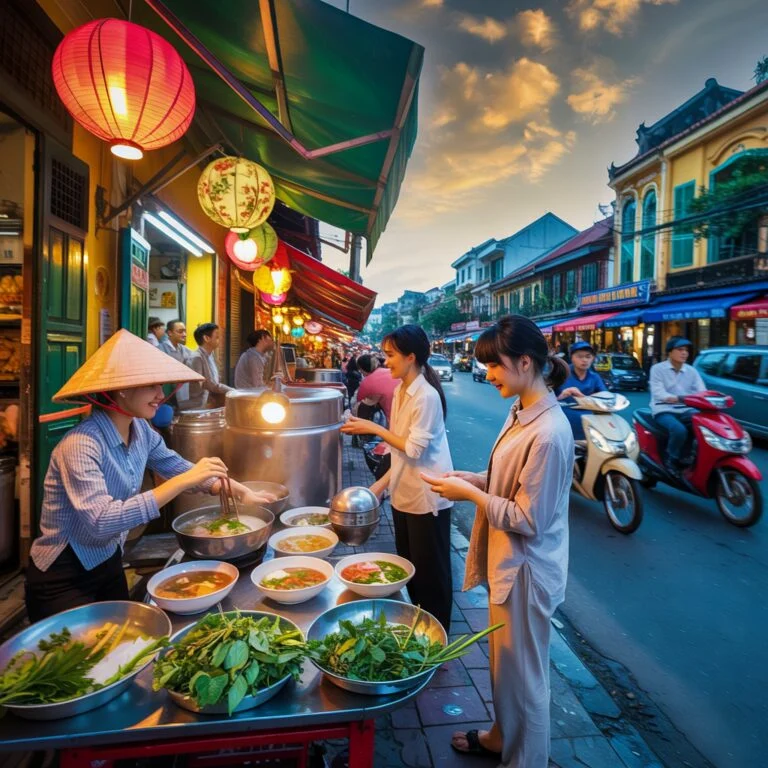
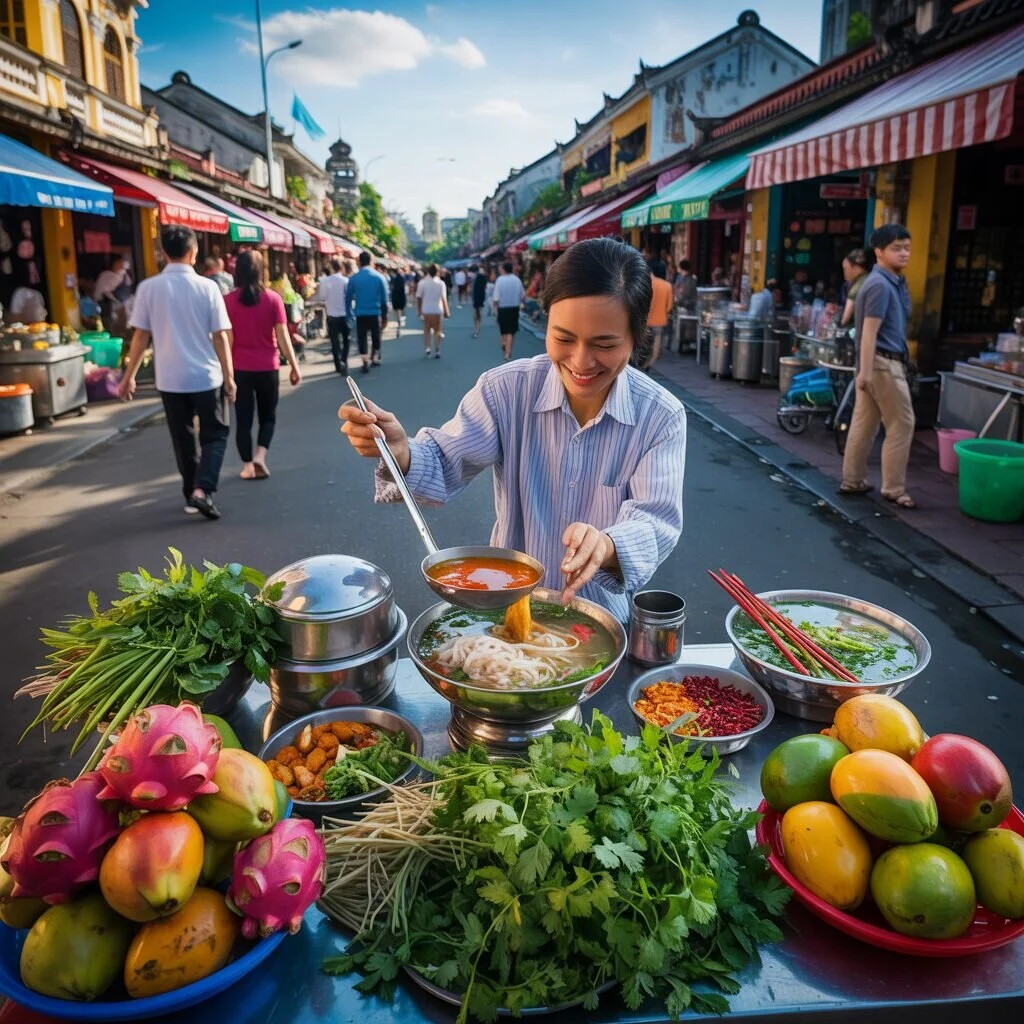
Most Vietnamese street stalls serve a single dish on plastic stools with no printed menu: food arrives within 30 seconds and substitutions are not accepted. This one-family, one-dish specialization is the engine of street food in Vietnam.
How to Order at a Street Stall
Pick a one-dish stall
Take any free plastic stool; low tables are shared with strangers.
Skip the menu
There is none: point at the dish or say its name.
Wait about 30 seconds
The time a vendor who has made the same dish all day needs to assemble your bowl.
Accept the food as served
Substitutions are not part of street food in Vietnam.
Pay in cash
Ideally with 50,000 or 100,000 VND notes.
How to Choose a Good Stall: The “Look for Locals” Rule
A crowded stall is a safe stall, because high turnover means ingredients never sit around. On our last trip, the best bún chả in Hanoi came from a stall with twenty locals on stools and zero tourists.
Bánh Tráng Nướng: Vietnam’s Grilled Rice-Paper “Pizza”
Bánh tráng nướng, the “Vietnamese pizza” that originated in Da Lat, is grilled rice paper topped with quail eggs and dried shrimp, proof that food in Vietnam turns the cheapest staples into cult street snacks.
How to Eat Street Food Safely in Vietnam
Eating street food in Vietnam is safe when you choose stalls with high local turnover, eat hot cooked-to-order food, and drink only bottled water with purified ice. Travelers who follow these rules eat street food in Vietnam every day without stomach issues.
Quick Safety Rules
- Look for locals: a line of Vietnamese diners means fresh, fast-cycling ingredients.
- Order it hot: cooked-to-order meals are safer than anything sitting pre-made.
- Never drink tap water; stick to sealed bottled water.
- Purified ice only: tubular ice with a hole in the middle is safe; avoid crushed block ice at unregulated stalls.
- Ask about hidden animal products: fish sauce and oyster sauce hide in many broths.
- Consider probiotics a few days before arrival to prepare your stomach.
Eating Like a Local: Vietnamese Dining Etiquette & How to Order
Food in Vietnam pairs best with proper local etiquette, which requires never sticking chopsticks upright in rice, sharing dishes communally, and knowing basic phrases like ‘không cay’ for not spicy.
Food in Vietnam revolves around family-style dining in 2026. Diners share communal plates, and guests must serve elders first. When drinking, locals toast with a loud “một, hai, ba, dô!”.
| Dining Rule | What to Do |
|---|---|
| Chopsticks | Never stick upright in rice. |
| Sharing | Share dishes communally; serve elders first. |
| Toasting | Cheer with “một, hai, ba, dô!”. |
Essential Ordering Phrases
- “chay”: vegetarian
- “không cay”: not spicy
- “bao nhiêu”: how much?
Food in Vietnam: How Much to Budget Per Day
Food in Vietnam costs $5 to $8 per day on a backpacker budget, with street meals like phở costing ~$1.30, while tourist restaurants are 3 to 10 times pricier.
Cash is king when paying for food in Vietnam at street stalls. Tourists should carry 50,000 and 100,000 VND notes for easy transactions. Tipping is not expected at street-level eateries. Prices updated for 2026.
| Budget Tier | Breakfast | Lunch | Dinner | Snacks | Daily Total |
|---|---|---|---|---|---|
| Backpacker | ~$0.65 | ~$1.30 | ~$1.07 | Varies | $5 to $8 |
Vietnamese Coffee & Drinks: Cà Phê Sữa Đá, Bia Hôi & Fresh Drinks
Vietnamese iced coffee (cà phê sữa đá), fresh bia hôi draft beer, and strong robusta brews anchor the drink side of food in Vietnam.
Cà Phê Sữa Đá & Egg Coffee
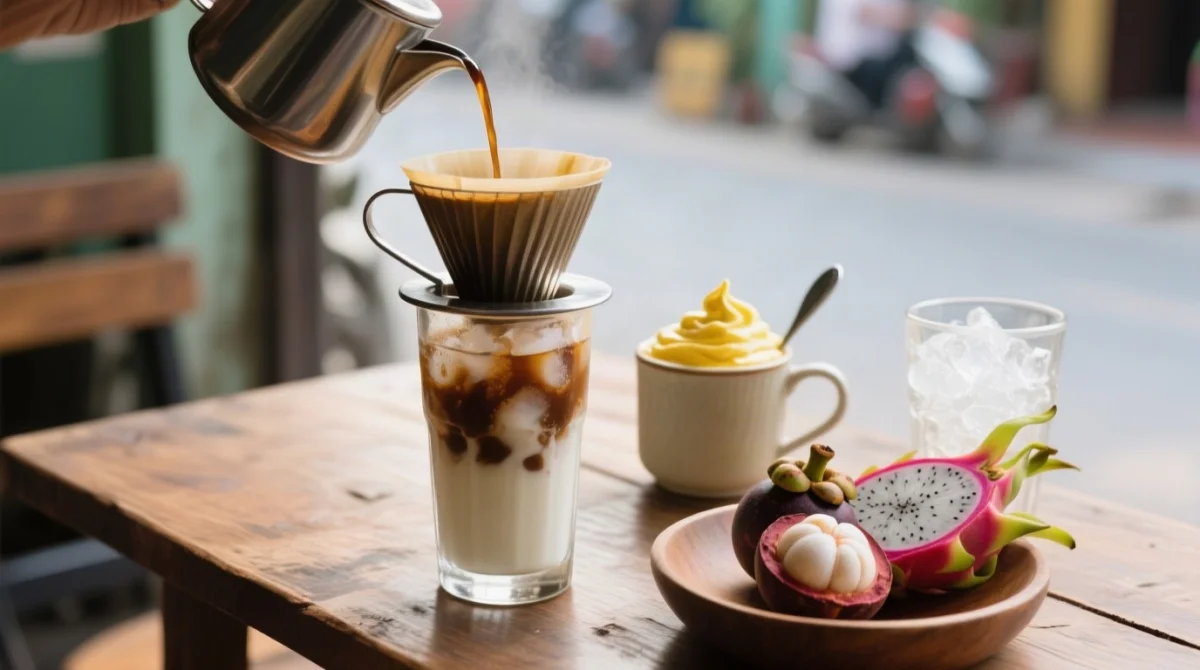
- Cà phê sữa đá: Made with bold Robusta beans, a metal drip filter, and sweetened condensed milk over ice.
- Cà phê trứng: A Hanoi specialty featuring strong coffee topped with whipped egg yolk and condensed milk foam.
Bia Hơi Culture
Exploring food in Vietnam includes experiencing bia hơi, a fresh, daily-brewed local beer served on ice that costs just pennies per glass in 2026.
Vietnamese Condiments, Tropical Fruit & Chè Desserts
Meals are customized at the table with Tay Ninh chili salt and fish sauce, while tropical fruits like mangosteen and sweet chè provide a cooling contrast to rich food in Vietnam.
| Specialty | What It Is |
|---|---|
| Tay Ninh chili salt | The signature salty-spicy dip for fruit and grilled meats. |
| Nước mắm | Fish sauce, the backbone seasoning of food in Vietnam. |
| Tropical fruit | Durian, mangosteen, and dragon fruit, often blended into sinh tố (smoothies). |
| Chè | Traditional Vietnamese sweet treats and dessert soups. |
Eating Vegetarian, Vegan & Halal in Vietnam
The keyword ‘chay’ (vegetarian) is essential when ordering food in Vietnam, but diners must beware of hidden fish sauce and oyster sauce in seemingly meatless broths.
The safest approach at street stalls is ordering plain rice with vegetable sides while explicitly clarifying dietary needs using local terms.
| Phrase | Vietnamese | Meaning |
|---|---|---|
| Vegetarian | Chay | Meat-free (always verify sauces) |
| Not spicy | Không cay | No chili added |
Halal & Muslim-Friendly Dining
Vietnam is not a Muslim-majority country, meaning certified halal restaurants are primarily found in major tourist areas. For travelers adhering to strict halal diets, eating vegetarian is the safest default when exploring food in Vietnam’s local markets.
Food Tours & Cooking Classes in Vietnam
Hanoi, Ho Chi Minh City, and Hoi An each offer guided food tours through iconic street-food districts, plus hands-on cooking classes where you learn to prepare phở, bánh xèo, and spring rolls. A tour is the fastest way to taste food in Vietnam with a local vetting every stall for you.
Hoi An Specialties: White Rose Dumplings & Cơm Gà
Hoi An concentrates some of the rarest food in Vietnam: bánh bao vạc (White Rose Dumplings), translucent shrimp and pork dumplings shaped like flowers and made to a secret family recipe, plus cơm gà Hội An (Hoi An chicken rice). For a benchmark sandwich, queue at Bánh Mì Phượng (2B Phan Chu Trinh, Hoi An); in Hanoi, try King Roti at 34 Hàng Gai.
Late-Night Eating in Vietnam
Food in Vietnam does not stop at midnight: night markets, 24-hour phở counters, and roadside BBQ stalls keep serving until dawn.
Frequently Asked Questions (FAQ) About Food in Vietnam
What food is famous in Vietnam?
The most famous food in Vietnam is the consensus “Big Four”: phở (noodle soup), bánh mì (baguette sandwich), bún chả (grilled pork with noodles), and gỏi cuốn (fresh spring rolls). Phở is considered the national dish, while a street-stall bánh mì typically costs 15,000 to 30,000 VND.
How do you pronounce Pho?
Phở is pronounced “fuh” (/fəː/), not “foh”. Saying “fuh” will get you Vietnam’s iconic bone broth and rice noodle soup without confusion anywhere in the country.
What is typical Vietnamese food?
Typical food in Vietnam is rice-based, naturally gluten-free, and built on fish sauce (nước mắm) plus fresh herbs like mint, cilantro, and Thai basil. The cuisine balances five fundamental tastes: sweet, sour, salty, bitter, and spicy, and is herb-forward rather than overtly spicy.
How much does food in Vietnam cost per day in 2026?
On a backpacker budget, food in Vietnam costs around $5 to $8 per day in 2026. A street-stall bowl of phở costs roughly 30,000 VND (about $1.30), while a bánh mì runs about $0.65.
Is street food in Vietnam safe for tourists?
Yes, street food in Vietnam is safe if you follow the “look for locals” rule: choose stalls with high local turnover and order hot, cooked-to-order meals. Use only purified ice rather than block ice to avoid stomach issues.
What do Vietnamese people eat for breakfast?
Vietnamese people eat savory breakfasts, with phở as a primary staple between 5:00 and 7:00 AM at stalls that close by mid-morning. Other morning items include bánh mì, sticky rice (xôi), and egg coffee (cà phê trứng).
Can you drink tap water or have ice in Vietnam?
Never drink tap water in Vietnam; stick to bottled water. Ice in your cà phê sữa đá or bia hơi is generally safe when purified, often tubular with a hole in the middle. Avoid crushed block ice at unregulated street stalls.
Is it easy to find vegetarian food in Vietnam?
Yes, if you learn the keyword “chay” (vegetarian). Beware of hidden fish sauce and oyster sauce in broths, even in dishes labeled vegetarian. The safest strategy is plain rice with vegetable sides plus clearly stated dietary restrictions.
Do you tip at restaurants and street food stalls in Vietnam?
No, tipping is not expected at street food stalls or local eateries in Vietnam. Cash is king at these venues, so carry smaller 50,000 and 100,000 VND notes to pay for your meals.
What is the difference between Northern and Southern Vietnamese food?
Northern Vietnamese food features clearer broths with less sugar and fewer garnishes, as in Hanoi’s phở. Southern food is sweeter, with richer broths, larger bowls, and abundant fresh herbs and bean sprouts. Central Vietnam is the spiciest, home to bún bò Huế.